Endangered
Warty-foot snail
Ifremeria nautilei
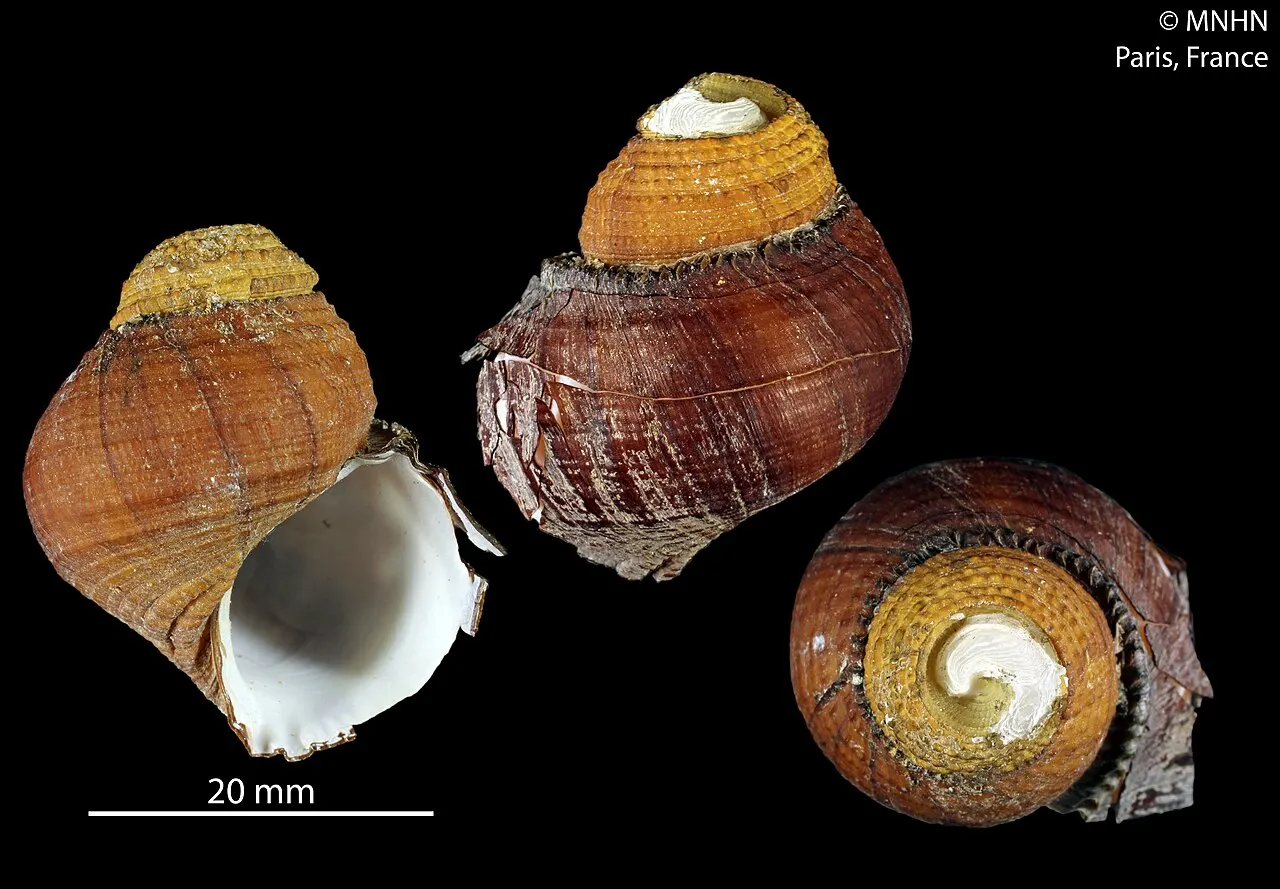
Ifremeria nautilei, the warty-foot snail, is a large deep-sea snail that lives on hydrothermal vents in the south-west Pacific. It depends on symbiotic bacteria for food. The IUCN Red List classed it as Endangered in 2019, mainly because of the threat from seabed mining.
What it is
This is a vent-dwelling marine snail and the only species in its genus. Philippe Bouchet and Anders Warén named it in 1991. For a deep-sea snail it's big, reaching up to about 85 mm, whereas other snails in its wider group are usually under 20 mm.
Its closest relative is the genus Warty-foot snail, which also lives at vents and also relies on symbiotic bacteria.
Where it lives
The IUCN records the species from Tonga, Papua New Guinea and Fiji, counts four locations, and treats its range as restricted. It lives on the sea floor at hydrothermal vents.
The IUCN gives a depth range of roughly 1,300 to 2,700 metres. Another reference gives about 1,700 to 2,900 metres. The IUCN does not treat it as a migrant.
Pins are Wikidata “endemic to” fields. Orange dots, when present, are GBIF occurrence tiles — survey bias included.
How it lives
No sunlight reaches the vents, so the snail can't graze like most snails. Instead, bacteria living in its tissues turn chemicals from the vent fluid into food. A 2022 survey of symbionts in Environmental Microbiology Reports found that the snail hosts Thiolapillus bacteria, a sulfur-oxidising group. Many individuals also carry a smaller number of methane-oxidising Methylomonas bacteria, especially at sites in the Eastern Lau Spreading Center.
Females brood their young in a pouch in the foot. A 2010 paper in Biological Bulletin described the larvae as a new larval form, now called Warén's larvae. They are covered in cilia, swim without feeding, and reportedly metamorphose into shelled larvae after about 15 days.
Why it is in trouble
The one threat the IUCN lists is mining and quarrying. The 2022 symbiont paper notes that Warty-foot snail and Ifremeria snails are rated Endangered or Vulnerable because of imminent deep-seabed mining at vents in the Indian and Pacific oceans.
The IUCN records a continuing decline in the area the species occupies, and its population trend is unknown. With only four locations, the loss of a single vent field matters.
What is being done
The IUCN lists resource and habitat protection, action at the international level, and awareness work as conservation actions needed. At the time of the 2019 assessment, no recovery plan, systematic monitoring scheme or protected area covered the species.
Sources
Written for this catalog in our own words from the sources below, checked against them on 12 November 2026. Population figures are estimates and carry the year they were made. Status and assessment year: IUCN. 2026. The IUCN Red List of Threatened Species. Version 2026-1. iucnredlist.org.




