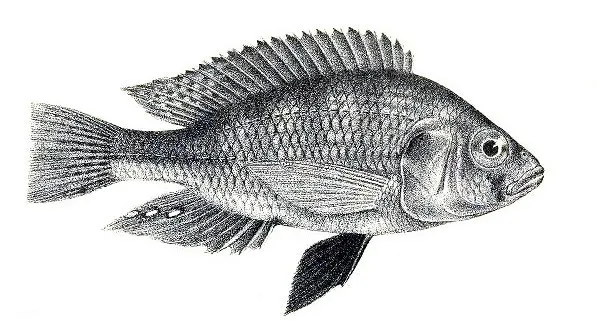
Critically Endangered
Haplochromis victorianus
Haplochromis victorianus
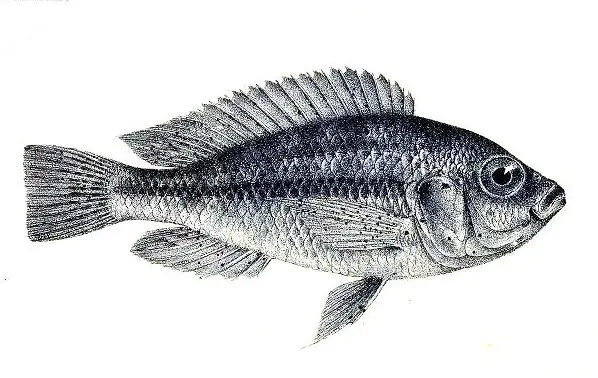
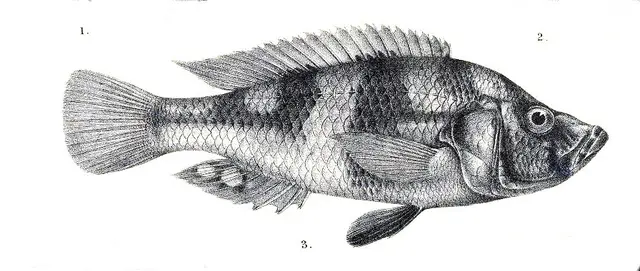
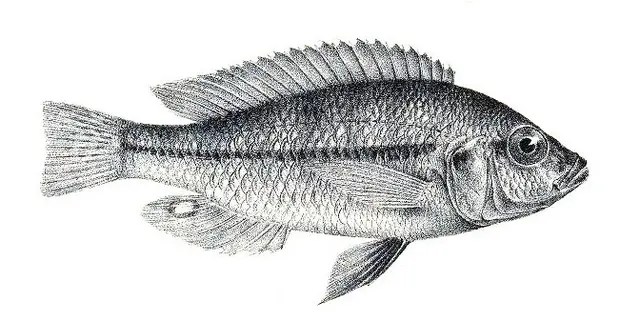
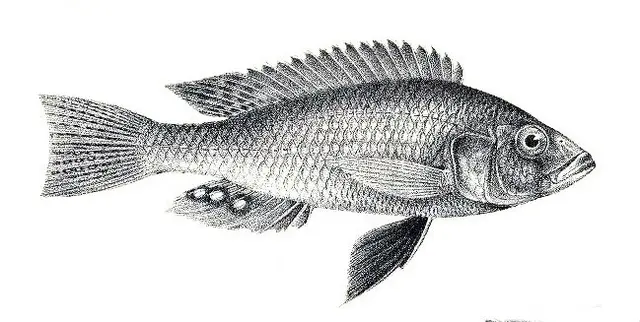
Haplochromis victorianus is a fish-eating cichlid known only from Lake Victoria in East Africa. It grows to about 16.6 cm. The IUCN Red List rates it Critically Endangered (assessed 2010), flagged as possibly extinct, since the last record dates to 1985.
How to recognise it
The French zoologist Jacques Pellegrin described this cichlid in 1904, under the name Paratilapia victoriana. It has since been placed in Haplochromis (and sometimes Harpagochromis). Males and unsexed fish reach a standard length of 16.6 cm, about 6.5 inches.
Published sources give almost nothing on its colour or body shape, and FishBase has no photograph of it.
Where it lives
The species is endemic to Lake Victoria, the huge lake shared by Uganda, Kenya and Tanzania. The Red List records it from Ugandan and Kenyan waters, both listed as possibly extinct, and treats it as a single location.
FishBase describes it as living in sheltered, muddy-bottomed areas at depths of roughly 6 to 12 m. The Red List lists the habitat simply as permanent freshwater lake.
Pins are Wikidata “endemic to” fields. Orange dots, when present, are GBIF occurrence tiles — survey bias included.
How it lives
It feeds on small fish, and FishBase puts it at a trophic level of 4.2, which marks it as a predator. Like other haplochromine cichlids, it is a mouthbrooder, meaning the female carries the eggs and young in her mouth. Beyond that, very little about its biology has been recorded.
Why it is in trouble
Lake Victoria's native haplochromine cichlids crashed in the 1980s. Decades of nutrient pollution had already degraded the water when the introduced Nile perch surged, and many native cichlids fell below the level that surveys could detect. The Red List assessment for this species lists sewage, soil erosion and sedimentation among the threats, along with problem species and hybridisation, and gives the population trend as decreasing.
The last record is from 1985, which is why the Red List tag reads possibly extinct. A database of recently extinct species lists it as missing.
What is being done
The Red List assessment lists national and international level action, site protection and management, habitat restoration, harvest management, education and awareness as relevant measures, but no species-specific recovery programme is documented.
There is a little hope in how other lost lake cichlids have fared. A related species, Lipochromis microdon, was last formally recorded in 1985 and then turned up again, with one male found in 2023 and another in 2024 on rocky reefs in the southern Mwanza Gulf. That suggests some species written off in the lake may survive in small pockets. No such find has been reported for H. victorianus.
Sources
Written for this catalog in our own words from the sources below, checked against them on 12 November 2026. Population figures are estimates and carry the year they were made. Status and assessment year: IUCN. 2026. The IUCN Red List of Threatened Species. Version 2026-1. iucnredlist.org.