Critically Endangered
Haplochromis percoides
Haplochromis percoides
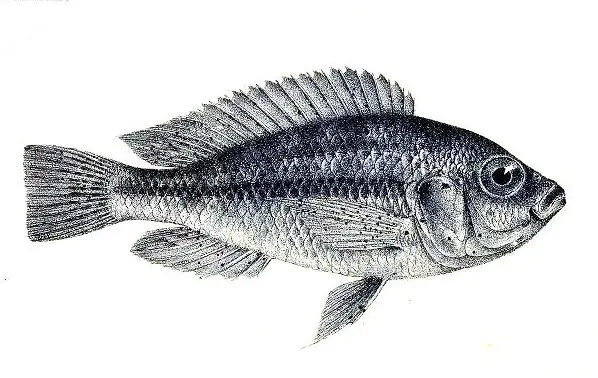
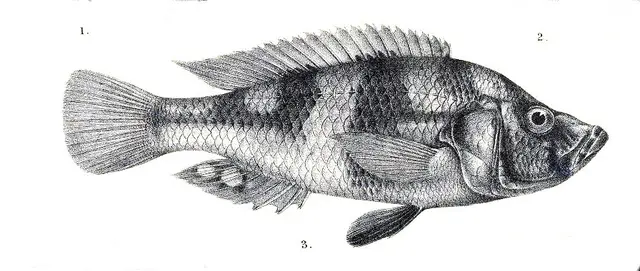
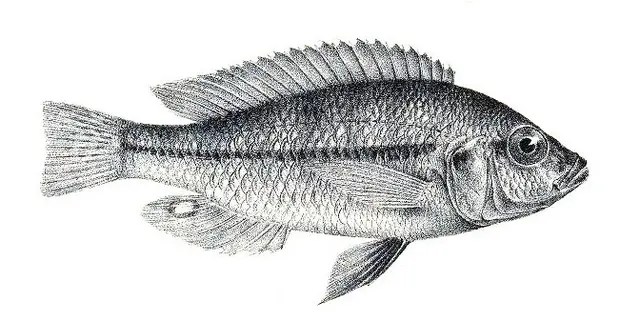
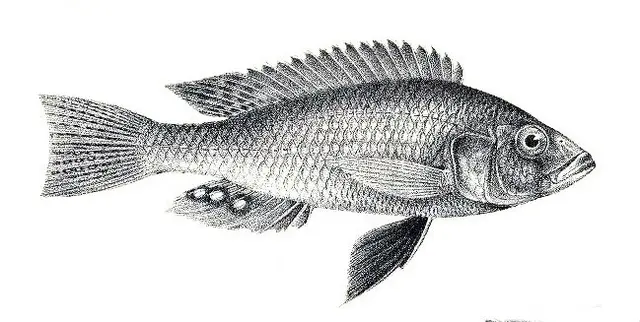
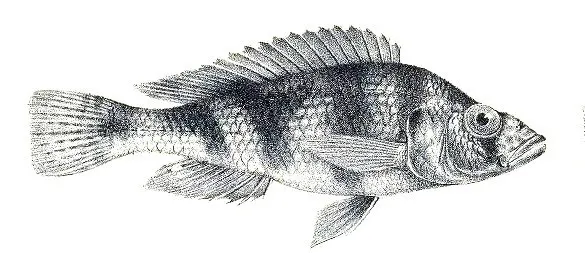
Haplochromis percoides is a small fish-eating cichlid found only in Lake Victoria, East Africa. The IUCN Red List rated it Critically Endangered, possibly extinct, in 2010. It reaches about 9.3 cm (3.7 in) and is described as nowhere common, though it seemed spread widely around the shoreline.
How to recognise it
This is a small fish-eating haplochromine cichlid, with a maximum recorded length of 9.3 cm in standard length. George Albert Boulenger described it in 1906. It has also been filed under the names Prognathochromis percoides and Astatilapia percoides, which can turn up in older references.
Like most cichlids of its group, it is a mouthbrooder, meaning eggs and young are carried in the mouth.
Where it lives
It belongs to Lake Victoria alone. The Red List records it for Uganda and Tanzania, with both marked as possibly extinct, and counts the whole range as one location, with an estimated extent of about 68,800 square km.
FishBase describes it as living in shallow water over exposed or partly exposed sandy beaches. It was nowhere common, but it seemed to be spread widely around the lakeshore. The Red List lists the habitat as permanent freshwater lakes of more than 8 hectares, at up to about 1,134 m above sea level.
Pins are Wikidata “endemic to” fields. Orange dots, when present, are GBIF occurrence tiles — survey bias included.
How it lives
FishBase lists fish as its food and gives it a trophic level of 4.2, which marks it as a predator high in the lake's food web. Beyond that, little has been published about its breeding or daily habits.
Why it is in trouble
Lake Victoria's small haplochromine cichlids once made up an estimated 80 percent of the lake's fish biomass, according to an FAO report on the lake's fisheries. They declined sharply after Nile perch spread, with numbers of the perch rising in the 1980s. Nutrient overload (eutrophication), which fuels algal blooms and oxygen loss, added to the pressure.
Scientists still debate the cause. A 2016 paper in the Canadian Journal of Fisheries and Aquatic Sciences by Paul van Zwieten and colleagues re-analysed long-term lake data to test whether the Nile perch drove the decline or followed it.
The Red List assessment names sewage, soil erosion and sedimentation, and invasive and other problem species as threats. It records the population trend as decreasing and gives no estimate of how many fish remain.
What is being done
The assessment lists no conservation actions as currently in place for this species. It does list protection of sites and resources, habitat restoration, harvest management and education as measures the species would benefit from. A close relative in the same lake, Haplochromis microdon, was caught again in 2023 and 2024 after decades with no records, but no recent record of this fish has been reported.
Sources
Written for this catalog in our own words from the sources below, checked against them on 12 November 2026. Population figures are estimates and carry the year they were made. Status and assessment year: IUCN. 2026. The IUCN Red List of Threatened Species. Version 2026-1. iucnredlist.org.
- IUCN Red List assessment, Haplochromis percoides (2010)
- FishBase summary, Haplochromis percoides
- Wikipedia, Haplochromis percoides
- Artensterben.de, Haplochromis microdon rediscovered
- SHOAL, Cichlid species previously lost to science rediscovered in Lake Victoria
- FAO, Fisheries of Lake Victoria (T0037E)
- van Zwieten et al. (2016), The Nile Perch invasion in Lake Victoria: cause or consequence of the haplochromine decline? CJFAS 73 (GOV.UK record)