Critically Endangered
Haplochromis microdon
Haplochromis microdon
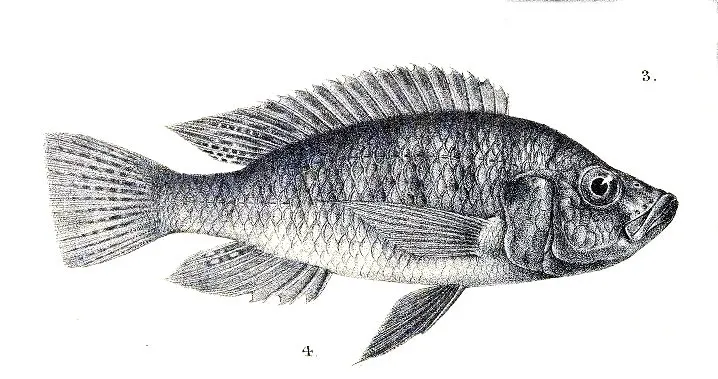
Haplochromis microdon is a Lake Victoria cichlid that eats the young of other fish. The IUCN Red List rated it Critically Endangered, possibly extinct, in 2010. No one had recorded it since 1985 until researchers caught two males on a rocky reef in 2023 and 2024.
How to recognise it
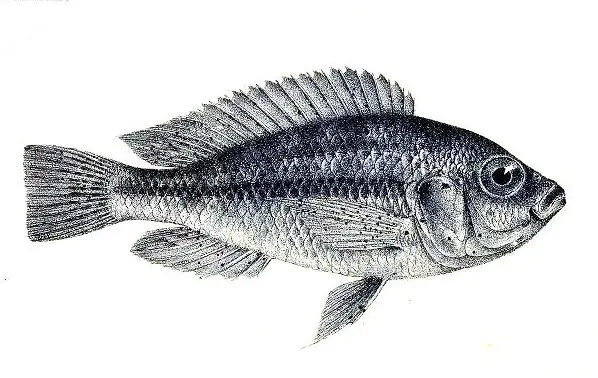
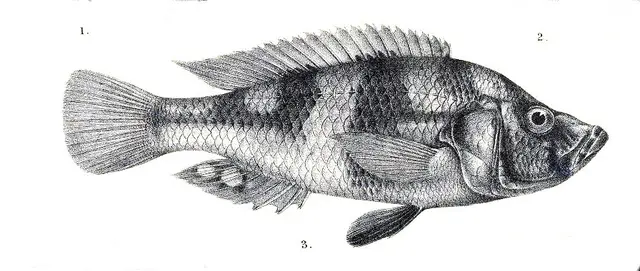
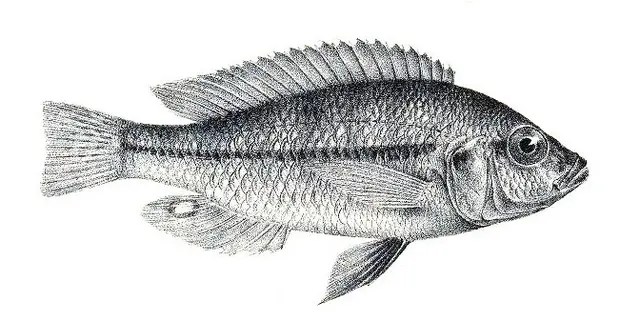
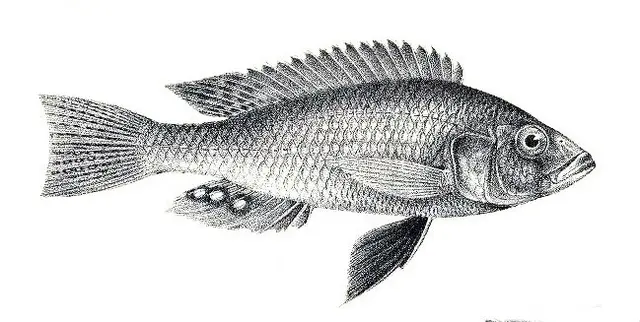
It's a modest-sized cichlid, reaching about 14.8 cm (5.8 in) in standard length. George Albert Boulenger described it in 1906, reportedly under the name Pelmatochromis microdon. Later authors moved it to the genus Lipochromis, so older papers may use that name.
FishBase notes that its teeth and jaw structure closely resemble those of another Lake Victoria cichlid, Haplochromis parvidens, and suggests the two may feed in similar ways. Like most haplochromine cichlids, it is a mouthbrooder.
Where it lives
The species is found only in Lake Victoria. The Red List maps it to Uganda and Tanzania, with its presence in both marked as possibly extinct, and treats its whole range as a single location. FishBase gives a depth range of 2 to 11 m in the shallow, near-shore zone over both firm and soft bottoms.
Before the decline, it was common in the northern part of Tanzania's Mwanza Gulf. It turned up in up to 72 percent of bottom-trawl catches in 1978 and about 60 percent from 1979 to 1982, then dropped out of surveys from the mid-1980s. It wasn't recorded in 1987 and 1988, 1993 to 1995, or 2006 to 2008.
The two recent fish came from rocky reefs in the southern Mwanza Gulf, at a site sampled several times between 1989 and 2015 without finding it.
Pins are Wikidata “endemic to” fields. Orange dots, when present, are GBIF occurrence tiles — survey bias included.
How it lives
It is a paedophage, a specialist predator on the larvae of haplochromine cichlids.
A 2024 study in Molecular Biology and Evolution compared the genomes of egg-eating and larva-eating cichlids from the lake. It found signs of a recent population bottleneck in this species, dated to the 1970s and 1980s.
Why it is in trouble
Lake Victoria lost many of its endemic fish after Nile perch were introduced in the 1950s and their numbers boomed in the 1980s. Estimates of the species lost range from more than 200 to as many as 400. Overfishing, nutrient runoff, algal blooms, falling oxygen and cloudy water added to the pressure. Cloudy water blurs the colour signals cichlids use to choose mates and can lead to hybridisation.
The Red List assessment lists sewage, soil erosion and sedimentation, and invasive and other problem species among the threats, and records the population trend as decreasing. The team that found the two males said the pressures behind the collapse are still present.
What is being done
The 2023 and 2024 catches came from haplochromine surveys by Ole Seehausen's research group, which resumed regular sampling after a break of several years. Anna Mahulu reported the finds in a March 2025 article for the SHOAL conservation site. Suggested next steps include protecting habitat, cutting pollution and nutrient input, managing fisheries sustainably, and surveying the whole lake for other species feared lost.
The Red List assessment, from 2010, still carries the possibly extinct tag and predates the new records.
Sources
Written for this catalog in our own words from the sources below, checked against them on 12 November 2026. Population figures are estimates and carry the year they were made. Status and assessment year: IUCN. 2026. The IUCN Red List of Threatened Species. Version 2026-1. iucnredlist.org.
- IUCN Red List assessment, Haplochromis microdon (2010)
- FishBase summary, Haplochromis microdon
- SHOAL, Cichlid species previously lost to science rediscovered in Lake Victoria (Mahulu, March 2025)
- Artensterben.de, Haplochromis microdon rediscovered
- Imamoto et al. (2024), Severe bottleneck impacted the genomic structure of egg-eating cichlids in Lake Victoria, Molecular Biology and Evolution
- Wikipedia, Haplochromis microdon