Critically Endangered
Haplochromis martini
Haplochromis martini
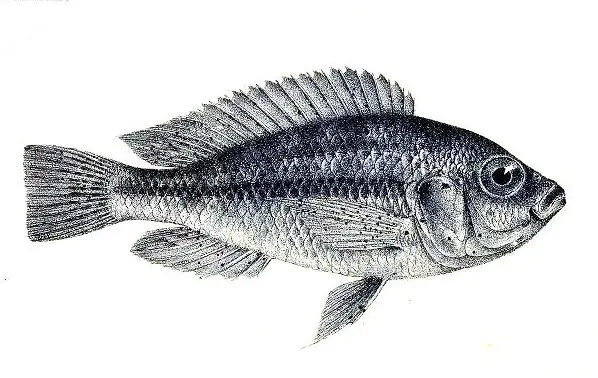
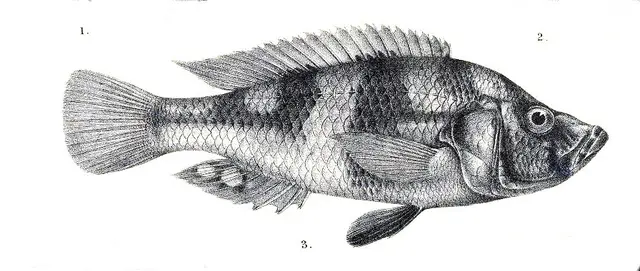
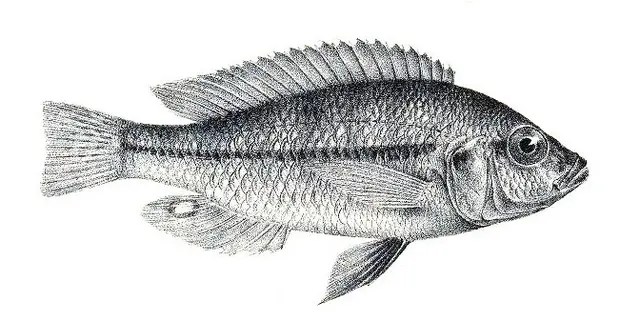
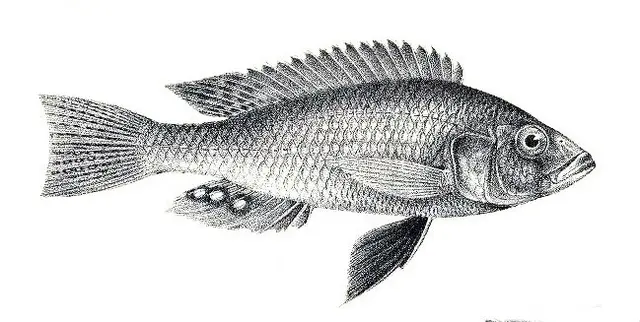
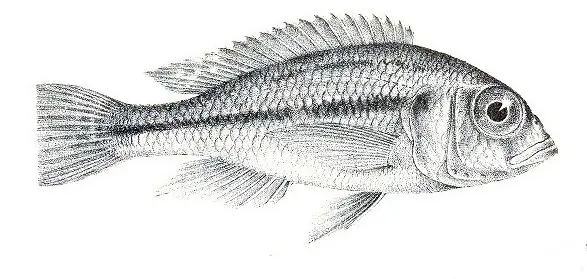
Haplochromis martini is a small cichlid fish of the Lake Victoria region in East Africa, reaching about 10 centimetres. The IUCN rated it Critically Endangered and possibly extinct in 2010. It was last recorded in Lake Victoria in 1985, and a later survey reportedly found it in Lake Bisina, Uganda.
How to recognise it
This is a modest-sized fish. Males and unsexed fish top out at about 10.4 centimetres standard length, which is body length without the tail fin. George Boulenger described it in 1906, and the species name honours James Martin, a transport officer in the Uganda Protectorate who helped the collector Edward Degen, who gathered the original specimen.
It belongs to Haplochromis, a large group of Lake Victoria region cichlids whose boundaries are still badly resolved, and some references list it as Astatotilapia martini.
Where it lives
The Red List records it as native to Uganda, Kenya and Tanzania, all marked as possibly extinct, and treats it as a single location with an extent of occurrence of about 68,800 square kilometres. FishBase describes it as living in the lower water column, down to about 12 metres, over sand and mud on exposed shores and in sheltered bays, though probably not right at the water's edge.
A 2010 fish survey of Lake Bisina, a satellite lake of Lake Kyoga in Uganda, reportedly recorded the species. That would mean it can survive outside Lake Victoria itself, though FishBase and the Red List give only Lake Victoria countries.
Pins are Wikidata “endemic to” fields. Orange dots, when present, are GBIF occurrence tiles — survey bias included.
How it lives
It eats mostly fish, with some fly larvae in the diet, and females carry the eggs and young in their mouths. The Red List notes that people eat the species for subsistence.
Why it is in trouble
The cause is the story of Lake Victoria itself. Nile perch were introduced to the lake after 1954 and badly disrupted its ecosystem. Introduced Nile tilapia competed with the native cichlids for food and other resources. An estimated 200 haplochromine species, mostly in this genus, may have been lost as perch stocks declined in the late 1980s, many of them described only a few years earlier.
For this species, the Red List names the Nile perch as an invasive threat, along with sewage, soil erosion and silt, each scored as a low impact. Hybridisation and ecosystem degradation appear among the stresses. The assessment gives a decreasing trend and criterion C2a(ii), which concerns a very small population that is declining.
What is being done
The assessment lists site protection, habitat restoration, harvest management and education as actions that apply, along with research on population trends, life history and threats, but the record does not say which are actually under way. Many surviving Lake Victoria cichlids are recovering, though the lake ecosystem has changed permanently and many are still critically endangered.
Sources
Written for this catalog in our own words from the sources below, checked against them on 12 November 2026. Population figures are estimates and carry the year they were made. Status and assessment year: IUCN. 2026. The IUCN Red List of Threatened Species. Version 2026-1. iucnredlist.org.