Critically Endangered
Haplochromis longirostris
Haplochromis longirostris
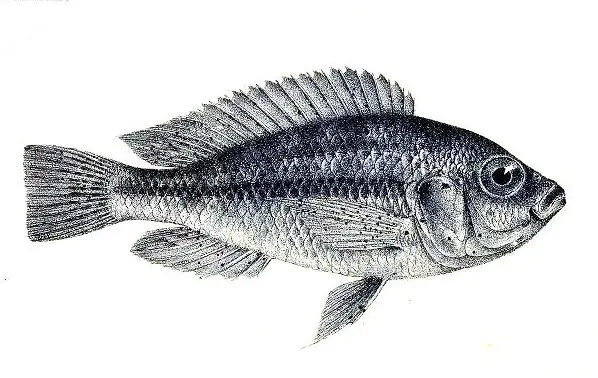
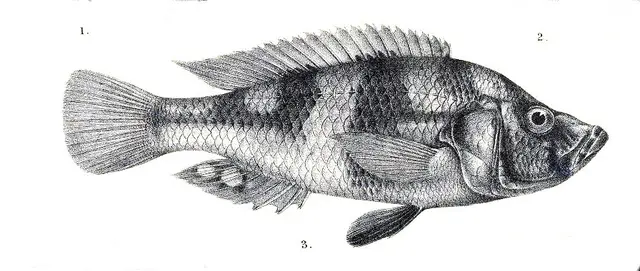
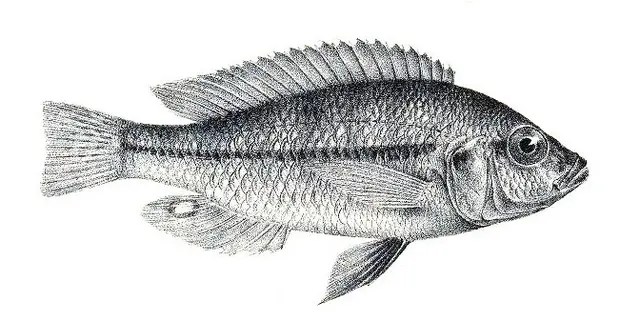
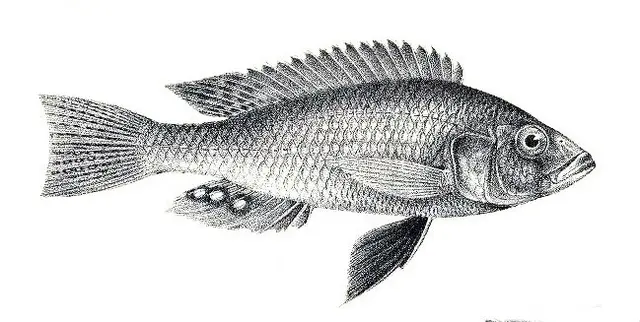
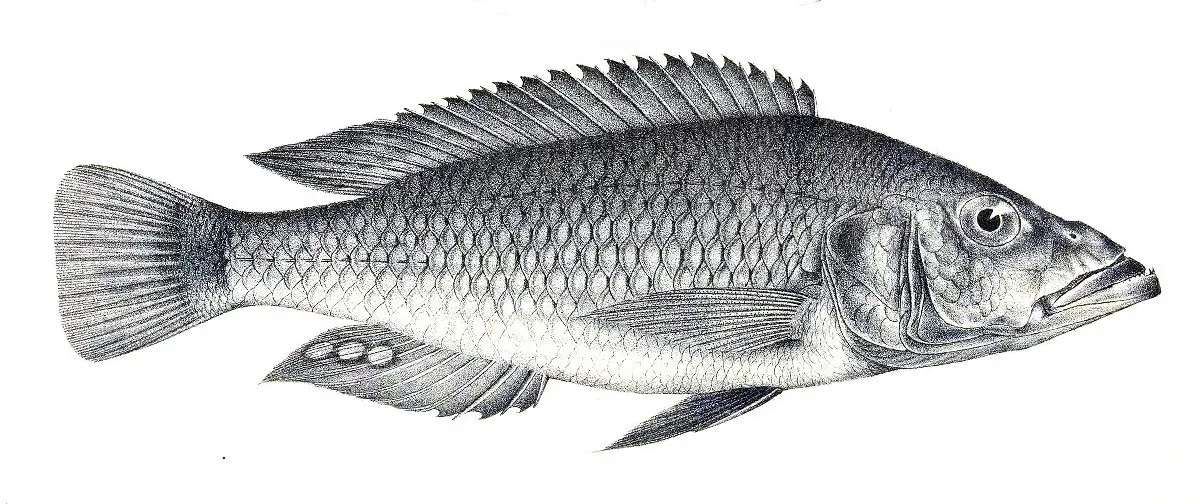
Haplochromis longirostris is a small cichlid fish from Lake Victoria in East Africa. The IUCN Red List assessed it as Critically Endangered in 2010 and flagged it as possibly extinct. It belonged to a huge group of lake cichlids, many of which vanished from parts of the lake in the 1980s.
How to recognise it
This is a modest fish, reaching about 14.5 cm in standard length (body length without the tail fin). It was described by the German zoologist Franz Hilgendorf in 1888, under the name Paratilapia longirostris. It was later placed in a separate genus, Prognathochromis, but that name is now treated as a synonym.
A 2022 monograph on fish-eating haplochromines describes it as a pelagic (open-water) fish with a shallow body and small teeth in its jaws.
Where it lived
The species is endemic to Lake Victoria, which means it was found nowhere else. The IUCN lists Uganda and Tanzania as the countries where it is possibly extinct. It records a single location, an extent of occurrence of 68,800 square kilometres, and permanent freshwater lake as the habitat.
One extinction database gives Kenya as well and a last record from 1985.
Pins are Wikidata “endemic to” fields. Orange dots, when present, are GBIF occurrence tiles — survey bias included.
How it lived
Taxonomists classify it among the lake's fish-eating haplochromines. The 2022 monograph cites earlier work from 1982 reporting that H. longirostris fed on both fishes and insects in open water.
Lake Victoria's haplochromines filled almost every feeding role, including detritus eaters, plankton feeders, insect eaters, snail eaters and predators of other fish.
Why it is in trouble
More than 500 haplochromine species once lived in Lake Victoria, making up over 80% of the fish by mass. In the 1980s the haplochromines of the shallow offshore waters of the Mwanza Gulf vanished almost completely. That decline coincided with the rise of the introduced Nile perch and with worsening nutrient pollution, which brought more algal blooms, less oxygen and murkier water.
The IUCN assessment lists sewage, soil erosion and sediment, an introduced species and hybridisation among the pressures on this species, and records its population as decreasing. It rates each threat as low impact, which sits oddly beside the possibly extinct flag and reflects how little recent information exists.
What is being done
The IUCN records no conservation measures in place for this species. Its assessment lists actions such as site protection, habitat restoration, harvest management and education.
There is some hope in the wider picture. After Nile perch stocks fell in the second half of the 1990s, a number of haplochromine species recovered in the Mwanza Gulf, according to a 2015 study. Whether H. longirostris is among those that survive is not known.
Sources
Written for this catalog in our own words from the sources below, checked against them on 12 November 2026. Population figures are estimates and carry the year they were made. Status and assessment year: IUCN. 2026. The IUCN Red List of Threatened Species. Version 2026-1. iucnredlist.org.