Critically Endangered
Haplochromis latifasciatus
Haplochromis latifasciatus
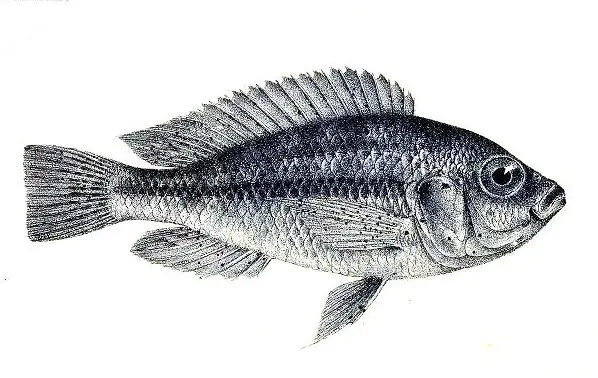
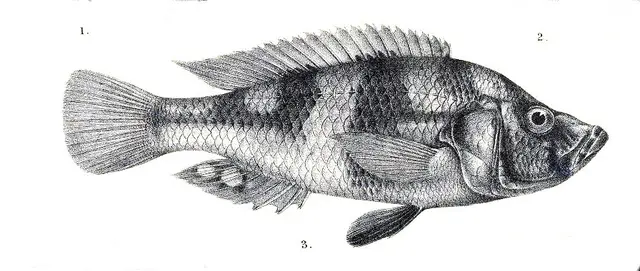
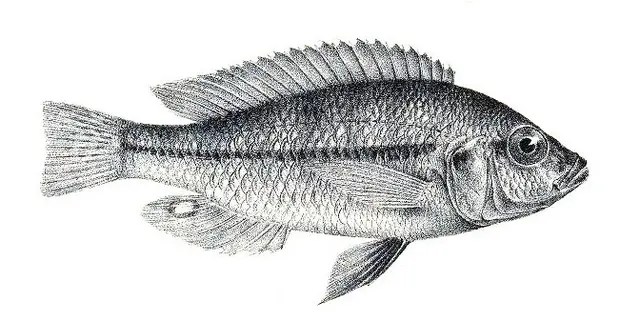
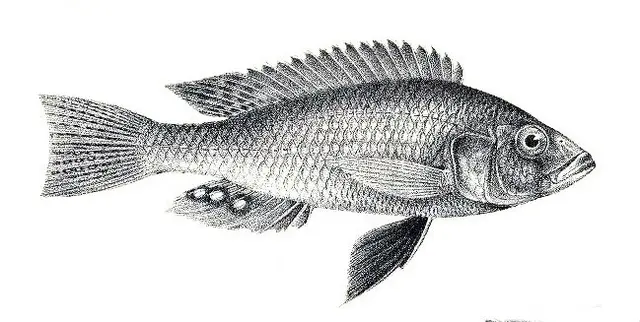
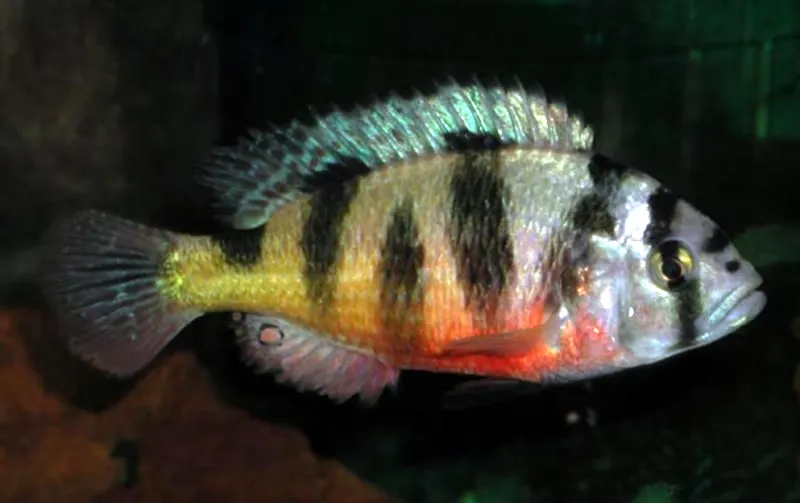
Haplochromis latifasciatus, now usually placed in the genus Astatotilapia, is a small cichlid found only in Uganda's Lake Kyoga system. Its range includes Lake Bisina and Lake Nawampasa. The IUCN listed it as Critically Endangered in 1996, a rating that has not been revised since.
What kind of fish it is
This is a cichlid of the haplochromine group, described by Regan in 1929 as Haplochromis latifasciatus. It has since been moved to the genus Astatotilapia as Astatotilapia latifasciata, and both names turn up in the literature. The IUCN still carries it under the older name.
It can grow to about 11 cm (4.3 in) in total length.
Where it lives
It is endemic to Uganda and restricted to the Lake Kyoga system. That includes Lake Bisina, a medium-sized lake east of Kyoga, and Lake Nawampasa, a small lake to the southeast that is separated from Kyoga by a thin strip of swamp. The IUCN lists its habitat as permanent freshwater lakes larger than 8 hectares.
Lake Kyoga itself is a large, very shallow lake of about 1,720 square kilometres, mostly under 4 m deep, ringed by papyrus swamp and wetlands.
Pins are Wikidata “endemic to” fields. Orange dots, when present, are GBIF occurrence tiles — survey bias included.
Why it is in trouble
The 1996 IUCN assessment, under criterion A1acde+2ce, rates it Critically Endangered. The structured record lists no individual threats and no population trend, so the cause behind this species' rating is not spelled out.
The wider picture in Kyoga is clearer, though it concerns the lake's haplochromine cichlids as a group and is not a finding about this species alone. The introduced Nile perch, a large predator, is blamed for the decline of fish diversity in Lake Kyoga, and some native cichlids are already extinct. Catches now consist mainly of the Lake Victoria sardine, Nile perch and Nile tilapia, and in 2006 haplochromines made up only about 4% of the catch.
What is being done
The IUCN record lists no conservation actions for this species. Some of the small satellite lakes that Nile perch has not reached still hold rich cichlid faunas. Lemwa and Nyaguo each have at least 50 haplochromine species and Nawampasa at least 60, against about 5 in Nyasala, where Nile perch is abundant. A 2000 chapter by Ogutu-Ohwayo and Ndawula on surveys of such lakes reported that the swamps separating such lakes from the main lakes act as a barrier to the predator, and recommended that many of the lakes be protected to conserve fish diversity.
The fish is also reportedly kept by aquarists and breeds easily in captivity. It is often sold as "zebra obliquidens", a trade name that can cause confusion with a different Lake Victoria species.
Sources
Written for this catalog in our own words from the sources below, checked against them on 12 November 2026. Population figures are estimates and carry the year they were made. Status and assessment year: IUCN. 2026. The IUCN Red List of Threatened Species. Version 2026-1. iucnredlist.org.