Critically Endangered
Haplochromis ishmaeli
Haplochromis ishmaeli
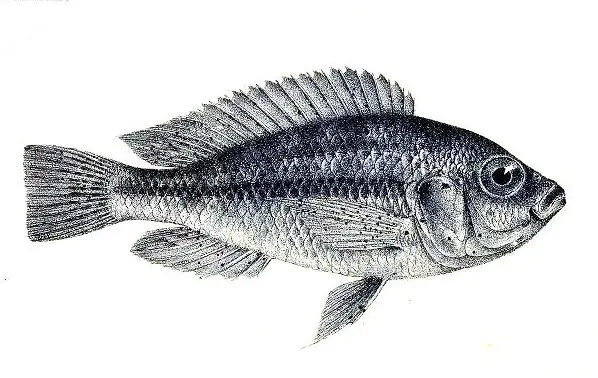
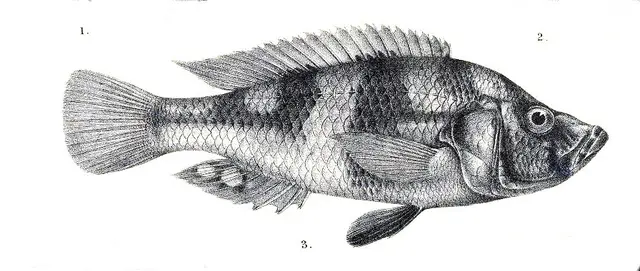
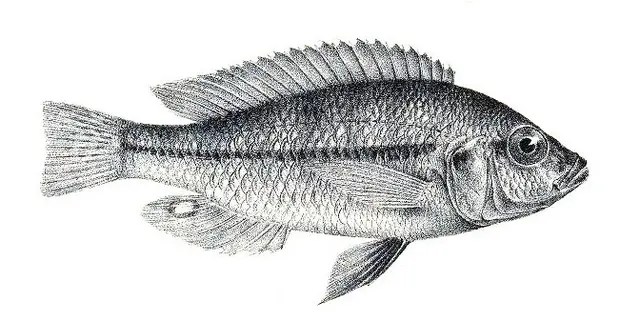
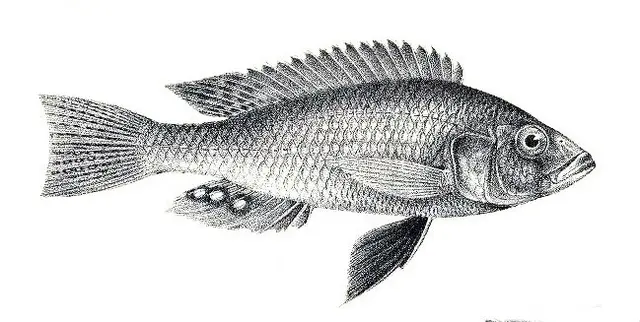
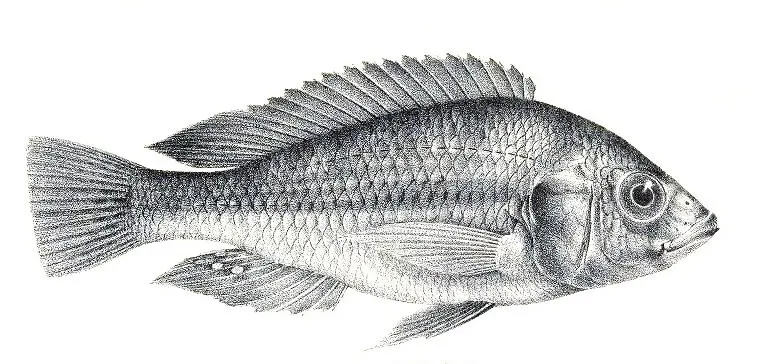
Haplochromis ishmaeli is a mollusc-eating cichlid fish from Lake Victoria in East Africa. It was described in 1906, and the IUCN Red List rated it Critically Endangered in 2010 while flagging it as possibly extinct. One database gives 1991 as the last record of it in the lake.
How to recognise it
It is a mid-sized haplochromine cichlid, reaching about 13.6 cm in standard length. George Boulenger described it in 1906 from fishes collected in Lake Victoria by the ornithologist Edward Degen. The species name honours George Ishmael, an interpreter in Entebbe who helped Degen in Uganda. Some references file it under the genus Labrochromis.
Where it lives
The IUCN assessment lists Uganda, Kenya and Tanzania, each with presence marked as possibly extinct, counts one location and gives permanent freshwater lake as the habitat. FishBase describes a fish of inshore waters down to about 9 metres, found over soft mud and rarely caught over sand or shingle.
Pins are Wikidata “endemic to” fields. Orange dots, when present, are GBIF occurrence tiles — survey bias included.
How it lives
Fish between about 8 and 13.5 cm have been found to feed almost entirely on molluscs, with insects eaten only by accident. Females brood their eggs in the mouth, as other haplochromines do. FishBase rates its ability to rebound from losses as high, with a population able to double in under 15 months, though that figure is an estimate from the fish's traits rather than field counts.
Why it is in trouble
Lake Victoria holds more than 500 haplochromine species, nearly all found nowhere else. The Nile perch, introduced in the 1950s, had spread throughout the lake by 1970 and peaked in the 1980s. Estimates suggest at least 200 haplochromines, about 40 percent, have been lost, although some feared extinct were later rediscovered. Nutrient enrichment adds to the pressure.
For this fish the assessment records a decreasing population trend. The threats it lists are fishing, introduced species, problem native species, and wastewater from towns, industry and agriculture. It also notes use as human food. No population estimate exists.
What is being done
The 2010 assessment lists no conservation actions in place and is marked as needing an update. Public aquariums in the United States began holding Lake Victoria haplochromines in the late 1980s. A captive insurance population of this species is reportedly kept, based on a single 2015 aquarium society citation, and no source opened names holders or numbers.
Sources
Written for this catalog in our own words from the sources below, checked against them on 12 November 2026. Population figures are estimates and carry the year they were made. Status and assessment year: IUCN. 2026. The IUCN Red List of Threatened Species. Version 2026-1. iucnredlist.org.