Endangered
Balan spiny crayfish
Euastacus balanensis
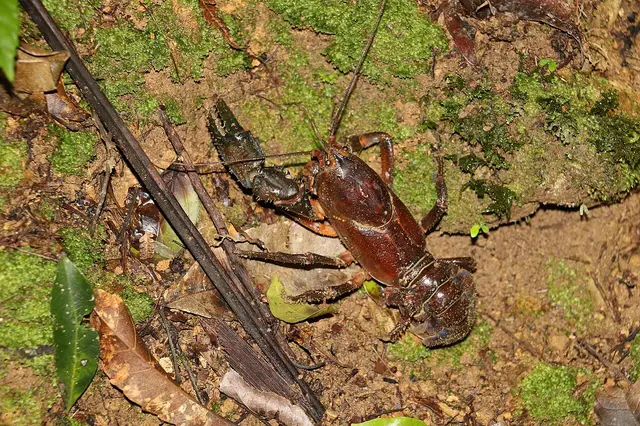
The Balan spiny crayfish (Euastacus balanensis) is a small freshwater crayfish of cool upland rainforest streams in far north Queensland, Australia. The IUCN Red List assessed it as Endangered in 2010. Its habitat is fragmented, its numbers appear to be low, and little research has been done on it.
How to recognise it
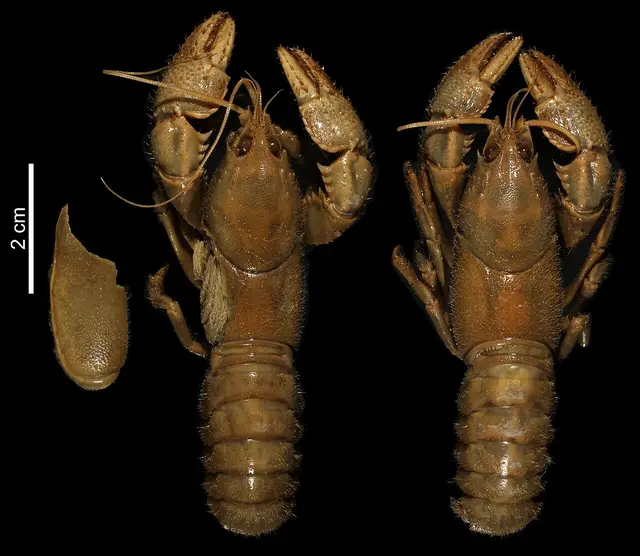
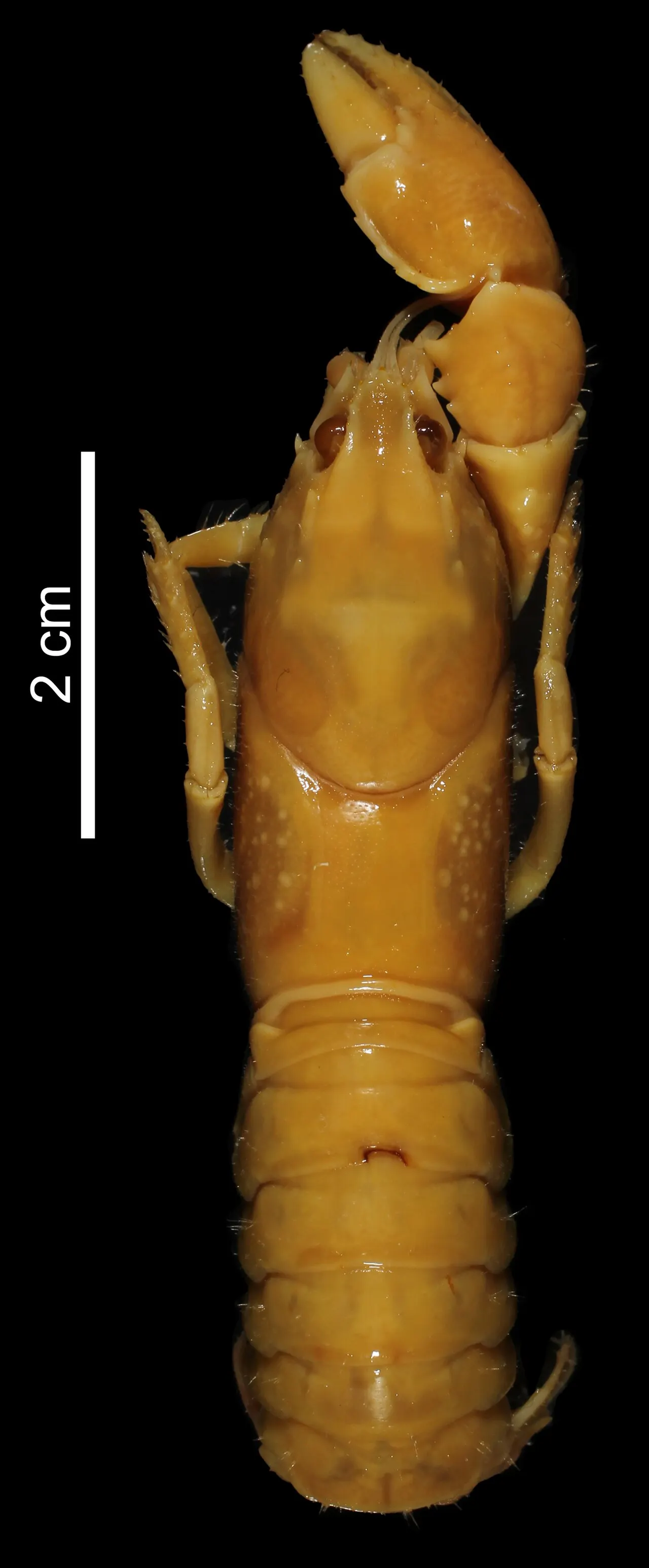
Euastacus balanensis was described by Morgan in 1988. It belongs to the dwarf group of spiny crayfish, and no adult measurements turned up in the sources available. Colour varies. Green and orange animals have been collected from the same stream, and it is unclear whether that is true variation or a matter of how recently they moulted, since a fresh shell is paler and takes weeks to darken.
One reported identification clue is a set of three spines along the inner edge of the claw's wrist, with the largest spine, the one furthest along, set apart from the other two.
Where it lives
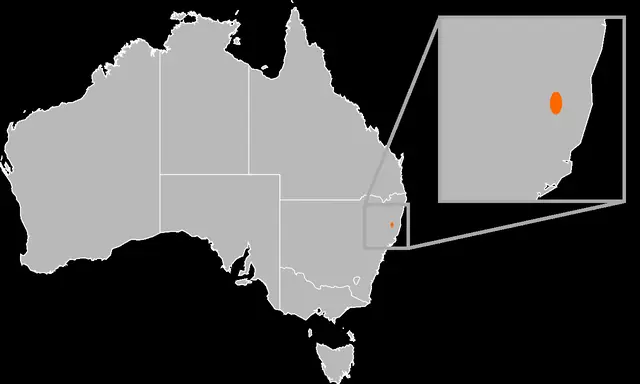
The species lives in highland rainforest in far north Queensland. Records come from the Atherton Tableland, west of Cairns, and the Bellenden Ker Range, and from the catchments of the Russell River, Mulgrave River, Davies Creek and Kauri Creek. The IUCN records it only from Queensland and from about 700 m upward. The Austcray crayfish site puts it above about 750 m and says it is more plentiful at higher altitudes.
It favours the margins of creeks and small feeder streams, where it digs deep, extensive burrows. It usually avoids large streams except when moving through them during floods, and it travels overland along streamside zones. It has also been found in streams with no surface flow but water running below ground. Its habitat needs are still poorly understood.
Pins are Wikidata “endemic to” fields. Orange dots, when present, are GBIF occurrence tiles — survey bias included.
Why it is in trouble
The IUCN lists the species as Endangered because its habitat is severely fragmented and its extent of occurrence is under 5,000 square kilometres. Austcray describes the distribution as reasonably wide but says total numbers appear very low. The population trend is unknown.
It lives in cool, high-altitude streams, the kind of habitat climate change threatens. A 2016 study in Proceedings of the Royal Society B on Euastacus crayfish and the flatworms that live on them described the Queensland populations as confined to mountain-top streams in high-rainfall rainforest, and counted 27 of the 36 IUCN-assessed species as threatened. That study does not single out this species.
The assessment lists future threats from drought, temperature extremes, habitat change and more frequent or intense fires. Introduced cane toads, red foxes, pigs and feral cats are also listed as pressures, though the impact of each is unscored. Small-scale harvest is listed too, with unknown timing and effect.
What is being done
The species occurs in at least one protected area, and a harvest management plan is recorded as in place. In Queensland, spiny crayfish of the genus Euastacus are fully protected, with exceptions for four species that do not include this one. The IUCN lists research on its population trends, population size, distribution and life history as the main needs, and Austcray says more research is badly needed.
Sources
Written for this catalog in our own words from the sources below, checked against them on 12 November 2026. Population figures are estimates and carry the year they were made. Status and assessment year: IUCN. 2026. The IUCN Red List of Threatened Species. Version 2026-1. iucnredlist.org.