Endangered
Ellen Clark's crayfish
Euastacus clarkae
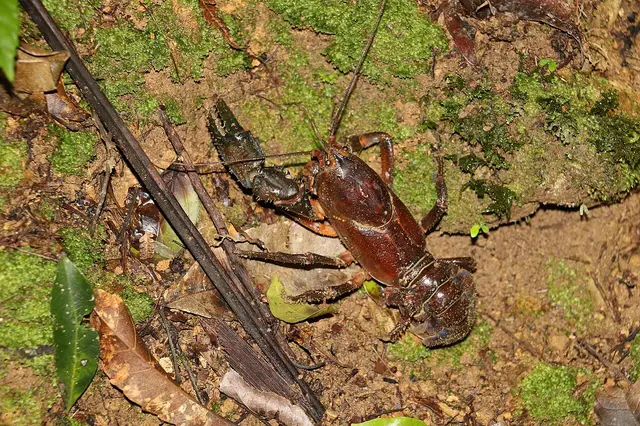
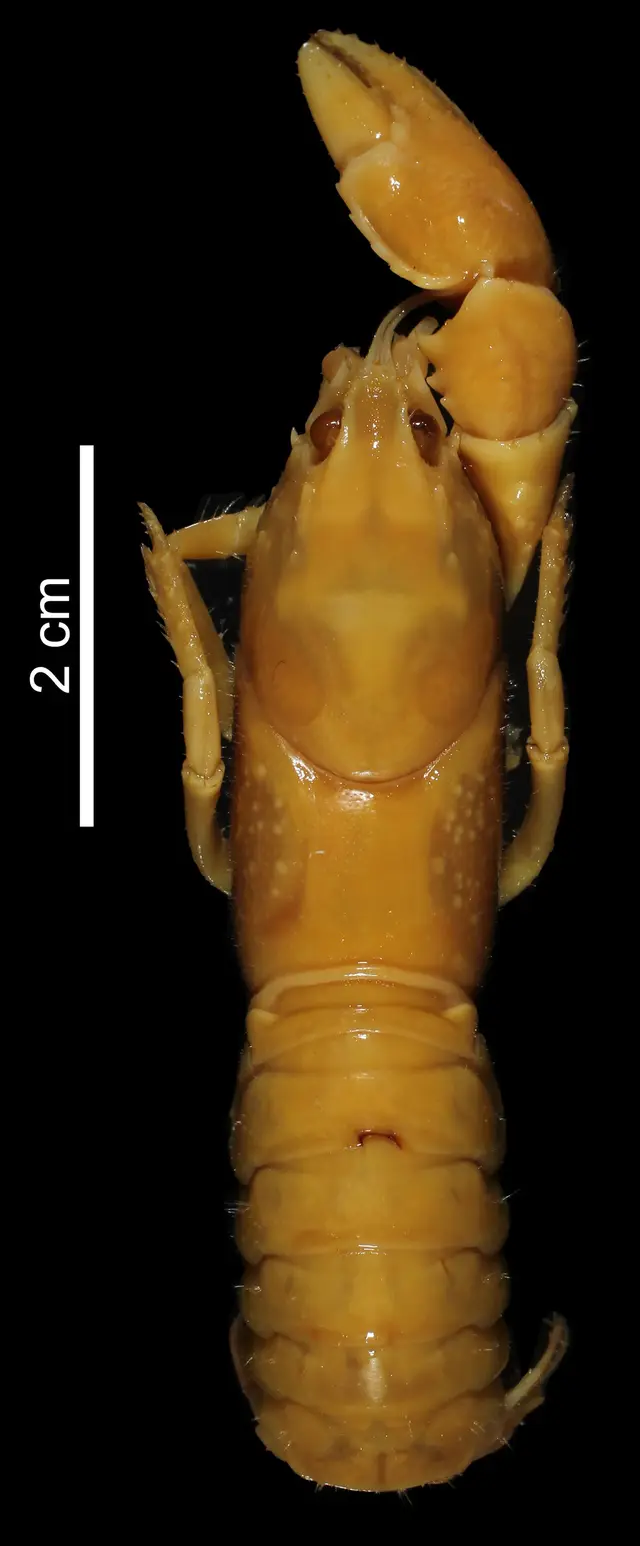
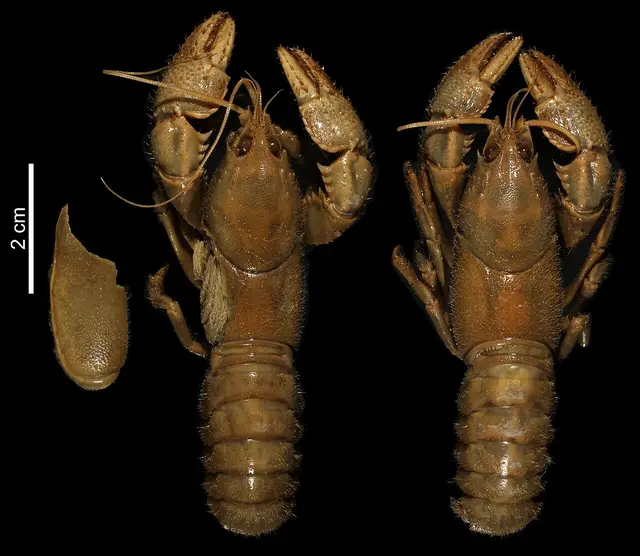
Ellen Clark's crayfish (Euastacus clarkae) is a spiny freshwater crayfish found only in the headwater streams of a plateau in New South Wales, Australia. The IUCN Red List rated it Endangered in 2015, after an earlier Critically Endangered listing, and its whole range covers about 200 square kilometres.
Where it lives
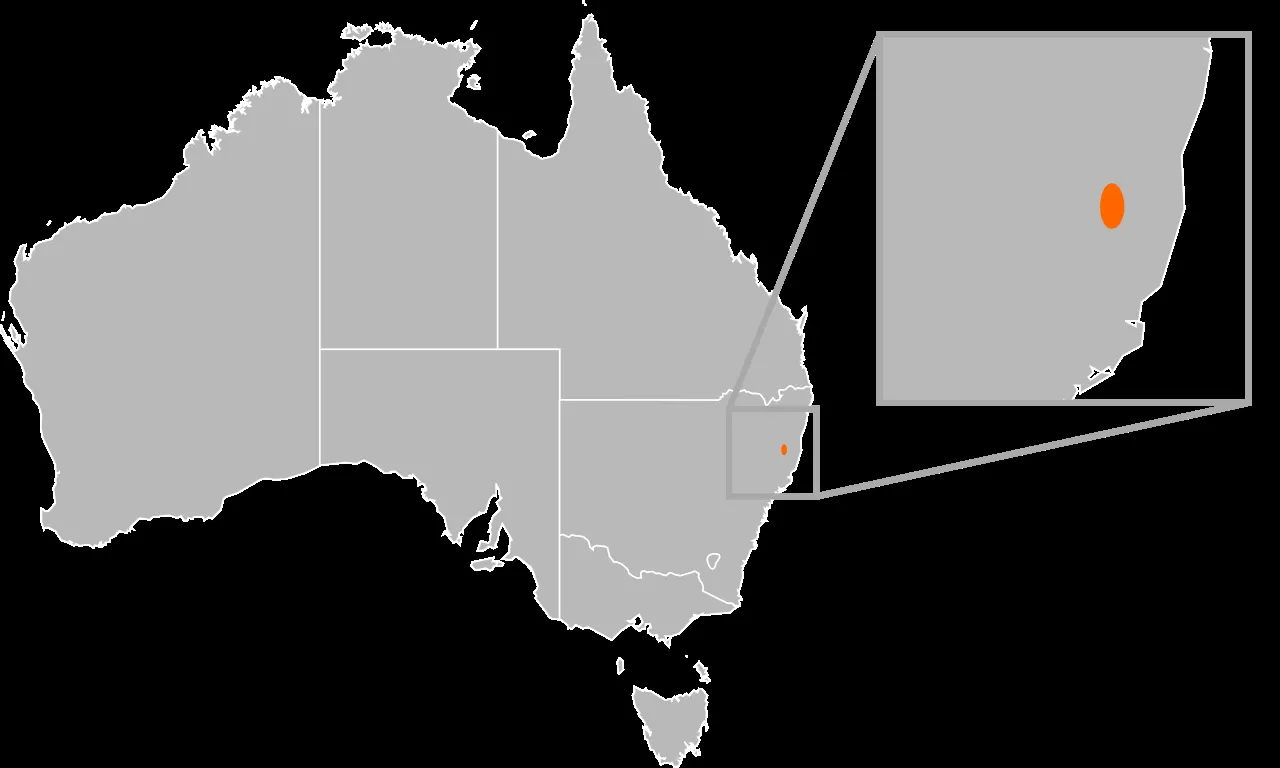
This crayfish is restricted to the upper reaches of highland streams that drain the plateau and feed the Hastings and Forbes rivers. It occurs between 670 and 1,150 m above sea level, in dry and moist montane forest around permanent streams.
Most of its range lies inside Werrikimbe National Park, within the Gondwana Rainforests of Australia World Heritage Area. The IUCN puts its extent of occurrence at 198 square kilometres and the area it actually occupies at 68 square kilometres, across one or two locations.
Pins are Wikidata “endemic to” fields. Orange dots, when present, are GBIF occurrence tiles — survey bias included.
A small discovery with a long wait
The species was described in 1997 by Morgan from a handful of juveniles collected at a single site in 1981, and it is named for Ellen Clark, a pioneer of parastacid crayfish studies. For years that was nearly all anyone knew.
The Australian Crayfish Project then surveyed the whole Hastings River catchment, about 3,846 square kilometres, between 2005 and 2012. It found the crayfish locally abundant within Werrikimbe National Park. A 2013 grant from the Mohamed bin Zayed Species Conservation Fund and support from the New South Wales National Parks and Wildlife Service backed the work.
How it lives
Like other spiny crayfish, it digs burrows. All of this species' burrows reportedly fall in the category that is in or connected to permanent water, rather than ones tied to the water table.
Why it is in trouble
The 2010 Red List assessment was Critically Endangered. The survey results, published by Robert McCormack in 2015 in the Journal of Crustacean Biology, led to a recommendation to move it down to Endangered, and the 2015 assessment rates the population trend as stable.
That does not make it safe. A range this small can be hit by a single event. The IUCN lists increased fire frequency and intensity, recreational activity and small-scale harvest as ongoing pressures, and drought and temperature extremes as future risks. It also records a continuing decline in habitat area.
Sources
Written for this catalog in our own words from the sources below, checked against them on 12 November 2026. Population figures are estimates and carry the year they were made. Status and assessment year: IUCN. 2026. The IUCN Red List of Threatened Species. Version 2026-1. iucnredlist.org.