Critically Endangered
Round Rocksnail
Elimia ampla
Elimia ampla, the ample elimia, is a freshwater snail found only in Alabama, in the Cahaba River system. The IUCN Red List rated it Critically Endangered in 2012 and judged its population to be shrinking. It lives at a single location, and its name is easily mixed up with a federally protected relative.
What it is
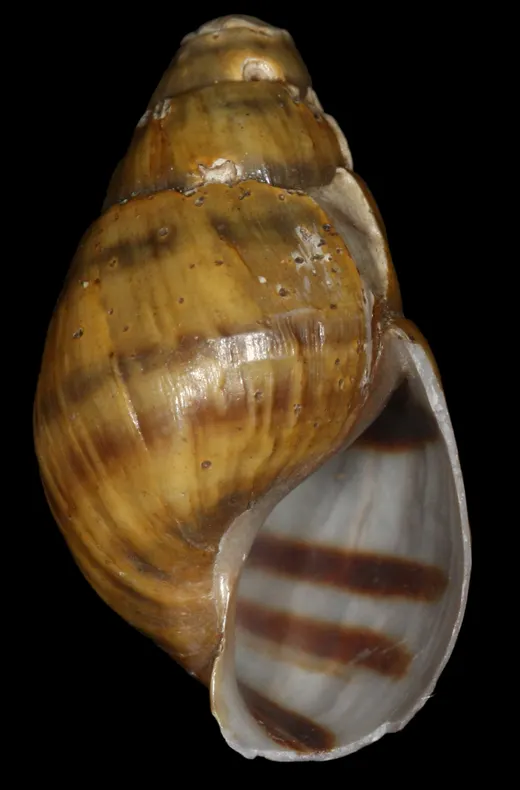
Elimia ampla, the ample elimia, is a freshwater snail in the family Pleuroceridae. John Gould Anthony described it in 1854 under the name Melania ampla. The original shell material survives as a lectotype (specimen MCZ 161735) at the Museum of Comparative Zoology, and a 2012 paper in PLoS ONE published a photograph of it.
The Red List's main English name is ample elimia, and it also lists round rocksnail as a second common name. That causes trouble. The federally threatened round rocksnail is Leptoxis ampla (Anthony, 1855), a different snail. The 2012 PLoS ONE survey of Cahaba River snails found both Elimia ampla and Leptoxis ampla at its sites and treats them as separate species, so the scientific name is the safe way to tell them apart.
Where it lives
Elimia ampla is endemic to Alabama. Outdoor Alabama's guide to the state's snails places it in the Cahaba River system, describes it as uncommon, associates it with flowing water, and rates its conservation concern as high. The Red List assessment records one location and gives its habitat as permanent rivers, streams and creeks.
The assessment put the extent of occurrence at under 100 square kilometres and the area actually occupied at about 16 (2012 figures). Beyond that, little has been published about its shell, diet or breeding.
Pins are Wikidata “endemic to” fields. Orange dots, when present, are GBIF occurrence tiles — survey bias included.
Why it is in trouble
The 2012 assessment recorded continuing declines in the snail's range, in the area it occupies and in its number of locations. Sewage and dams are listed as ongoing threats, drought as a future one, along with other pressures of unrecorded type.
It has plenty of company in the red. Outdoor Alabama lists 55 Elimia species in the state, most of them found in only one river system, and marks 14 as extinct. Most of those were endemic to the Coosa River and have not been reported since it was impounded. Snails that depend on flowing, shoal habitat have few places to go once a river is dammed or fouled.
What is being done
No conservation measures were recorded as in place when the species was assessed in 2012. The assessment's list of needed actions includes species recovery, site protection and management, habitat restoration, captive breeding and reintroduction. Those are recommendations, not programmes already running.
Sources
Written for this catalog in our own words from the sources below, checked against them on 12 November 2026. Population figures are estimates and carry the year they were made. Status and assessment year: IUCN. 2026. The IUCN Red List of Threatened Species. Version 2026-1. iucnredlist.org.