Critically Endangered
Lily Shoals elimia
Elimia annettae
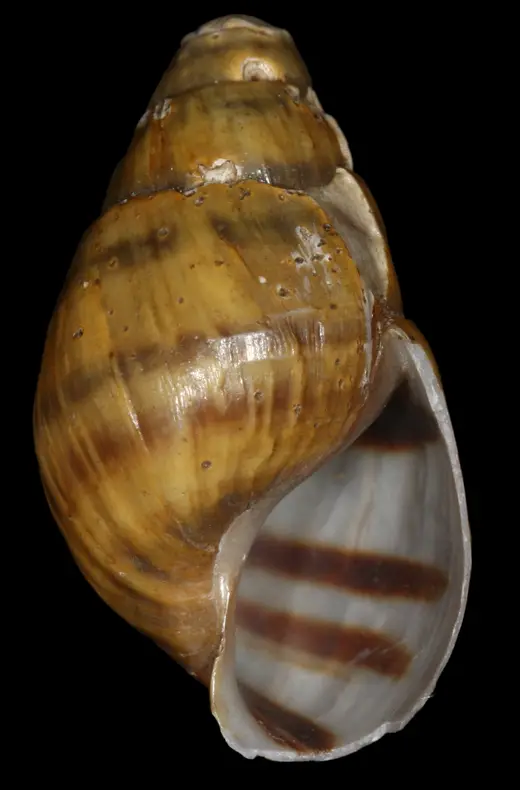
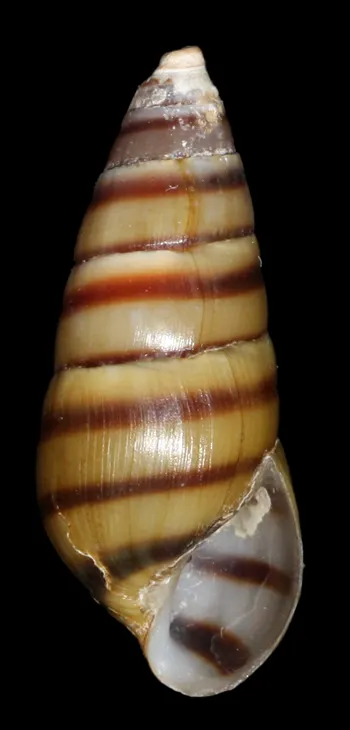
The Lily Shoals elimia (Elimia annettae) is a small freshwater snail that lives only in the Cahaba River in Bibb County, Alabama. The IUCN Red List classed it as Critically Endangered, in an assessment dated 1996. It is a river snail with a trapdoor-like operculum, and very little has been published about it.
What kind of animal it is
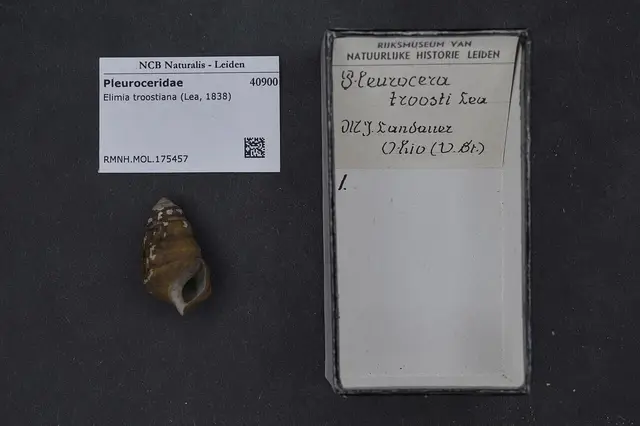
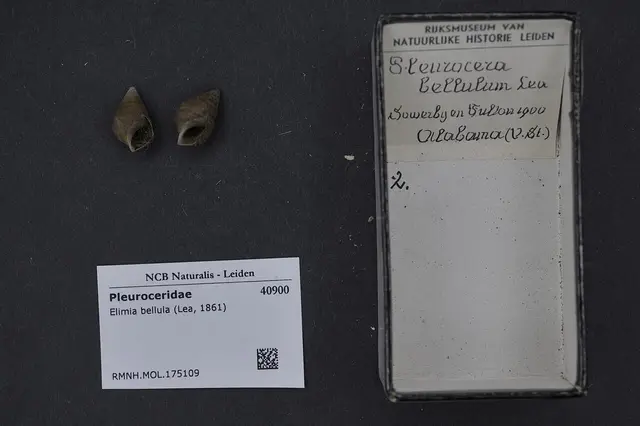
Elimia annettae is a freshwater snail in the family Pleuroceridae, the group often called hornsnails, riversnails and rocksnails. It was described by Goodrich in 1941 under the name Goniobasis annettae, and the genus Elimia now covers it. A preserved lectotype, the reference specimen for the name, is catalogued as UMMZ 128908.
Pleurocerids typically have sturdy, high-spired shells with a thin, coiled operculum, the plate that closes the shell opening. Adults can breed more than once, and females lay eggs on a firm surface. The young hatch as miniature snails, with no drifting larval stage. Most of the family needs unpolluted rivers and streams, which matters for a snail with a very small range.
Where it lives
Outdoor Alabama, the state wildlife agency's site, lists the species as endemic to the Cahaba River in Bibb County. It is usually found in flowing water, is described as uncommon, and is ranked of high conservation concern. Its name matches Lily Shoals, a site on the central Cahaba where researchers collected it in 2011.
The Cahaba is one of the better places left for these snails. When researchers rediscovered the oblong rocksnail, Leptoxis compacta, in the central Cahaba in May 2011, they recorded nine pleurocerid snails at that site, Lily Shoals elimia among them. The Alabama and Coosa river systems are the modern centre of pleurocerid variety.
Pins are Wikidata “endemic to” fields. Orange dots, when present, are GBIF occurrence tiles — survey bias included.
Why it is in trouble
The 1996 IUCN assessment, made under the older 2.3 version of the Red List rules, gives the species a Critically Endangered rating under criteria A1ce+2e. It records the United States as its only range and freshwater as its system, but lists no population size, trend or named threats, so the account is brief.
The wider picture for Mobile River Basin snails is grim. A 2012 paper on the oblong rocksnail's rediscovery counted at least 47 mollusc extinctions in the basin, including about 29 pleurocerids. It named reservoirs flooded for hydropower, channelisation and pollution from mines and cities as major drivers, mostly in the mid-20th century. A species confined to one river reach can be hit hard by a single spill or a long decline in water quality.
What is being done
The IUCN entry lists no conservation actions, and the Alabama agency's entry records only the high level of concern. Nothing in the sources opened describes a recovery plan, captive breeding or a population count for this snail. Clean water in the Cahaba is what a snail with this range depends on.
Sources
Written for this catalog in our own words from the sources below, checked against them on 12 November 2026. Population figures are estimates and carry the year they were made. Status and assessment year: IUCN. 2026. The IUCN Red List of Threatened Species. Version 2026-1. iucnredlist.org.