Critically Endangered
Elimia troostiana
Elimia troostiana
The mossy elimia (Elimia troostiana) is a small freshwater snail known only from Mossy Creek in Jefferson County, Tennessee. The IUCN Red List rated it Critically Endangered in 2011 and flagged it as possibly extinct, but a biologist collected six specimens from the creek in spring 2019.
How to recognise it
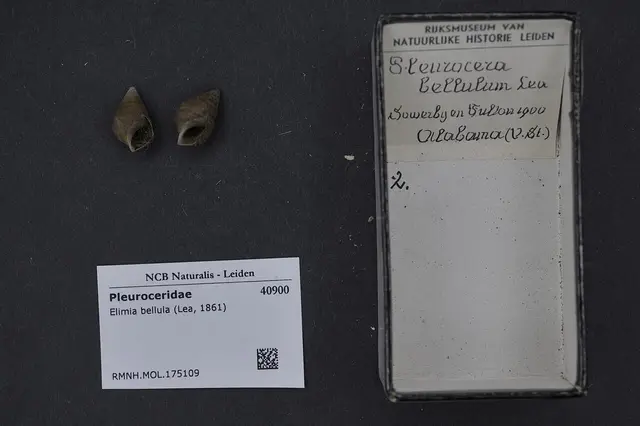
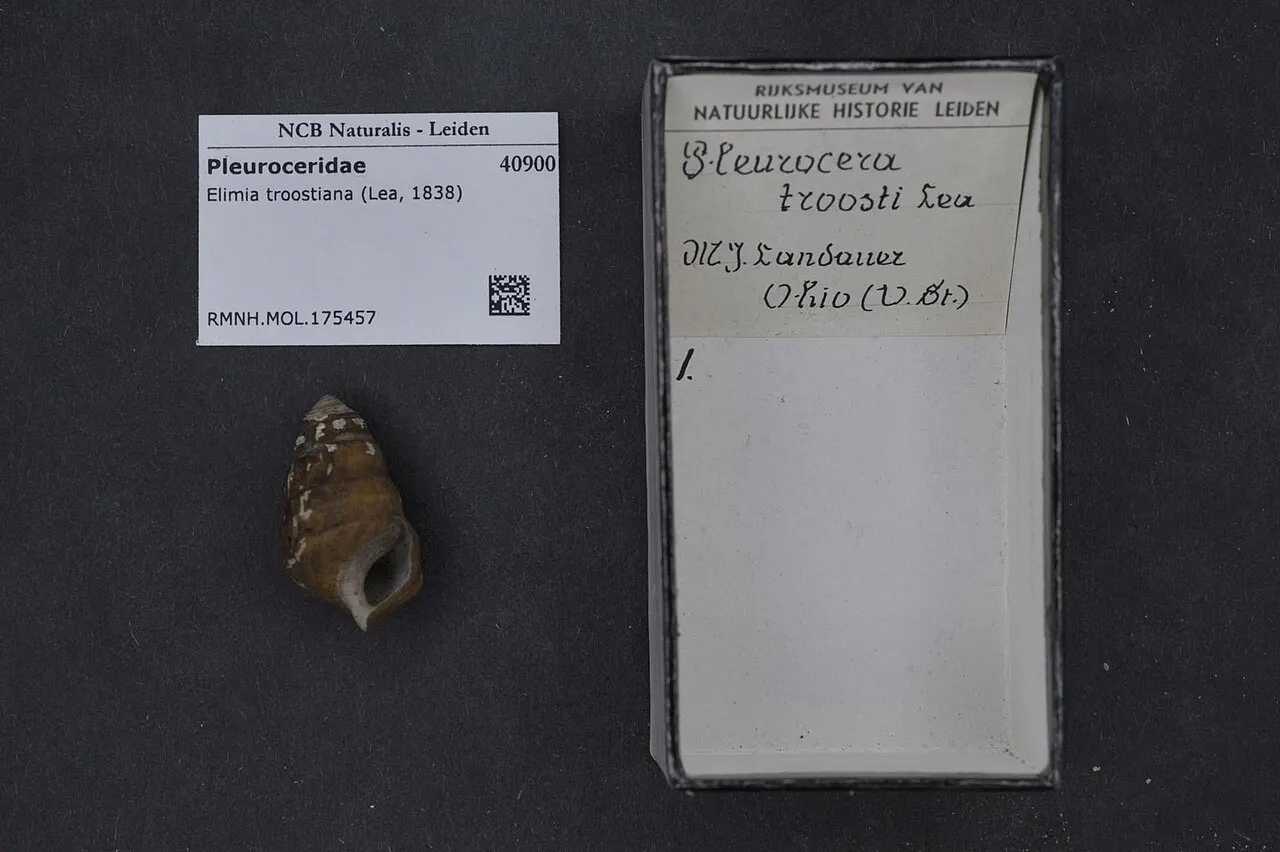
It is a river snail of the family Pleuroceridae, with a lid-like operculum. Its shell is variable. In a 2019 sample of six shells from the creek, all were finely ridged, and two were so strongly ridged that a keel formed, much like the figure in the original description.
Isaac Lea described it as Melania troostiana in 1838, after first reading a short Latin description to the American Philosophical Society in November 1836. The publication date of the fuller English account is given as 1838, 1839 or 1841 depending on the source. Some freshwater snail specialists now place it in the genus Pleurocera.
Where it lives
The creek is roughly 10 km long, drains through Jefferson City and flows into Cherokee Reservoir. The IUCN gives the habitat as permanent rivers and streams, with a single location and an area of occupancy of 0.4 to 4 square km.
Old museum lots in GBIF carry labels from Mossy Creek and Jefferson City, along with a few from other Tennessee localities.
Pins are Wikidata “endemic to” fields. Orange dots, when present, are GBIF occurrence tiles — survey bias included.
Why it is in trouble
A 2019 account by malacologist Rob Dillon describes the catchment as a mix of overgrazed pasture and dusty rock quarries, and the creek as suffering decades of erosion, sediment and nutrient enrichment. In summer 2011 he found no pleurocerid snails at the few access points he tried. In spring 2019, at the Old Andrew Johnson Highway bridge, he collected six.
The IUCN lists the population trend as decreasing and flags the species as possibly extinct, with no threats recorded. NatureServe ranks it as Critically Imperiled.
What is being done
The Red List assessment records no conservation actions. The sources checked show no protection plan, captive population or regular monitoring for this snail.
Sources
Written for this catalog in our own words from the sources below, checked against them on 12 November 2026. Population figures are estimates and carry the year they were made. Status and assessment year: IUCN. 2026. The IUCN Red List of Threatened Species. Version 2026-1. iucnredlist.org.