Endangered
Conus xicoi
Conus xicoi
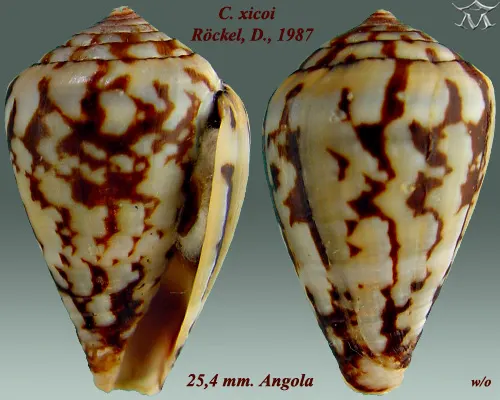
Conus xicoi is a small cone snail found only in shallow water off Angola. The IUCN Red List rated it Endangered in 2025, citing a very small range, a population judged to be declining, and pressure from sewage and run-off along a developing coast.
How to recognise it
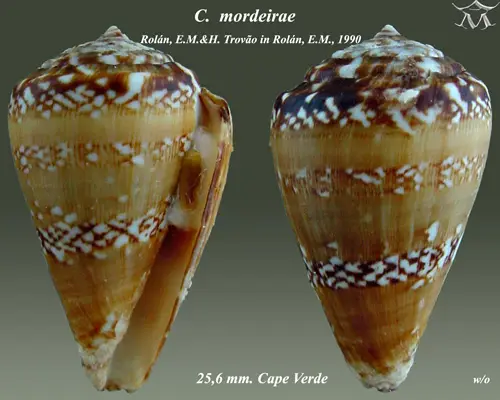
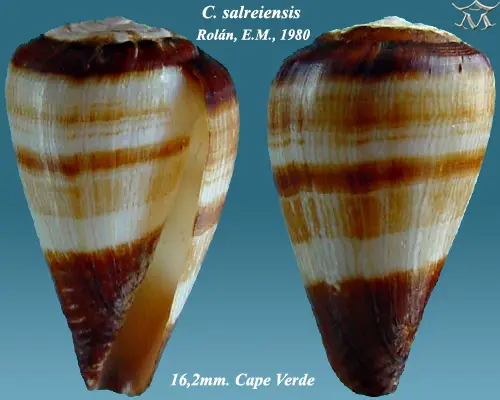
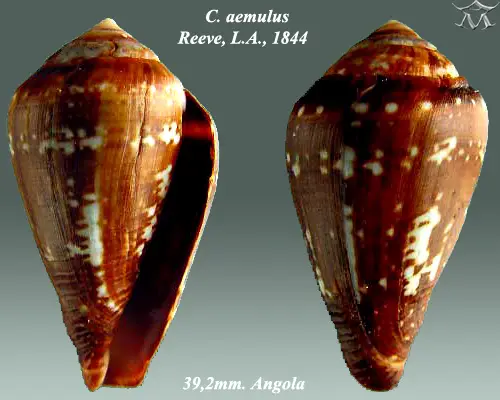
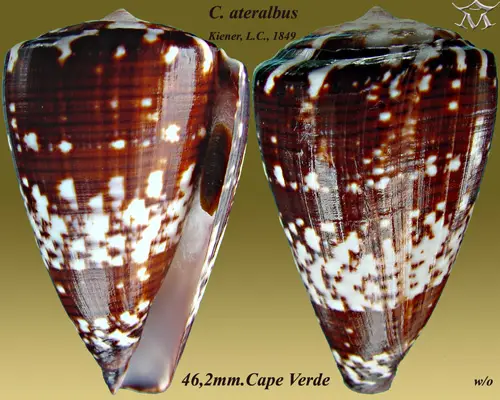
It's a sea snail in the cone snail family (Conidae). Its shell is reportedly 16 to 32 mm long. Like other cone snails it is a predatory, venomous animal, and live ones should be handled carefully or not at all.
The German shell specialist Dieter Röckel described it in 1987. It has also been placed under the names Conus (Lautoconus) xicoi and Varioconus xicoi.
Where it lives
The species is endemic to Angola, in the south-east Atlantic. The IUCN assessment records it at a single location, with an extent of occurrence of about 150 square km and an area of occupancy of about 88 square km.
It lives in shallow water, from the surface down to about 5 m, on rocky reefs and sandy bottoms below the tide line. It is not a migrant. SeaLifeBase describes it as a bottom-dwelling snail that doesn't release eggs into open water, which fits a species that stays in a small area.
Pins are Wikidata “endemic to” fields. Orange dots, when present, are GBIF occurrence tiles — survey bias included.
Why it is in trouble
The IUCN names two ongoing threats, each affecting most of the range: run-off and sewage. Both degrade the shallow habitat the snail depends on. The assessment records a continuing decline in the area it occupies and an overall decreasing population.
Cone snail shells are collected, and the assessment lists international specimen collecting among the uses of this species. The scale of that collecting is not quantified.
What is being done
No conservation measures are recorded. The snail doesn't occur in any protected area, and no conservation sites have been identified for it. The assessment lists research needs: population size, distribution and trends, threats, and harvest and use.
Sources
Written for this catalog in our own words from the sources below, checked against them on 12 November 2026. Population figures are estimates and carry the year they were made. Status and assessment year: IUCN. 2026. The IUCN Red List of Threatened Species. Version 2026-1. iucnredlist.org.