Endangered
Bigmouth Silverside
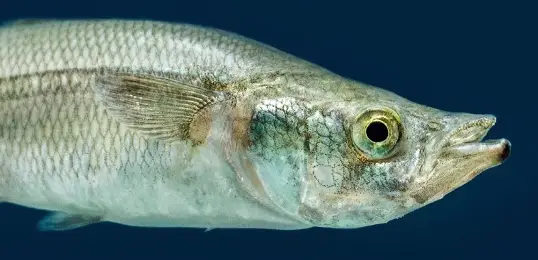
Chirostoma sphyraena
Chirostoma sphyraena is a large, fish-eating silverside from the Lake Chapala basin in western Mexico, one of the group locals call pescados blancos. The IUCN's 2019 assessment lists it as Endangered, with a decreasing population, a single location and a steep past decline.
What kind of fish it is
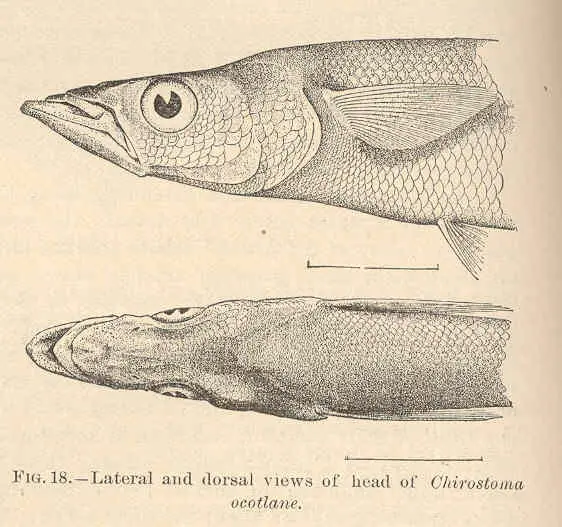
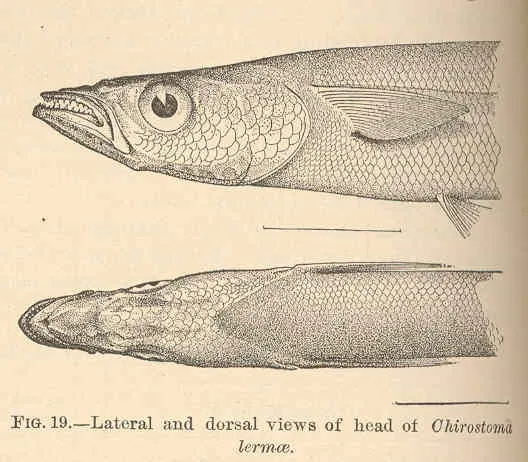
Silversides in the genus Chirostoma are slender freshwater fish endemic to central Mexico. This one was described by George Boulenger in 1900 from Lake Chapala, and the single holotype is held in the Natural History Museum collection in London. A 2015 study of Chapala's silversides calls it the second largest species in the genus.
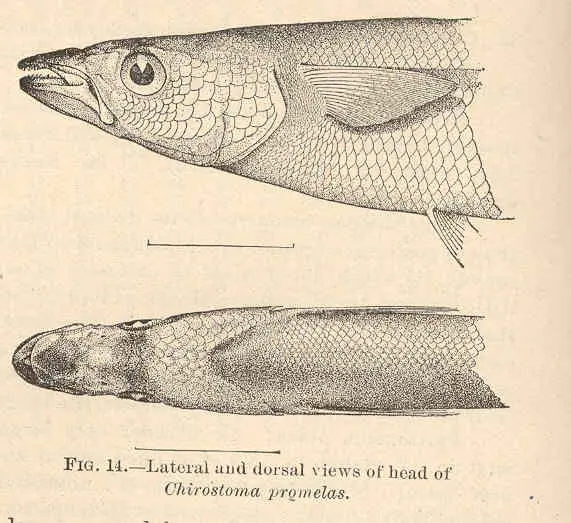
Along with Chirostoma promelas, it is one of the pescados blancos, as opposed to the charales, a group of three other Chapala silversides.
Where it lives
Its natural range is the Lake Chapala basin and the Lerma River basin in Mexico. The IUCN lists the states of Jalisco and Michoacán as native, with introduced records in Chihuahua and Durango. It treats the species as occurring in one location, with an extent of occurrence of about 1,407 km2, at an elevation of about 1,520 m.
The assessment names permanent freshwater lakes and permanent rivers and streams as its habitat. Lake Chapala is the largest lake in Mexico, about 1,100 km2 in area, but shallow, with a mean depth of roughly 4.5 m.
Pins are Wikidata “endemic to” fields. Orange dots, when present, are GBIF occurrence tiles — survey bias included.
How it lives
The pescados blancos eat other fish, especially as adults. In a 2015 study of Chapala silversides, nitrogen isotope values in muscle were the highest of any Chirostoma species sampled, which puts this one near the top of the lake's food web. That result rests on only two captured fish, one supplied by fishers, so no firm conclusion about its position was drawn.
Why it is in trouble
The IUCN records a decreasing population, a continuing decline in the number of locations and an estimated past reduction of 97 percent. It gives no time frame for that figure. Its stated basis is both levels of exploitation and loss of habitat extent and quality. The threats listed are sewage, subsistence and small-scale harvest, unintentional large-scale harvest, and the abstraction of surface water for domestic, commercial and agricultural use.
Silversides are described as the most important native fishery at Chapala, which also holds introduced fish such as common carp and tilapia. Those points concern the lake's silversides in general rather than this species alone.
What is being done
The IUCN records that the species occurs in at least one protected area and that conservation sites have been identified over its entire range. It lists no recovery programme, and no population count is given.
Sources
Written for this catalog in our own words from the sources below, checked against them on 12 November 2026. Population figures are estimates and carry the year they were made. Status and assessment year: IUCN. 2026. The IUCN Red List of Threatened Species. Version 2026-1. iucnredlist.org.