Endangered
Blacknose Silverside
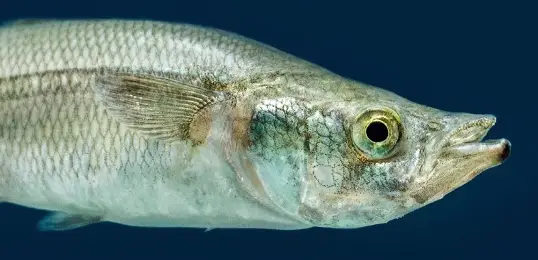
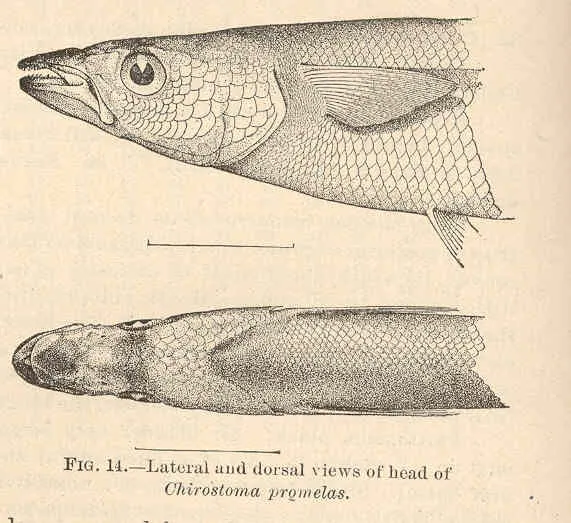
Chirostoma promelas
The blacknose silverside (Chirostoma promelas) is a freshwater fish from the lake and wetlands of west-central Mexico, around Lake Chapala. The IUCN Red List rated it Endangered in 2019 and records a past decline of about 97 percent. It belongs to the pescado blanco group of large silversides.
How to recognise it
Chirostoma silversides are known locally as small charales and larger pescados blancos. This species is one of the pescados blancos, which usually reach about 20 cm as adults, while charales usually measure 5 to 10 cm.
It was described in 1899 by David Starr Jordan and John Snyder, from fish bought at a market in Guadalajara that were said to come from Lake Chapala.
Where it lives
The IUCN lists the Mexican states of Jalisco and Michoacan, with 2 to 5 known locations, and puts its extent of occurrence at only about 2,300 square km. It lives in permanent freshwater lakes and in marshes and pools, at around 1,520 m above sea level.
Lake Chapala, Mexico's largest lake at about 1,100 square km, holds three pescados blancos (this one, Chirostoma lucius and C. sphyraena) alongside five or six charales.
Pins are Wikidata “endemic to” fields. Orange dots, when present, are GBIF occurrence tiles — survey bias included.
Why it is in trouble
An IUCN review of Mexican freshwater fish traces the decline of Chapala's pescados blancos to overfishing, hybridisation, habitat change, pollution and introduced species. Demand pushed their size and numbers down, especially after 1970. Large areas of the lake are infested with non-native water hyacinth, which forms thick mats and reduces habitat, and water extraction and pollution have also taken a toll.
The lake's whole fishery rose from about 1,000 tonnes a year in the 1930s to a peak of 17,700 tonnes in 1981, then fell to 3,200 tonnes by 2004. Those figures cover all species taken from the lake, not this one alone. Charales were so reduced by 2000 that official statistics no longer listed Chirostoma as a main fishery. The IUCN assessment adds groundwater extraction to the threats and says the decline continues.
Mexico's official list of endangered species also includes it.
What is being done
The assessment records a recovery plan in place and conservation sites identified over its whole range. It lists species recovery, site management and protection, habitat protection and control of problem species among the actions. Work across the Chapala watershed has aimed to improve water quality and quantity, and aquaculture projects have aimed at producing pescados blancos in captivity.
Sources
Written for this catalog in our own words from the sources below, checked against them on 12 November 2026. Population figures are estimates and carry the year they were made. Status and assessment year: IUCN. 2026. The IUCN Red List of Threatened Species. Version 2026-1. iucnredlist.org.