Endangered
Caridina holthuisi
Caridina holthuisi
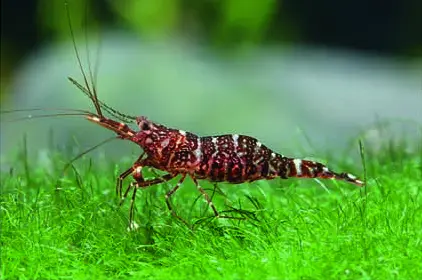
Caridina holthuisi is a small freshwater shrimp found only in the ancient Malili lakes of Sulawesi, Indonesia, and one river that feeds them. Dark brown to match the leaf litter it hides in, it was listed as Endangered on the IUCN Red List in 2019, with numbers still falling.
How to recognise it
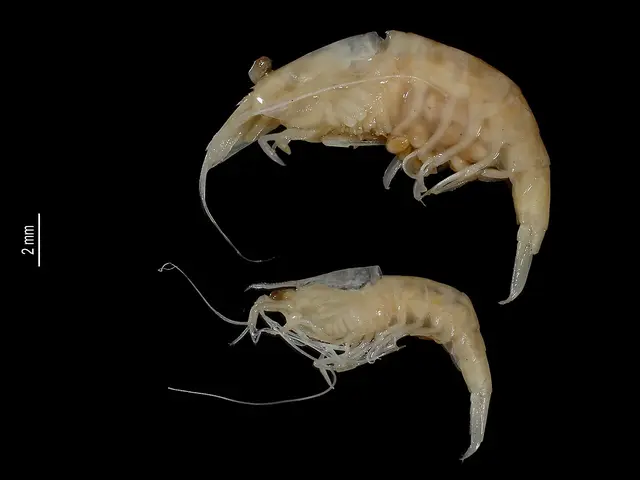
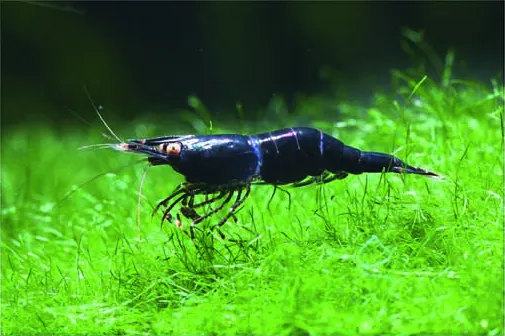
This is a tiny shrimp. Specimens measured when the species was described had a carapace (the shell over the head and chest) of 2.3 to 3.8 mm, and the holotype, an egg-carrying female, measured 3.2 mm. The body is a vivid dark brown, often with white or beige markings, usually crosswise stripes or a single stripe down the back. Even the eggs are dark brown.
The pointed rostrum between the eyes carries 14 to 28 teeth along the top, usually with a smooth gap in the upper edge that helps separate it from the similar Caridina masapi. Aquarium dealers have sold it as the Matano black tiger.
Where it lives
It is endemic to the Malili lake system in central Sulawesi, which means it lives nowhere else. It occurs in Lake Matano, Lake Towuti, Lake Mahalona and the Petea River, and within each lake it is widespread. The IUCN puts its extent of occurrence at about 1,290 square kilometres, with an area of occupancy of only 64 square kilometres, split between two locations (2019).
DNA work published with the original description found two separate lineages inside what is currently one species, living in different parts of the lake system. No physical differences between them have been found, but two hidden species remain possible.
Pins are Wikidata “endemic to” fields. Orange dots, when present, are GBIF occurrence tiles — survey bias included.
How it lives
Caridina holthuisi is a soft-bottom dweller. It is mostly found under dead leaves in shallow water along the shore, and sometimes on water plants. Its dark colour matches the brown leaves it hides beneath. When disturbed it tends to burrow downward into the litter rather than dart sideways, so a dip net full of leaves usually collects shrimp at the bottom. Two egg-carrying females examined held 19 to 25 eggs, each 0.8 to 1.0 mm long.
Why it is in trouble
The IUCN lists sewage, mining and quarrying, dams and small-scale harvesting as threats, and records the population as decreasing. Its assessment projects a future reduction of 50 to 79 percent, based on the effects of introduced species, pollutants and similar pressures.
The 2009 species description named other dangers across the Malili lakes: introduced predatory fish, a nickel mine at Lake Matano, waste from a growing human population, illegal logging on the shoreline and unlicensed export of native animals. Flowerhorn cichlids, a hybrid aquarium fish, now live in Lake Matano and prey on and compete with its endemic fish. The describers also worried that heavy collecting of lake shrimp for the aquarium trade could harm them.
What is being done
The IUCN names control of invasive species, site management and site protection as the actions needed. No species-specific recovery programme is recorded.
Sources
Written for this catalog in our own words from the sources below, checked against them on 12 November 2026. Population figures are estimates and carry the year they were made. Status and assessment year: IUCN. 2026. The IUCN Red List of Threatened Species. Version 2026-1. iucnredlist.org.
- IUCN Red List assessment, Caridina holthuisi (2019)
- von Rintelen and Cai 2009, Revision of Caridina from ancient lakes of Sulawesi, Raffles Bulletin of Zoology 57
- Practical Fishkeeping, Eight new shrimps described from Sulawesi
- Lake Matano (encyclopedia article)
- Caridina holthuisi (encyclopedia article)