Endangered
Betta pi
Betta pi
Betta pi is a small mouthbrooding fighting fish from the acidic peat swamp forests of southern Thailand and northern Peninsular Malaysia. It's named for the pi-shaped dark mark on its throat. The IUCN Red List assessed it as Endangered in 2019 because its swamp habitat is being cleared.
How to recognise it
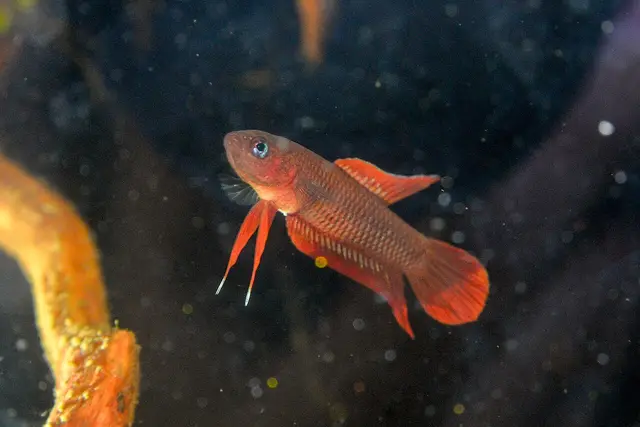
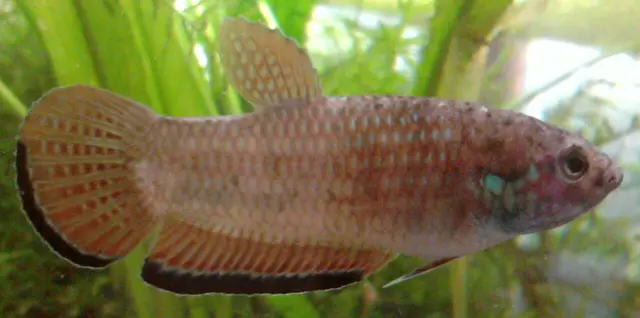
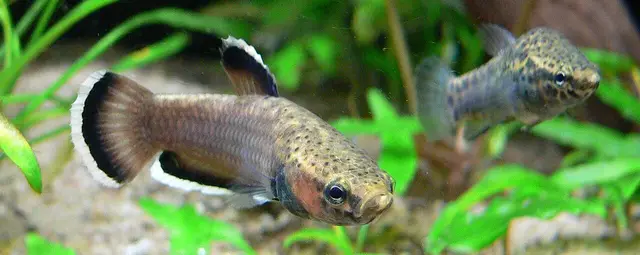
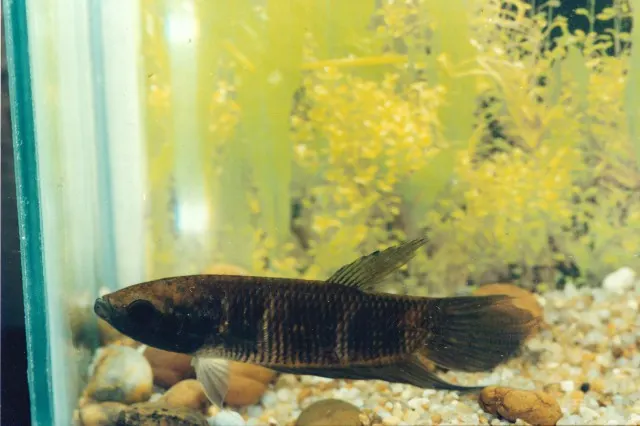
It's a modest, clay-yellow fish that reaches about 9 cm. Adult males are larger, with longer fins and a broader head, and some have iridescent gold scales. The giveaway is a dark marking on the throat shaped like the Greek letter pi, which gave the species its name when Tan described it in 1998.
Other details include a thick blue band along the edge of the anal fin in both sexes, a black lower gill cover and no cross bars on the dorsal and tail fins. Like other bettas it has a labyrinth organ and can gulp air.
Where it lives
The type locality is in Narathiwat Province, southern Thailand, in the Pru Toe-Daeng peat swamps near Sungai Golok. Hobbyist and reference sources also report it from Kelantan and Terengganu in northern Peninsular Malaysia, and the Red List names Thailand and Peninsular Malaysia.
Its estimated extent of occurrence is only 1,781 square kilometres, and the assessment counts two locations. It lives in peat swamp forest, blackwater streams and sometimes freshwater swamp forest, where the canopy is dense and the water is stained dark by decaying plant matter. The pH can fall to 3 or 4. Where permanent water disappears, fish reportedly survive for several weeks in moist leaf litter.
Pins are Wikidata “endemic to” fields. Orange dots, when present, are GBIF occurrence tiles — survey bias included.
How it lives
Details of the wild diet are thin. It likely eats small aquatic and land invertebrates, and captive fish take bloodworm, Daphnia and brine shrimp.
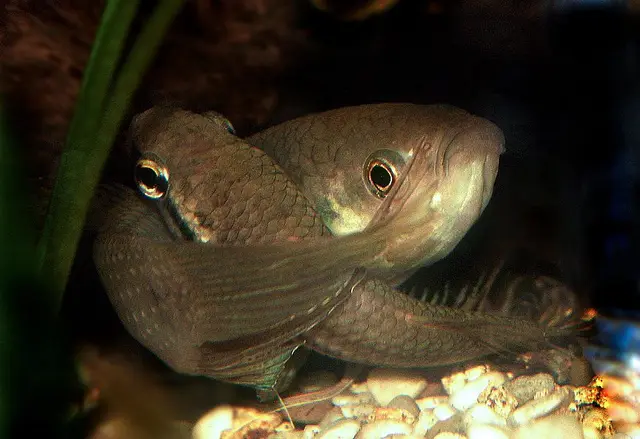
It is a paternal mouthbrooder. After a long courtship the male wraps around the female. She gathers the eggs in her mouth and passes them to him, and he holds them in his mouth for 10 to 28 days, without help from her. Aquarists note that stressed or inexperienced males sometimes swallow or release the eggs early.
Why it is in trouble
Forest has been cleared for rubber and oil palm plantations across the region. The Red List lists agro-industry farming and plantations as ongoing threats and records a continuing decline in habitat area. Large-scale harvest is also listed as an unintentional effect, with no detail on what is taken. The population trend is unknown, and no population estimate exists.
What is being done
The assessment lists resource and habitat protection, site protection and awareness work as needed actions, and records no conservation measures in place. The fish has some importance in the aquarium trade, though it needs very soft acidic water and isn't well suited to community tanks.
Sources
Written for this catalog in our own words from the sources below, checked against them on 12 November 2026. Population figures are estimates and carry the year they were made. Status and assessment year: IUCN. 2026. The IUCN Red List of Threatened Species. Version 2026-1. iucnredlist.org.