Endangered
Betta albimarginata
Betta albimarginata
Betta albimarginata, the white-seam betta, is a tiny fighting fish from forest streams in East Kalimantan on Indonesian Borneo. It grows to only about 3 cm, the male carries the eggs in his mouth, and the IUCN rated it Endangered in 2019, listing plantations, mining and harvesting as threats.
How to recognise it
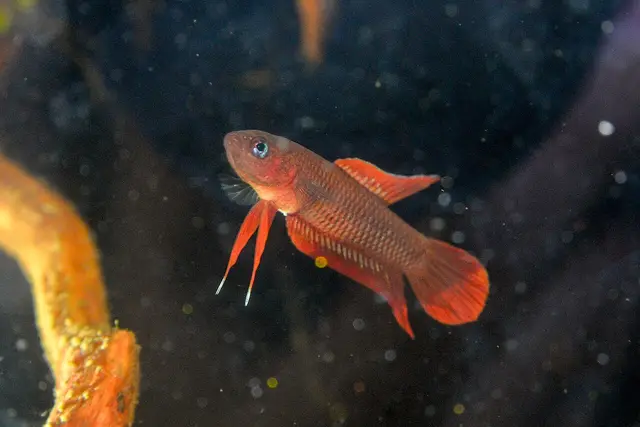
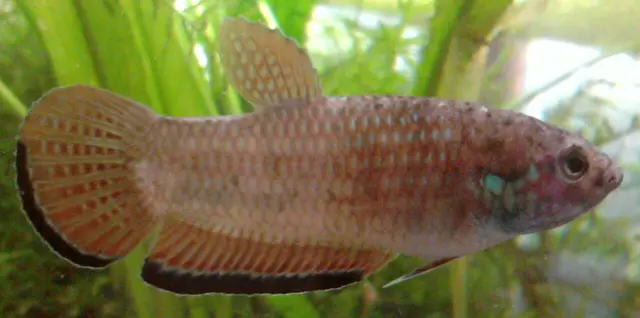
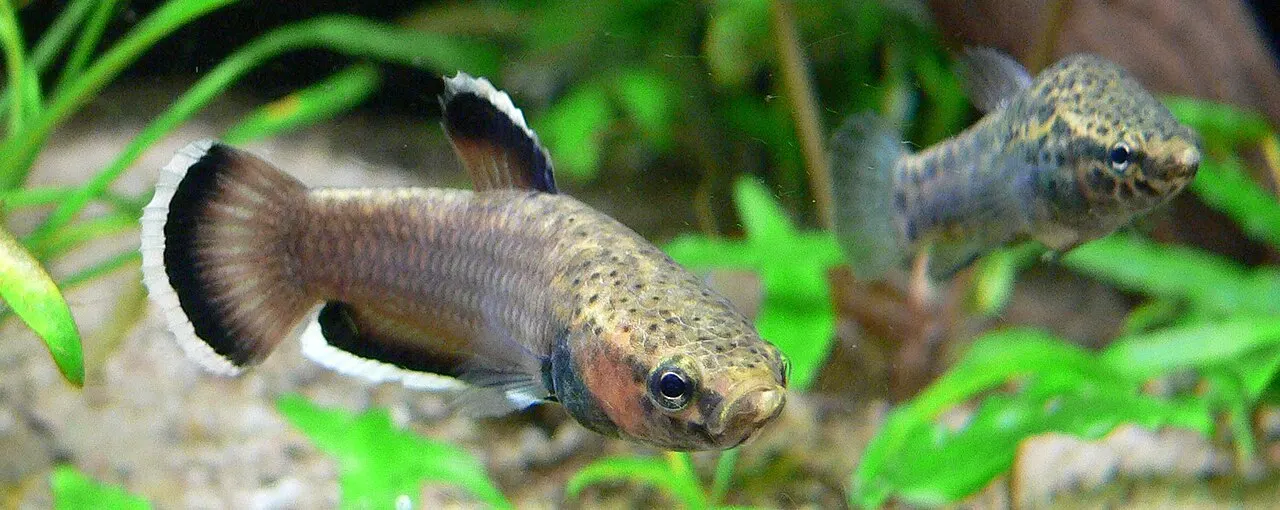
It reaches only about 3 cm in standard length. Males are more colourful than females and have broader heads, and displaying males turn a brick red. The unpaired fins have a broad white outer band, then a broad dark band, then a plain red centre, which is where the common name comes from.
It looks a lot like a close relative, Betta channoides, though in that species the dorsal fin is nearly all red with only a thin white edge and the body is scarlet rather than brick-red. Unlike most other bettas, which have 0 to 4 anal-fin spines, B. albimarginata has 9 to 11.
Where it lives
It's known from Kalimantan Timur on the island of Borneo. Aquarium literature describes it as apparently confined to the Sebuku River drainage, with the type locality at Sungei Sanul, a tributary of the Sungei Tikung. The IUCN counts four locations, an extent of occurrence of about 22,000 square kilometres and an area of occupancy of just 20 square kilometres.
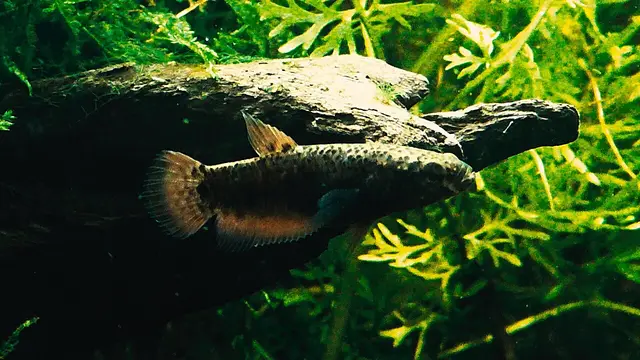
It lives in forest streams with moderate flow, in very shallow water about 5 to 10 cm deep, among plant roots and leaf litter along the banks.
Pins are Wikidata “endemic to” fields. Orange dots, when present, are GBIF occurrence tiles — survey bias included.
How it lives
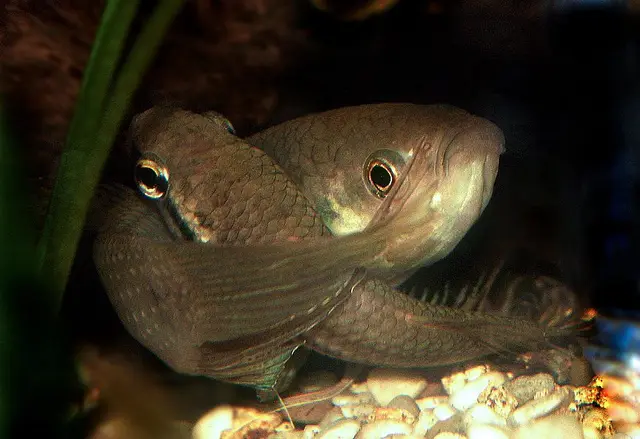
It is a paternal mouthbrooder. Courtship is prolonged and can include several dummy embraces. The male catches the eggs on his anal fin, the female collects them in her mouth and spits them back, and he holds them for roughly 10 to 21 days before releasing free-swimming fry. These figures come from aquarium spawnings. Broods are small, and about 10 eggs counts as a good spawning.
Why it is in trouble
The IUCN lists farming and plantation development, mining and quarrying, seepage from mining, and small-scale and unintended harvesting as threats. The population is judged to be decreasing, and the area of occupancy is only about 20 square kilometres.
What is being done
The assessment lists habitat protection, site protection, harvest management and awareness work as relevant actions, but records no conservation measures in place. Nothing in the sources describes a breeding programme or a protected area created for this fish.
Sources
Written for this catalog in our own words from the sources below, checked against them on 12 November 2026. Population figures are estimates and carry the year they were made. Status and assessment year: IUCN. 2026. The IUCN Red List of Threatened Species. Version 2026-1. iucnredlist.org.