Endangered
Betta channoides
Betta channoides
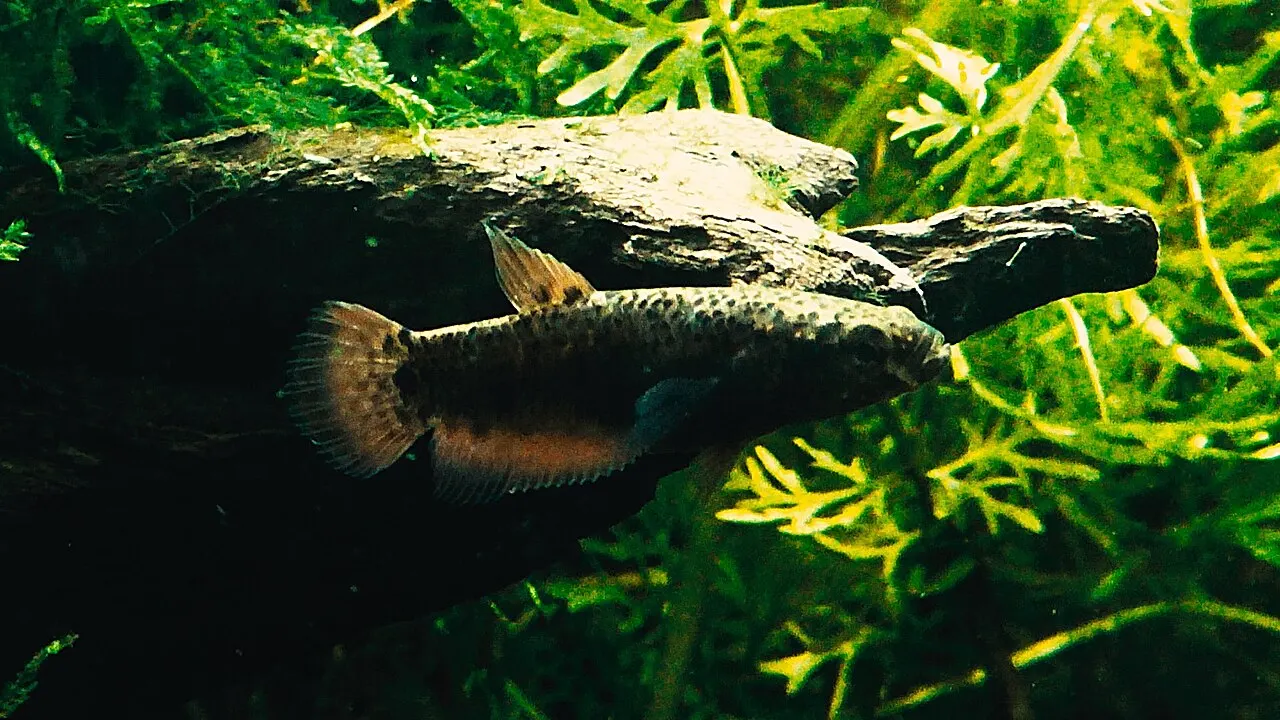
The snakehead betta (Betta channoides) is a small labyrinth fish from blackwater forest streams of the middle Mahakam River basin in East Kalimantan, Indonesian Borneo. The IUCN rated it Endangered in 2019, with a decreasing population in a tiny range. Displaying males turn scarlet, which makes the fish popular with aquarists.
How to recognise it
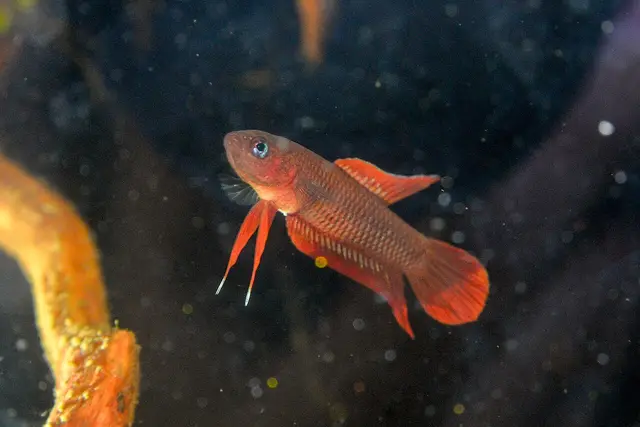
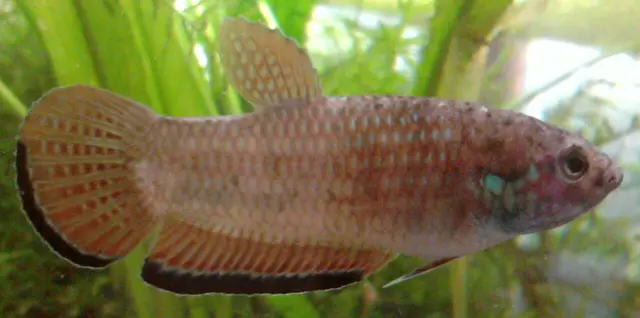
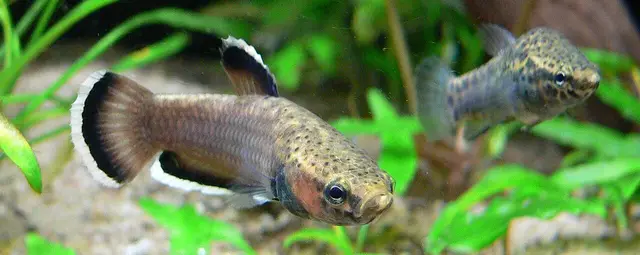
This is a small fish, reaching about 4 centimetres standard length by one fishkeeping reference and about 5 centimetres by another. Males are more colourful than females and have a broader head. A displaying male is scarlet, with a nearly all-red dorsal fin edged by a thin white band.
Its name refers to snakeheads of the genus Channa, whose head shape it partly resembles. It belongs to the same species group as Betta albimarginata, whose dorsal fin has a broad white band instead. Maurice Kottelat and Peter Ng described it in 1994.
Where it lives
It is native to the Mahakam basin in the province of Kalimantan Timur. The type locality is an unnamed blackwater stream entering the Mahakam near Mujub, and it has also been collected around Sungai Merimun and Muarapahu. Aquarium sellers prize a form from near Pampang.
The IUCN counts three locations. It estimates the area where the fish actually occurs at only 12 square kilometres, within an extent of 76 square kilometres. Its habitat is shallow, forested acid streams, where it has been caught among submerged leaf litter and bank roots. In captivity it does best at a pH of about 4 to 6.5.
Pins are Wikidata “endemic to” fields. Orange dots, when present, are GBIF occurrence tiles — survey bias included.
How it lives
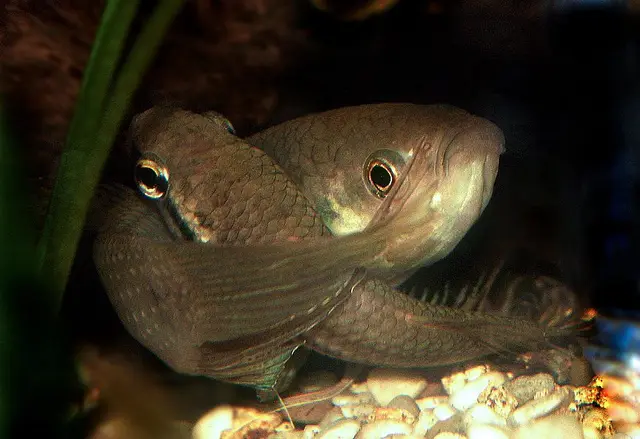
Like other bettas in its group it is a paternal mouthbrooder. After a long courtship the male catches eggs on his anal fin and the female collects them in her mouth, then passes them to him. Broods are small, and about 10 eggs is counted a good spawn. The male carries them for 10 to 21 days before releasing free-swimming fry. In the wild it probably eats insects, small invertebrates and zooplankton.
Why it is in trouble
The IUCN lists agro-industry farming and plantations as ongoing pressures. It also names small-scale harvest, which involves international trade, and unintended losses from larger-scale harvesting. How much each contributes is recorded as unknown. Forest clearance for oil palm and paper pulp is among the concerns.
The decline is inferred rather than counted, partly from continuing imports of wild-caught fish for the aquarium trade. The assessment records no conservation action as in place. It lists habitat and site protection, harvest management and awareness work among the relevant measures.
Sources
Written for this catalog in our own words from the sources below, checked against them on 12 November 2026. Population figures are estimates and carry the year they were made. Status and assessment year: IUCN. 2026. The IUCN Red List of Threatened Species. Version 2026-1. iucnredlist.org.