Critically Endangered
Red-brown Dwarf Betta
Betta burdigala
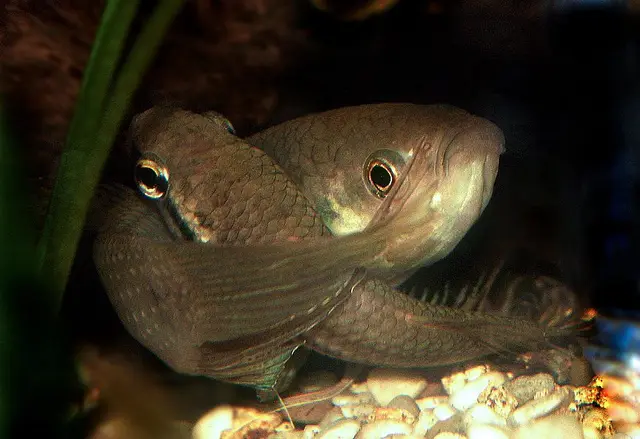
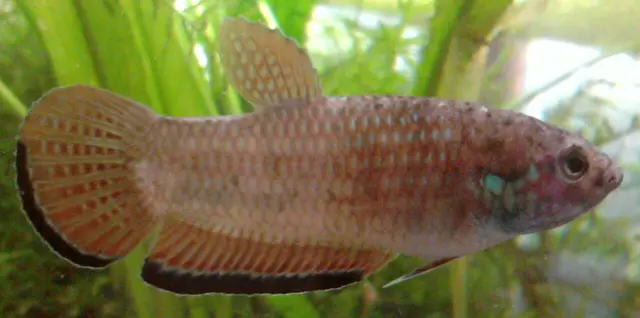
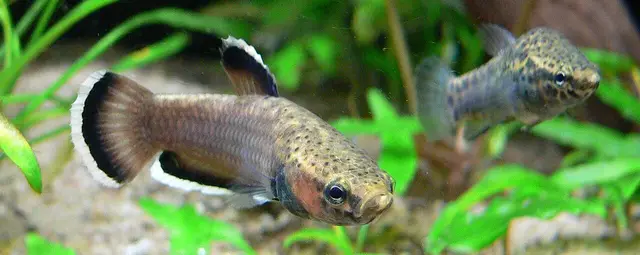
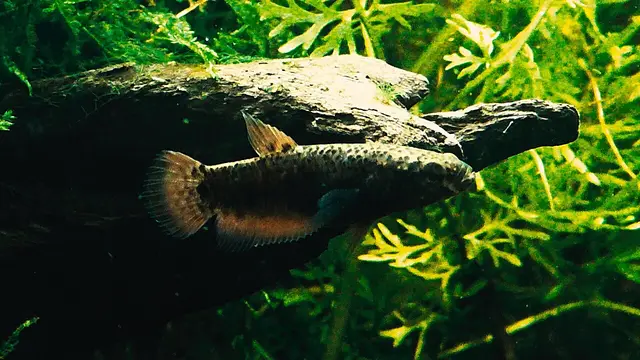
The red-brown dwarf betta (Betta burdigala) is a tiny gourami that lives only on Bangka Island, Indonesia, in dark peat swamp water. It grows to about 2.5 cm. The IUCN Red List rates it Critically Endangered (assessed 2019), because its swamp habitat is small and shrinking.
How to recognise it
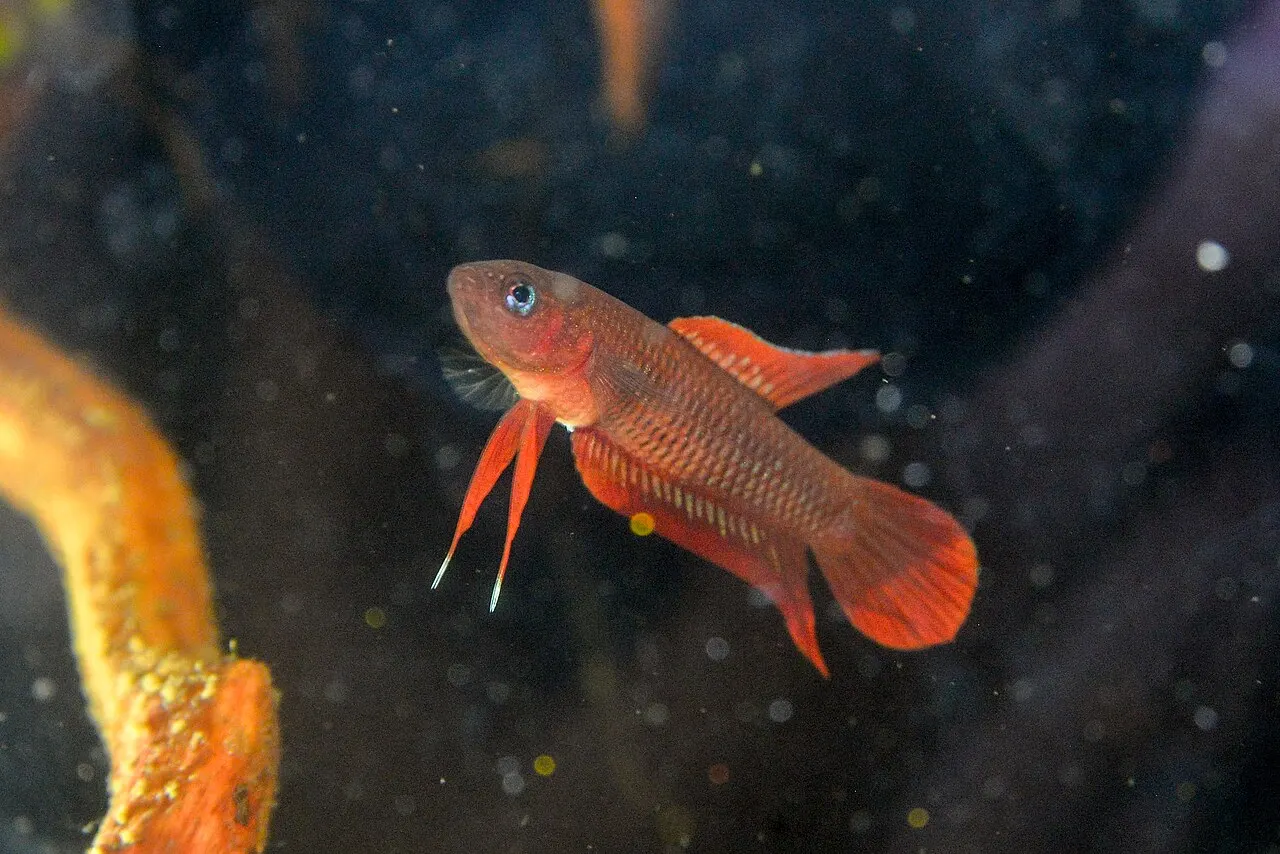
This is a very small fish. Adults reach roughly 2.5 cm (1 inch) in length. It belongs to the gourami family (Osphronemidae). A Parosphromenus Project article by fish keeper Wentian Shi describes it as a red fish and calls it the swimming ruby of Bangka.
Like other bettas, it has a labyrinth organ, a folded breathing structure that lets it gulp air at the surface. That matters in its home waters, where oxygen is scarce.
Where it lives
The species is found only on Bangka, an island off the east coast of Sumatra. The Red List counts it as occurring at a single location. It lives in peat swamp forest, where rain-fed water turns black and acidic from leaf tannins.
A 2025 study of Bangka's wild bettas measured pH between 4.2 and 5.8, dissolved oxygen of 0.8 to 2.5 mg per litre and temperatures of 26 to 30 degrees C across the island's betta habitats. Those figures describe the habitat of all the bettas surveyed, not this species alone. Seven betta species were recorded on the island.
Fish keepers have described it as living in a single small black-water swamp at the far end of the island, which is why its range is judged so restricted.
Pins are Wikidata “endemic to” fields. Orange dots, when present, are GBIF occurrence tiles — survey bias included.
How it lives
Bettas of this kind are bubble-nest builders. According to conservation groups working with the fish, the male blows a nest of bubbles at the surface, then guards the eggs and the young fry. In captive breeding, one pair has produced up to 15 juveniles per cycle.
Why it is in trouble
The Red List names agricultural plantations, mining and quarrying (including seepage from mining) and more frequent fires as threats, all of which convert or degrade the swamp. A 2025 survey of Bangka's wild bettas in Aquatropica also points to tin mining, oil palm expansion and pollution, with several populations declining severely. The population trend for this species is listed as unknown, and nobody has published a count of wild fish.
Wentian Shi reported that illegal wood cutting partly destroyed the known swamp within about six months of his first visit in 2016. The water had dropped to no more than 10 cm deep later in 2017. By April 2018 the cutting appeared to have stopped, the water had recovered and a police warning sign had been posted, though he judged the habitat might survive only another five years or so.
What is being done
The Red List lists habitat and site protection, awareness work and habitat restoration as the actions needed. In practice, a captive breeding programme run by the SHOAL freshwater conservation group with partners including ASAP, Mandai Nature and Airlangga University has been raising fish for release. Skilled local fish catchers collect wild breeders to keep the stock genetically varied. By late 2024, 147 juveniles had been reintroduced, and the team had found a site in Bangka's peat swamp forest with potential for a fish sanctuary.
Sources
Written for this catalog in our own words from the sources below, checked against them on 12 November 2026. Population figures are estimates and carry the year they were made. Status and assessment year: IUCN. 2026. The IUCN Red List of Threatened Species. Version 2026-1. iucnredlist.org.