Endangered
Blood Betta
Betta livida
The blood betta is a tiny red fighting fish from the blackwater peat swamps of Peninsular Malaysia. Adults reach only about 3.6 cm. It is listed as Endangered (2019 assessment) because the swamp forest it needs has been cleared for plantations across most of its small range.
How to recognise it
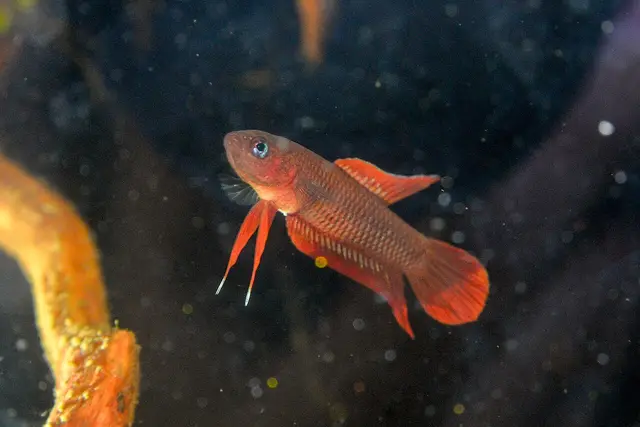
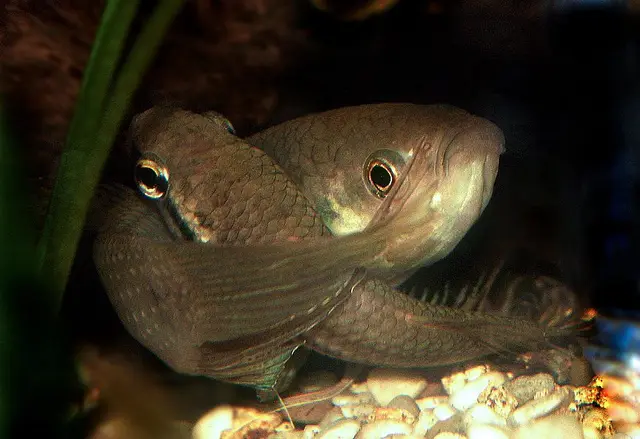
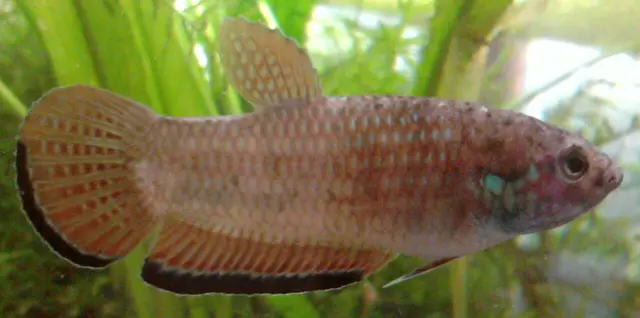
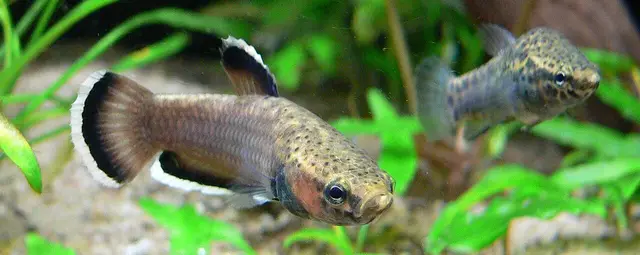
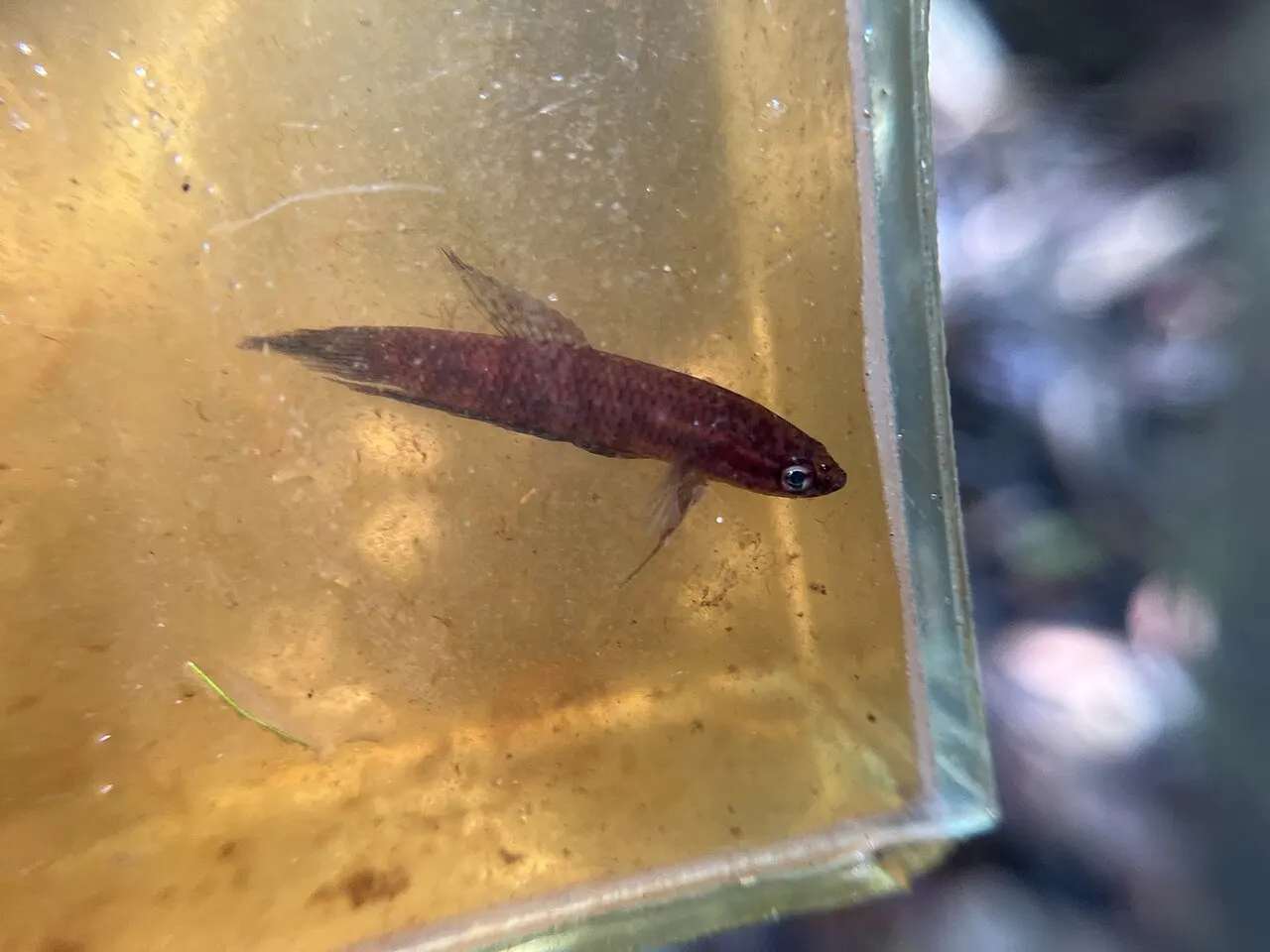
Betta livida is a red fish, small even by betta standards: the largest are about 36 mm long. Both sexes have a small iridescent green blotch on the flank that fades with age, parallel gold bars on the gill cover, and a broad iridescent green tip on the pelvic fin. Males have longer fins and richer colour than females.
It was described in 1992 by Ng and Kottelat. The type locality is a blackwater stream in a north Selangor peat swamp, near the road between Tanjong Malim and Sungai Besar.
Where it lives
The Red List treats it as endemic to Malaysia, recorded from Peninsular Malaysia, and counts only 4 locations. Its extent of occurrence is about 3,050 square kilometres. Most sources place it in Selangor, and SeriouslyFish calls it endemic to northern Selangor.
It lives in peat swamps and their blackwater streams, stained dark by humic acids and shaded by dense forest. It is most often found in slow, shallow water under a metre deep, or along vegetated margins of deeper streams. The Red List also records it from small permanent pools and streams. SeriouslyFish gives a pH range of about 3.0 to 6.0 and very soft water, and says fish may survive for weeks in moist leaf litter when permanent water is unavailable.
Pins are Wikidata “endemic to” fields. Orange dots, when present, are GBIF occurrence tiles — survey bias included.
How it lives
It is a bubble-nester. The male builds the nest and guards the eggs, which hatch in 24 to 48 hours. Clutches are usually under 20 eggs and sometimes reach 50. The young need warm, humid air above the water so their labyrinth organ, the structure that lets bettas gulp air, works properly. In the wild it probably feeds on small invertebrates.
Why it is in trouble
The Red List lists agro-industry farming and plantations as threats, along with the unintended effects of large-scale harvesting. The area it occupies is shrinking and the population trend is unknown. Across much of its range the peat forest has become oil palm or rubber plantation, and the fish is thought to survive only in a few pockets of primary forest.
Blood bettas do appear in the aquarium hobby, but they are demanding and not suited to community tanks. SeriouslyFish encourages captive breeding as a back-up.
What is being done
The Red List gives site and area protection, habitat protection, and awareness and communications as the conservation actions needed. SeriouslyFish reports that the collecting locality labelled Tg Malim has been designated a protected zone, though it notes that this site is not close to the town of that name.
Sources
Written for this catalog in our own words from the sources below, checked against them on 12 November 2026. Population figures are estimates and carry the year they were made. Status and assessment year: IUCN. 2026. The IUCN Red List of Threatened Species. Version 2026-1. iucnredlist.org.