Endangered
Belgrandiella aulaei
Belgrandiella aulaei
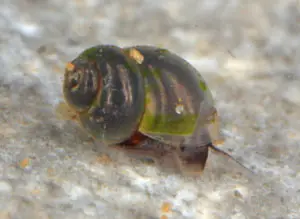
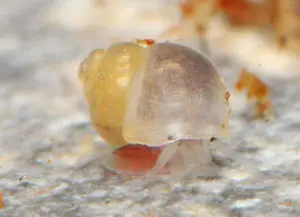
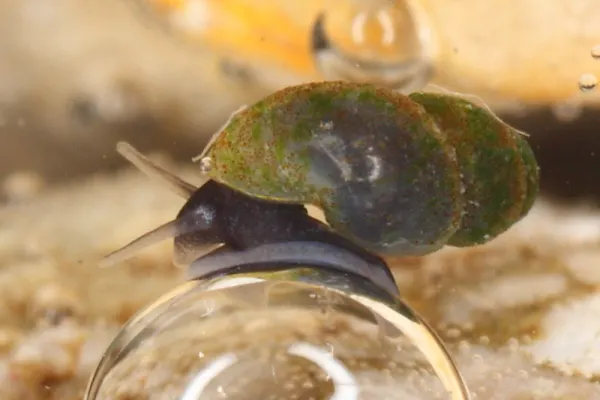
Belgrandiella aulaei is a tiny freshwater spring snail known only from a handful of springs in northern Upper Austria, around the Kalkalpen National Park. It was described in 2000. The IUCN Red List rated it Endangered in 2026, citing a very small range (about 12 square kilometres) and a continuing decline in habitat.
What it is
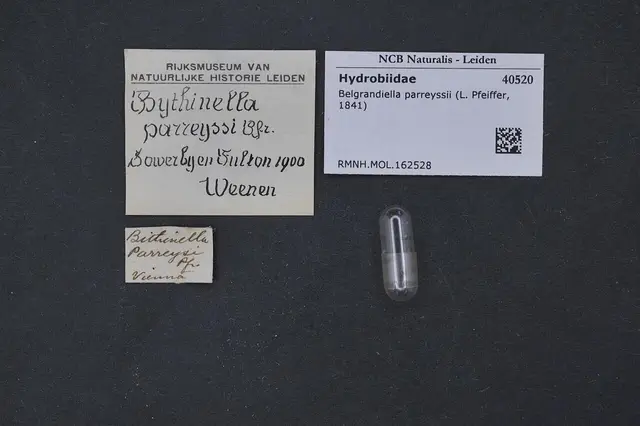
This is a member of the Hydrobiidae, a family of minute freshwater snails. The species was described in 2000 by Haase, Weigand and Haseke from the Kalkalpen area. It has a German name, Mollner Zwergquellschnecke, which roughly means Molln dwarf spring snail.
Snails in this group are hard to tell apart, and the shell and anatomy of small genera like Belgrandiella are especially tricky, so identification takes a specialist and often DNA. Little is known about the ecology of the group.
The DNA is itself a puzzle. A 2023 study in Biodiversity Data Journal found that the barcode gene of B. aulaei differs from its relatives B. fuchsi and B. wawrai (both from Lower Austria) by only four substitutions in about 670 base pairs, and from B. mimula by seven. These species share a single barcode group. The study concluded that the data do not contradict B. aulaei being a separate species, but that nuclear DNA and more samples would be needed to confirm it.
Where it lives
It lives in freshwater springs and small spring-fed ponds. Spring snails of this kind need uncontaminated, relatively cold water, and the IUCN records the species from three locations in Austria, with an area of occupancy of just 12 square kilometres.
The 2023 study surveyed 39 springs in and around the Kalkalpen National Park and found the snail in three, all outside the park boundary. They lie to the north, north-east and east of it, several kilometres apart. One was about 7 km from the original collecting site. Despite heavy search effort, none were found inside the park.
Pins are Wikidata “endemic to” fields. Orange dots, when present, are GBIF occurrence tiles — survey bias included.
Why it is in trouble
With so few sites, one damaged spring is a serious loss. The IUCN lists the abstraction of surface water for agriculture as an ongoing threat, affecting most of the range (50 to 90 percent) and causing slow but significant declines. It also records that the habitat is still shrinking. The trend in numbers is unknown.
The three known springs sit outside the national park, so they get none of its protection.
What is being done
The IUCN says the species does not occur in any protected area and lists awareness and communications as the conservation action needed. The 2023 survey team recommends extending the national park to cover the sensitive edge areas where the snail lives. If that is not possible, they suggest protecting individual springs outside the park, for example as natural monuments.
DNA barcodes from the survey now give a reference for identifying the species and a baseline for future monitoring.
Sources
Written for this catalog in our own words from the sources below, checked against them on 12 November 2026. Population figures are estimates and carry the year they were made. Status and assessment year: IUCN. 2026. The IUCN Red List of Threatened Species. Version 2026-1. iucnredlist.org.