Critically Endangered
Belgrandiella parreyssii
Belgrandiella parreyssii
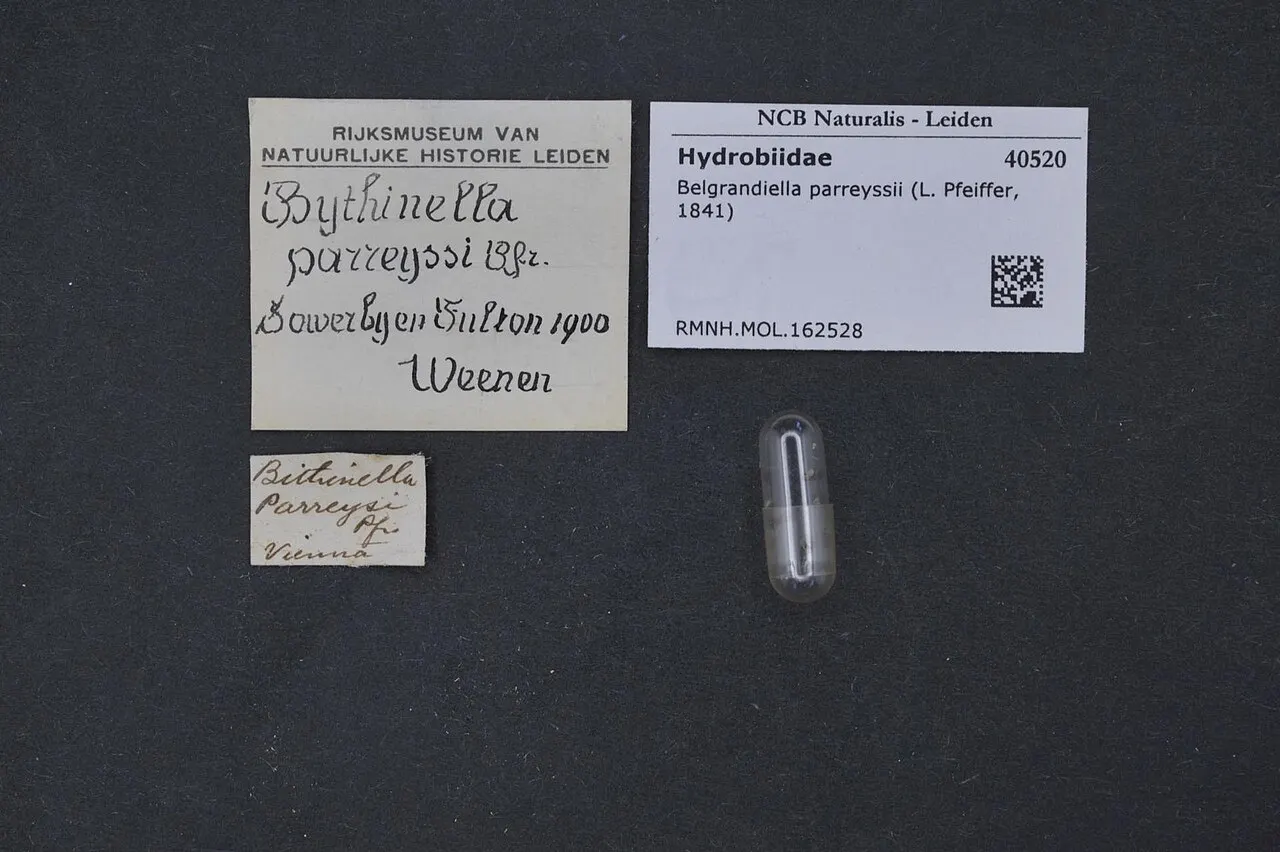
Belgrandiella parreyssii, the thermal springsnail, is a tiny freshwater snail from Austria. It lives in warm spring water at Bad Vöslau, south of Vienna, and almost nowhere else. The IUCN Red List rated it Critically Endangered in 2026, citing a very small range and ongoing decline.
How to recognise it
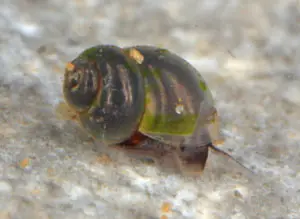
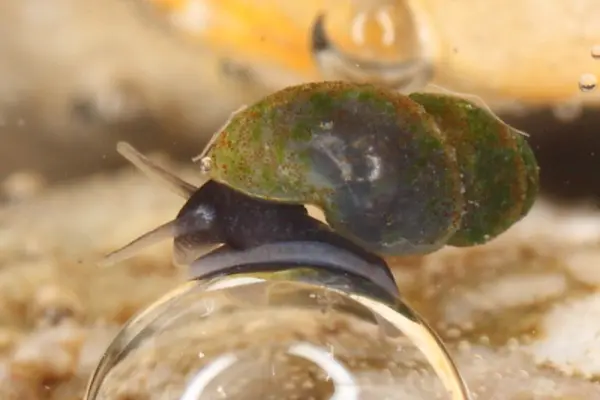
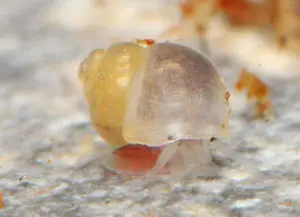
You would need a magnifying glass. The shell is reportedly about 1.3 mm long and 0.9 mm wide, with roughly three and three-quarter whorls. It is transparent, coils to the right and has a squat, egg-like shape with a closed umbilicus, the small hole at the base of the shell that many snails have.
The soft body is described as black, grey or white, with a short, narrow snout, a short foot and long, hair-fine tentacles. The operculum, the little lid that seals the shell opening, is reddish-brown to cherry red. The animal is said to move briskly. It has a gill rather than a lung.
Where it lives
It is endemic to Austria. The classic site is the thermal spring at Bad Vöslau in Lower Austria, where the water is reportedly about 23.5 °C. A German-language account also gives the Hansybach, the stream the spring feeds, as a second known site.
The Red List assessment counts a single location and an extent of occurrence of about 9 square kilometres. Its habitat is classed as geothermal wetland. It is described as a stenothermic snail, meaning it tolerates only a narrow temperature band, living under stones in warm spring water.
Pins are Wikidata “endemic to” fields. Orange dots, when present, are GBIF occurrence tiles — survey bias included.
Why it is in trouble
A snail confined to one warm spring has nowhere to retreat. Numbers have reportedly fallen steeply since the 1970s, blamed on human changes to the habitat, though the specific changes are not described.
The 2026 Red List assessment lists recreational activities as the one threat, affecting the majority of the population and causing slow but significant declines. Its recorded harms are ecosystem degradation and disturbance of the animals. It also records a decreasing population, continuing decline in its area, and no systematic monitoring scheme.
What is being done
The Red List records all of the population as lying inside a protected area, with an area-based regional management plan in place. The species is also subject to ex-situ conservation, meaning animals are held outside the spring. It is not covered by international legislation or trade controls. Monitoring is the gap, since no regular count is in place.
Sources
Written for this catalog in our own words from the sources below, checked against them on 12 November 2026. Population figures are estimates and carry the year they were made. Status and assessment year: IUCN. 2026. The IUCN Red List of Threatened Species. Version 2026-1. iucnredlist.org.