Endangered
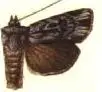
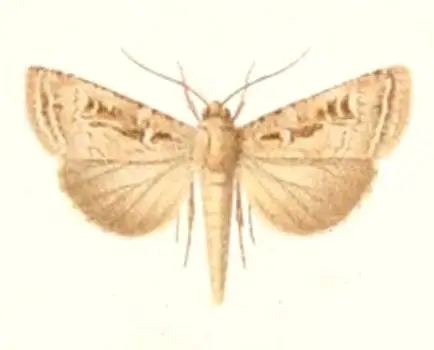
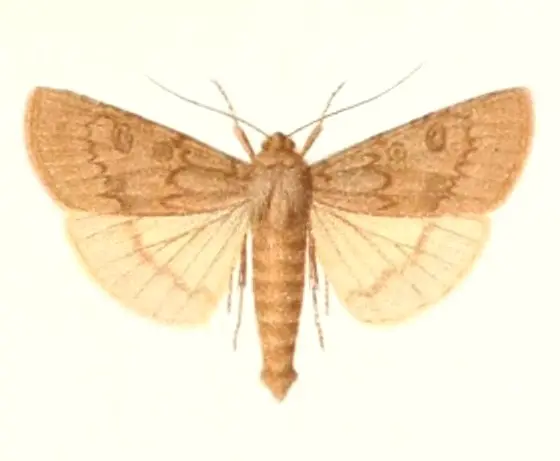
Agrotis baliopa
Agrotis baliopa
Agrotis baliopa is a small noctuid moth that lives only in the Hawaiian Islands, on high volcano slopes. The IUCN Red List rated it Endangered in 2021. It is known from just two to five locations, and most of the records come from Haleakalā on Maui.
What it is
Edward Meyrick described the moth in 1899, and Hampson later moved it to the genus Euxoa as Euxoa baliopa. It is a cutworm-type noctuid in the genus Agrotis, a group of about 300 described species worldwide whose caterpillars are major agricultural pests in some places.
Hawaiʻi has 27 Agrotis species, and 26 of them are found nowhere else. In the islands the genus is easy to recognise by the many conspicuous spines along the legs of the adults, but the species are hard to separate, and wing pattern, locality and diet are needed to tell them apart.
Where it lives
The IUCN gives its elevation as 1,830 to 3,050 m, in high-altitude shrubland and grassland, with an extent of occurrence of roughly 1,778 to 7,684 square kilometres and two to five locations. It occurs in at least one protected area, and it is listed from Maui and Hawaiʻi Island.
GBIF holds 43 records, mostly preserved specimens collected in the 1970s. Most that name a place are from Haleakalā National Park on Maui, including the Halemauʻu trailhead, Kapalaoa and Paliku. A few are from Hawaiʻi Island, at Mauna Loa and Hualālai, and the oldest is an 1896 specimen from Haleakalā. Photographs from 2018, 2022 and 2024 have also been recorded.
Pins are Wikidata “endemic to” fields. Orange dots, when present, are GBIF occurrence tiles — survey bias included.
Why it is in trouble
The IUCN reports a continuing decline in the area the moth occupies, though its population trend is listed as unknown. The Red List names the threat only as unspecified species, with mortality of the moth as the effect.
How the caterpillars of this moth live has not been documented in the sources available. A related day-flying species from Maunakea, Agrotis kuamauna, lives in cold, dry conditions at high elevation, and its larvae eat a mix of plant material and insects.
What is being done
The conservation actions listed for the species are control of invasive or problem species and restoration of habitat and natural processes. Research needs recorded for it cover population trends, habitat trends, population size and distribution, life history and ecology, and threats, which is a fair summary of how little is known.
Sources
Written for this catalog in our own words from the sources below, checked against them on 12 November 2026. Population figures are estimates and carry the year they were made. Status and assessment year: IUCN. 2026. The IUCN Red List of Threatened Species. Version 2026-1. iucnredlist.org.