Critically Endangered
Midway Noctuid Moth
Agrotis fasciata
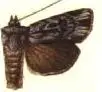
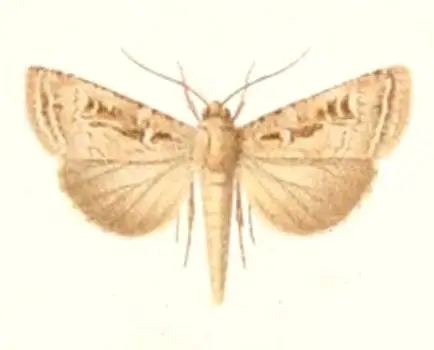
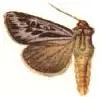
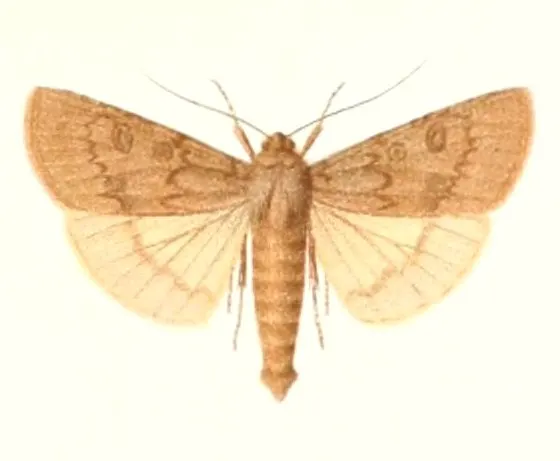
The Midway noctuid moth (Agrotis fasciata), also called the Midway mudworm, is known only from Midway Atoll in the Hawaiian Islands. The IUCN Red List rated it Critically Endangered in 2021, tagged possibly extinct. No record of it exists from the last century or more, and almost nothing is known of its life.
What is known about it
The moth belongs to the owlet moth family, Noctuidae. It was described by Walter Rothschild in 1894 under the name Peridroma fasciata, in the journal Novitates Zoologicae, and was later moved to the genus Agrotis. The description rests on four male specimens (syntypes) held in the collection of the Natural History Museum in London.
Beyond that, very little has been published. No host plant has been recorded, and the biology of the caterpillar and adult is essentially unknown.
Where it lived
The IUCN assessment lists the moth's habitats as coastal sand dunes and dry tropical shrubland, with a single location and an estimated range of 20 square kilometres. Midway lies in the Northwestern Hawaiian Islands.
A 1963 report also listed the species from Laysan Island. It is unknown whether that record was correct or referred to a vagrant, so Midway remains the only secure locality.
Pins are Wikidata “endemic to” fields. Orange dots, when present, are GBIF occurrence tiles — survey bias included.
Why it is feared lost
Sources give different last dates. A 1998 review (Preston) gives 1908 or earlier, while a 2021 list treats the date as unknown. An entomologist named Asquith visited Midway in 1994 and did not collect it. NatureServe lists the species as missing, and an older 1992 list gave it as extinct.
The Red List assessment names war and military activity as a threat that degraded habitat, and lists unspecified species as a cause of mortality. For context, black rats and house mice reached Midway around 1943, when the atoll was a naval base. The rats were removed in 1996, but mice remain. How these animals affected this moth has not been documented.
What is being done
The assessment records no recovery plan or monitoring scheme for the moth. It lists habitat protection, control of problem species and habitat restoration as actions that would help. Midway was transferred to the US Fish and Wildlife Service in 1996.
Sources
Written for this catalog in our own words from the sources below, checked against them on 12 November 2026. Population figures are estimates and carry the year they were made. Status and assessment year: IUCN. 2026. The IUCN Red List of Threatened Species. Version 2026-1. iucnredlist.org.