Endangered
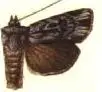
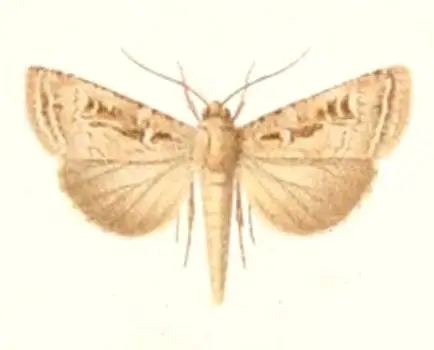
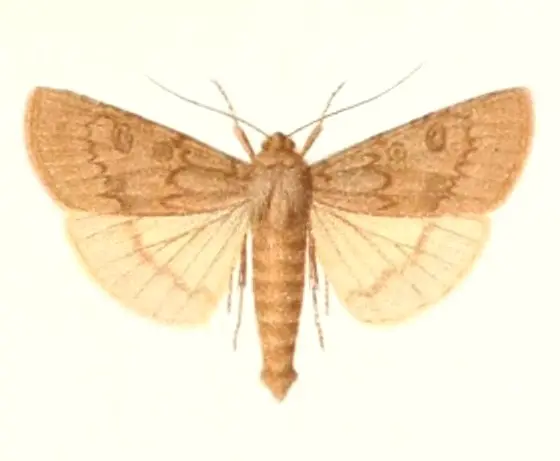
Agrotis arenivolans
Agrotis arenivolans
Agrotis arenivolans is an owlet moth found only in the Hawaiian Islands, on Maui and possibly still on Hawaiʻi Island. The IUCN Red List recorded it as Endangered in 2021. It is known from a single location, and very little has been written about how it lives.
A moth known mostly from old records
Agrotis arenivolans belongs to the Noctuidae, the large family of owlet moths. The English entomologist Arthur Butler described it in 1879, in a paper on moths that the Rev. T. Blackburn had collected in the Hawaiian Islands. In 1903 George Hampson placed it in the genus Euxoa, and it appears in older books under that name. The name Euxoa arenivolans is now treated as a synonym, and Agrotis is the accepted genus.
It is one of 27 Agrotis moths listed for Hawaii. The islands as a whole have about 1,150 recorded moth and butterfly species, and roughly 948 of them occur nowhere else.
Where it lives
The species is endemic to Hawaii, with records from Maui and Hawaiʻi Island. It may now be extirpated from Hawaiʻi Island, which would leave Maui as its only home.
The Red List counts it as occurring at one location. Its estimated extent of occurrence is between about 185 and 2,317 square kilometres, a wide range that reflects how few records there are. Recorded elevations run from sea level up to 3,050 metres. The habitats listed are high-altitude shrubland and moist montane forest, and it has been found in at least one protected area.
Pins are Wikidata “endemic to” fields. Orange dots, when present, are GBIF occurrence tiles — survey bias included.
Why it is in trouble
The 2021 assessment placed the moth in the Endangered category under criterion B1ab(iii), which covers a small range, a single location and a continuing decline in the area or quality of habitat. The population trend is listed as unknown, and no population size has been estimated.
The assessment's threat entry is generic. It lists only "unspecified species" as a source of mortality, so no particular cause has been pinned down for this moth. It does record that the area of habitat is still declining, and a species held to a single location has little room for error.
What is being done
The only conservation action the assessment lists is control of invasive and problematic species. No recovery plan, captive breeding or targeted survey programme is recorded.
The assessment names population trends, habitat trends, life history and threats as research needs. Where the moth still occurs, and what its caterpillars eat, remain open questions.
Sources
Written for this catalog in our own words from the sources below, checked against them on 12 November 2026. Population figures are estimates and carry the year they were made. Status and assessment year: IUCN. 2026. The IUCN Red List of Threatened Species. Version 2026-1. iucnredlist.org.