Critically Endangered
Achatinella taeniolata
Achatinella taeniolata
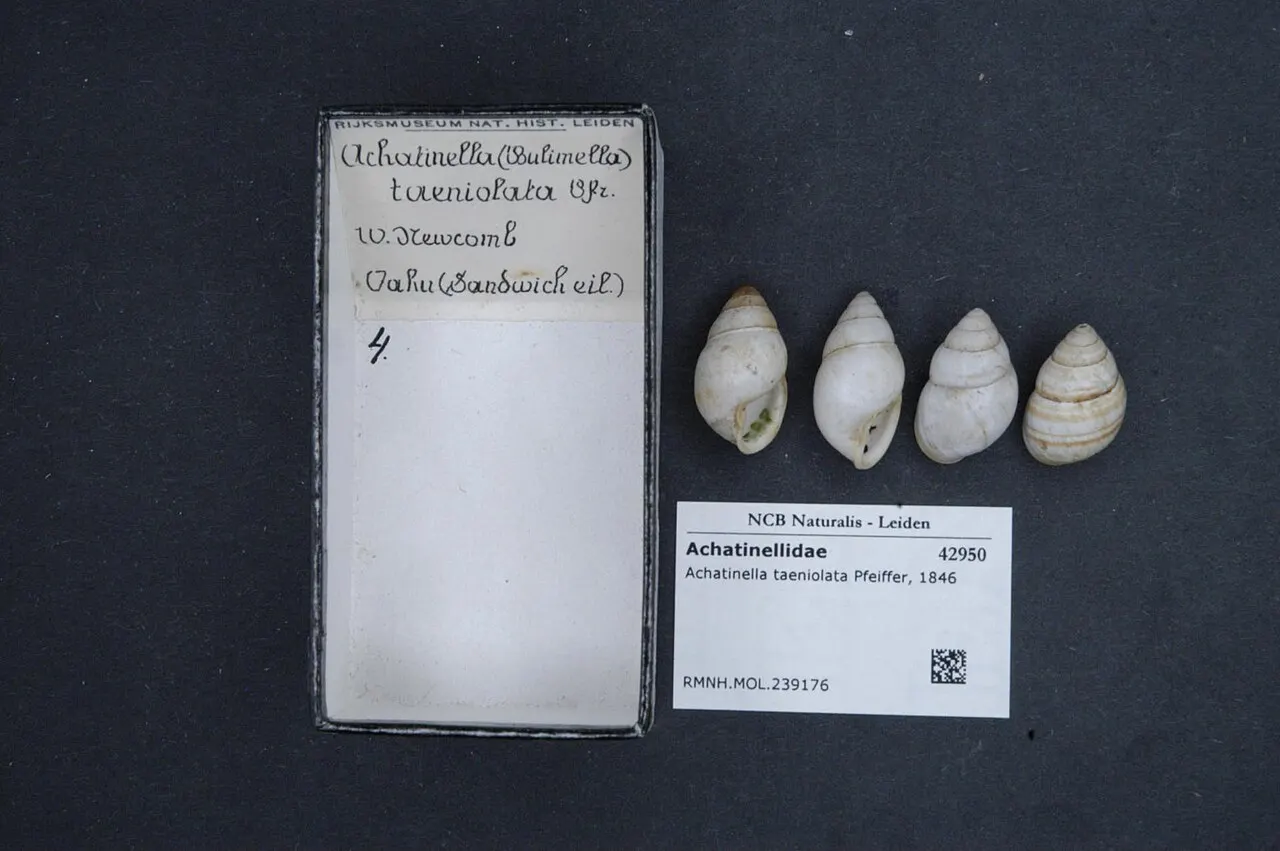
Achatinella taeniolata is a banded tree snail found only on the Hawaiian island of Oahu. The IUCN Red List rated it Critically Endangered in 1996, and NatureServe reportedly lists it as possibly extinct. Some sources treat it as a form of Achatinella viridans rather than a species of its own.
How to recognise it
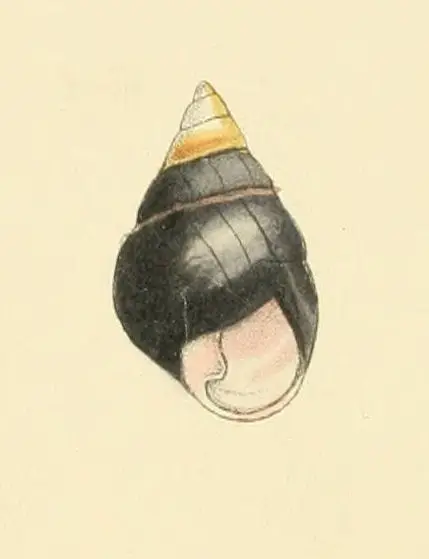
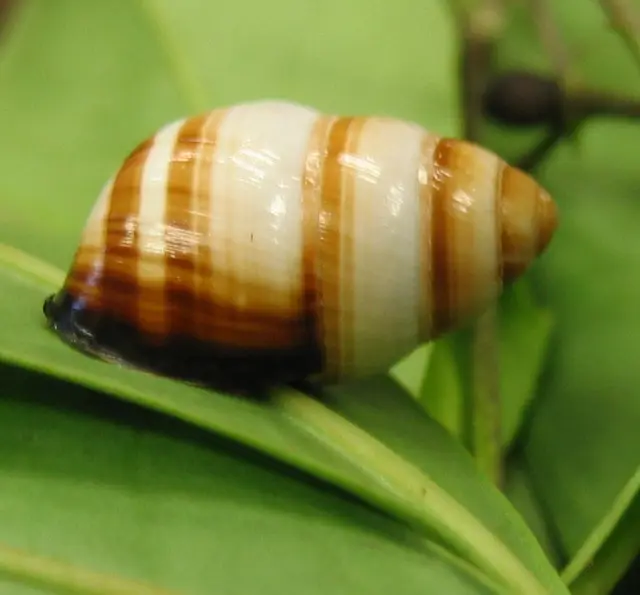
The shell is oblong-ovate, solid and finely striped, with six whorls. It is about 20 mm tall and 11 mm wide, glossy white with brown bands that vary in pattern. The central pillar of the shell is strongly toothed near the top, and the opening is irregularly semi-oval.
Pfeiffer described it in 1846. Because it intergrades completely with Achatinella viridans, some sources regard it as a subspecies of that snail, so whether it deserves species rank is unsettled.
Where it lives
It is a tree-dweller, native to Oahu and found nowhere else. The IUCN lists the Hawaiian Islands and the United States as its range. Oahu tree snails in general need undisturbed native forest, and the remaining populations of the genus are in the Waianae and Koolau ranges.
Most snails in the group are nocturnal, grazing on fungi and microscopic algae growing on leaves, and on detritus. They are sedentary, and a snail may spend its whole life on one tree.
Pins are Wikidata “endemic to” fields. Orange dots, when present, are GBIF occurrence tiles — survey bias included.
How it lives
Oahu tree snails are hermaphrodites that breed throughout the year, but slowly. A snail usually bears one live, shelled young at a time and takes six or seven years to mature.
Why it is in trouble
An early-1980s count put taeniolata among nine Oahu tree snail species that each numbered fewer than 20 individuals. Numbers have probably fallen since.
Habitat loss and invasive plants have shrunk the forest the snails need, and collectors prized the colourful shells. The introduced rosy wolfsnail, brought from Florida in 1955 to control a snail pest, is linked to nearly every recent native snail disappearance where it arrived. Rats, Jackson's chameleons and a flatworm also prey on them. These threats are documented for the genus, not for taeniolata alone.
What is being done
All surviving Oahu tree snails have been federally listed as endangered since January 1981, and the genus is on CITES Appendix I. A US recovery plan followed in 1992. In Hawaii, a state program breeds other Achatinella species in captivity and releases them into fenced plots with walls designed to keep out rats, chameleons and wolfsnails. No captive or fenced group is documented for taeniolata.
Sources
Written for this catalog in our own words from the sources below, checked against them on 12 November 2026. Population figures are estimates and carry the year they were made. Status and assessment year: IUCN. 2026. The IUCN Red List of Threatened Species. Version 2026-1. iucnredlist.org.
- IUCN Red List, Achatinella taeniolata (1996)
- Achatinella taeniolata, Wikipedia
- Oahu Tree Snails, Encyclopedia.com
- Achatinella, Wikipedia
- Jewels of the Forest, US Fish and Wildlife Service (2024)
- Rare snails reintroduced after 33 years in captivity, Hawaii DLNR (2024)
- Hawaii's Snail Extinction Crisis, Scientific American