Critically Endangered
Achatinella bellula
Achatinella bellula
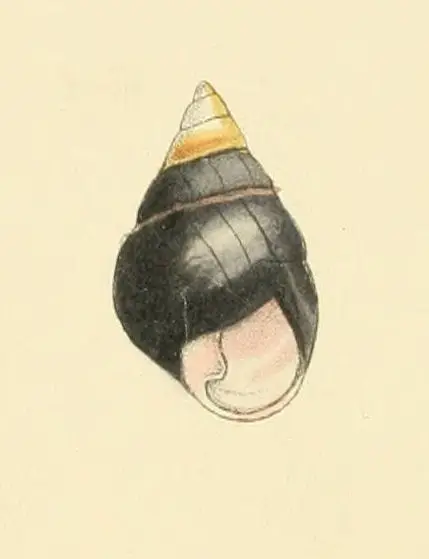
Achatinella bellula is a small tree-dwelling land snail found only on the Hawaiian island of Oahu. The IUCN Red List rated it Critically Endangered in 1996. No more than five specimens have been recorded since 1979, and NatureServe reportedly lists it as possibly extinct.
How to recognise it
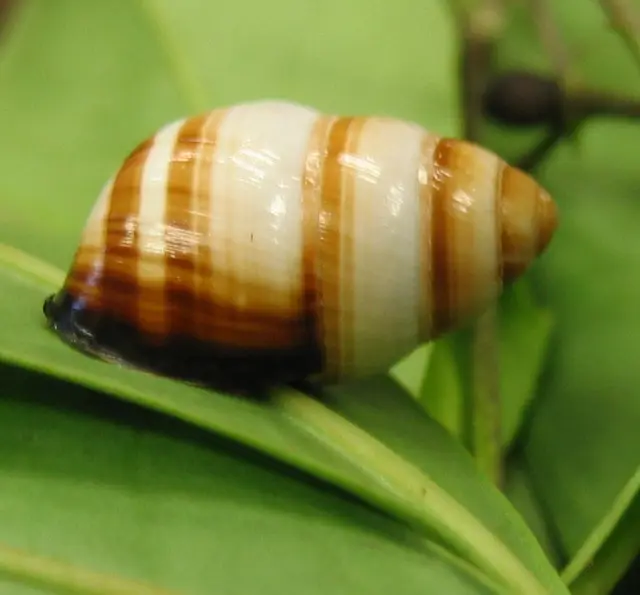
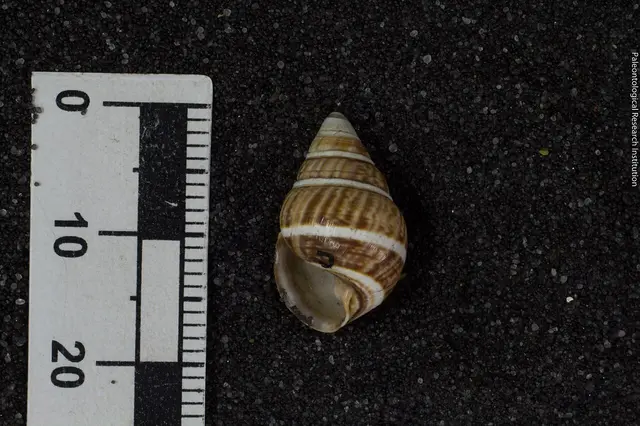
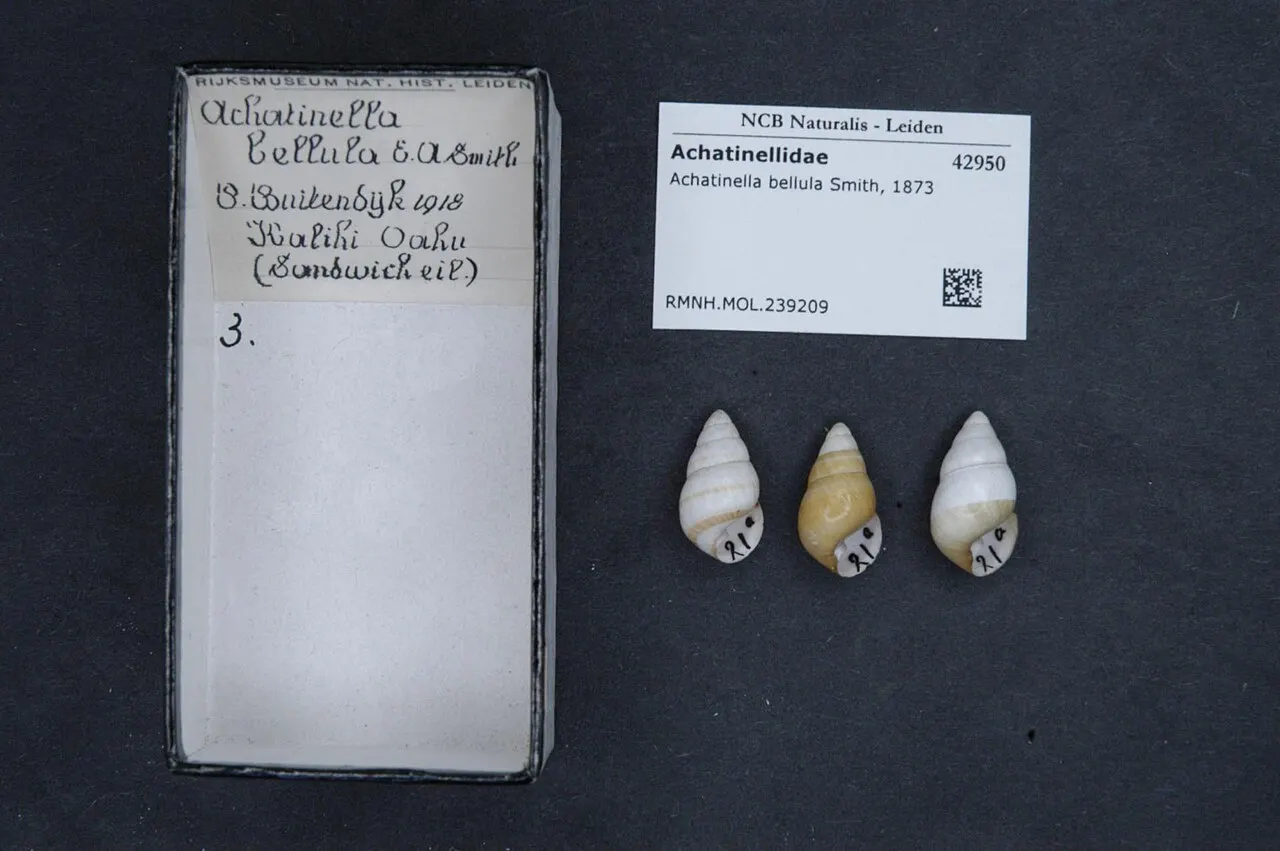
Achatinella bellula belongs to the Oahu tree snails, a group of brightly patterned, air-breathing snails with glossy shells. Across the genus, adults are roughly 0.5 to 2.5 cm long. Edgar Albert Smith described this species in 1873.
Detailed shell notes for bellula itself are scarce, which fits a snail that has hardly been seen in recent decades.
Where it lives
The IUCN lists it as native to Oahu and found nowhere else. Oahu tree snails live in native forest, usually above about 300 m, and the last populations of the genus hang on in the Waianae and Koolau ranges.
The genus is sedentary. Individual snails may spend their whole lives on a single tree, grazing at night on fungi and microscopic algae growing on leaves, and on detritus.
Pins are Wikidata “endemic to” fields. Orange dots, when present, are GBIF occurrence tiles — survey bias included.
How it lives
Oahu tree snails are hermaphrodites that breed year-round, but they are very slow. A snail usually bears a single live young, already shelled, and takes six or seven years to mature. That pace means a population cannot bounce back quickly once adults are lost.
Why it is in trouble
An early-1980s count put bellula among nine Oahu tree snail species that each numbered fewer than 20 individuals. Since 1979 no more than five specimens have been observed.
The genus has been hit by habitat loss, invasive plants, shell collectors, and introduced predators. The rosy wolfsnail, brought to Hawaii from Florida in 1955 to control a snail pest, is linked to nearly every recent native snail disappearance in the areas it has reached. Rats, Jackson's chameleons and a predatory flatworm add to the pressure. These threats are documented for the genus, not for bellula alone.
What is being done
All surviving Oahu tree snails have been federally listed as endangered since January 1981, and the genus is on CITES Appendix I. A US recovery plan followed in 1992. Hawaii's Snail Extinction Prevention Program now breeds other Achatinella species in captivity and has begun releasing them into predator-proof fenced plots. No captive population of bellula is documented, and the species' wild status is unresolved.
Sources
Written for this catalog in our own words from the sources below, checked against them on 12 November 2026. Population figures are estimates and carry the year they were made. Status and assessment year: IUCN. 2026. The IUCN Red List of Threatened Species. Version 2026-1. iucnredlist.org.
- IUCN Red List, Achatinella bellula (1996)
- Achatinella bellula, Wikipedia
- Oahu Tree Snails, Encyclopedia.com
- Achatinella, Wikipedia
- Jewels of the Forest, US Fish and Wildlife Service (2024)
- Hawaii's Snail Extinction Crisis, Scientific American
- Rare snails reintroduced after 33 years in captivity, Hawaii DLNR (2024)