Critically Endangered
Achatinella byronii
Achatinella byronii
Achatinella byronii is an Oahu tree snail, a small, glossy-shelled land snail found only on the Hawaiian island of Oahu. It is rated Critically Endangered on the IUCN Red List (assessed in 1996), and it belongs to a genus in which most species have already vanished.
How to recognise it
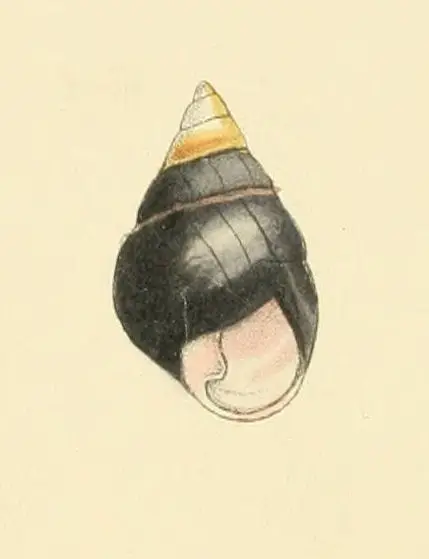
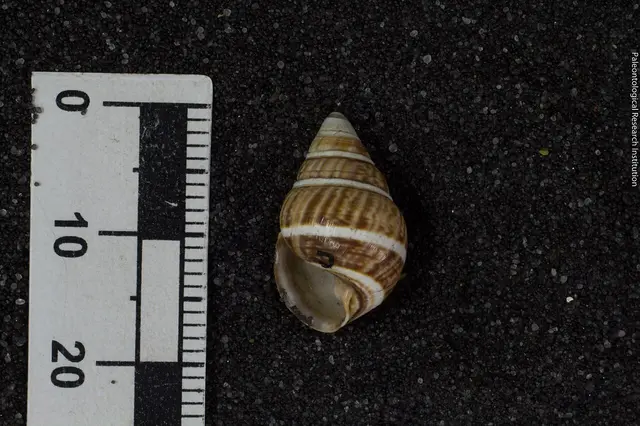
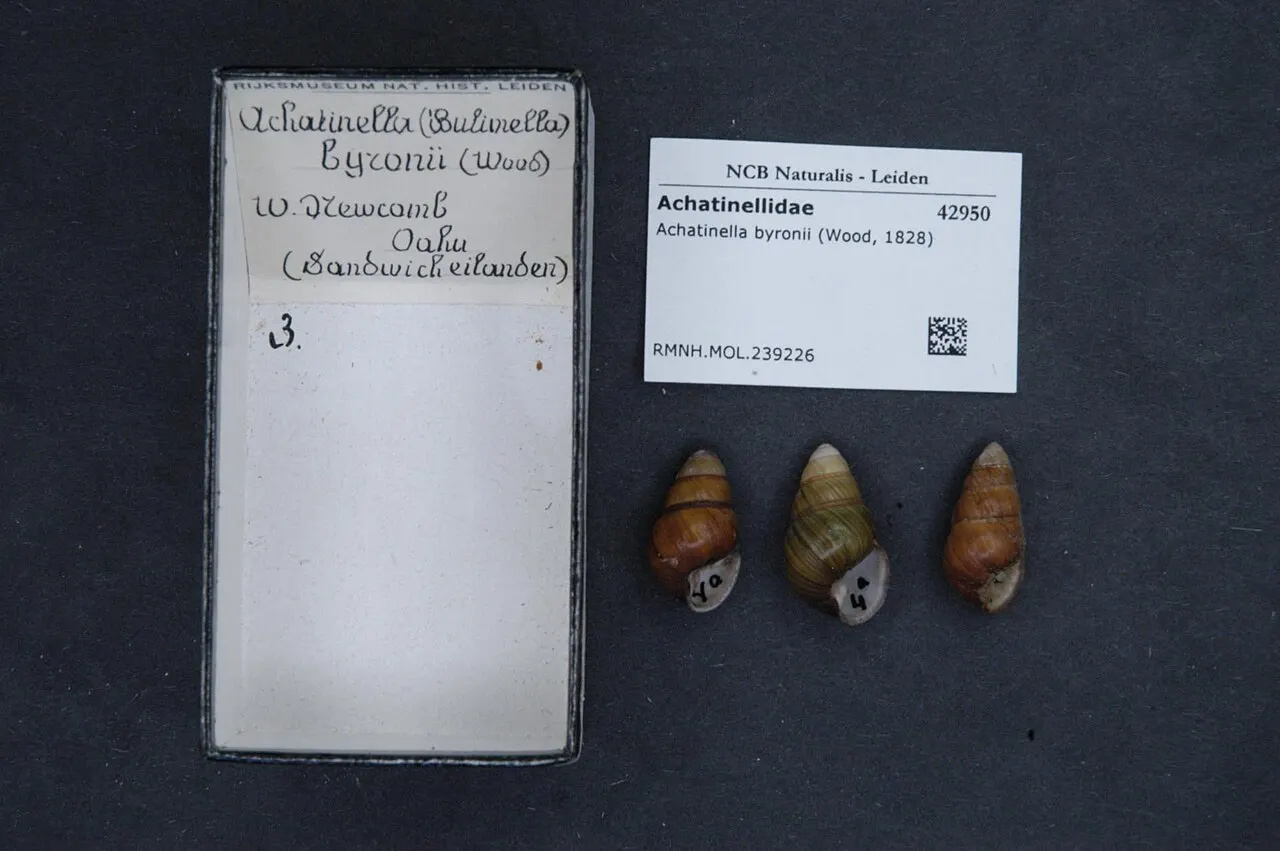
The shell is solid, glossy and pyramid-shaped with a blunt tip and about six and a half whorls. It is reported at about 20 mm tall and 11 mm wide. Shells coil either right-handed or left-handed.
The colour is mostly green, with pale yellowish-green streaks running diagonally across the last two whorls, a faint green band at the edge and a dark reddish-brown band below the seam. The embryonic whorls are pinkish gray. The opening is white, with a dark brown rim.
Where it lives
It is endemic to Oahu. The Red List records it as native to the Hawaiian Islands and found only in the United States, and gives no habitat or population figures. The genus Achatinella has been documented from the Waianae and Koolau mountain ranges.
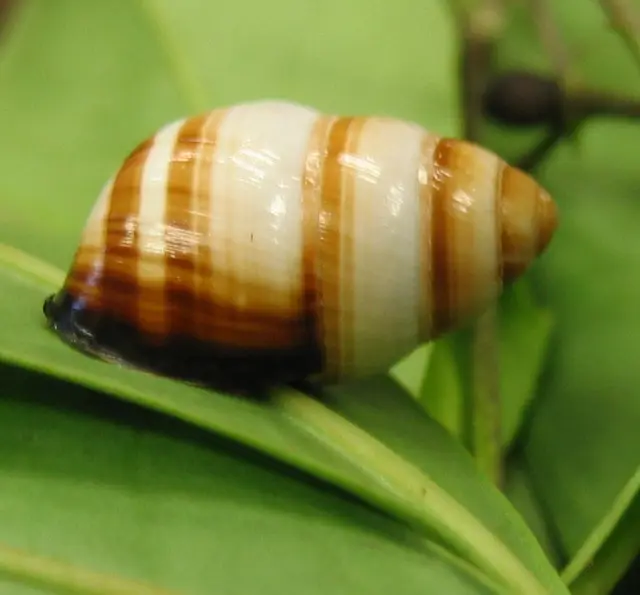
For the genus as a whole, a general account says the snails live in trees in mountain forest and shrubland above roughly 400 m, and that most spend their whole lives on a single tree.
Pins are Wikidata “endemic to” fields. Orange dots, when present, are GBIF occurrence tiles — survey bias included.
How it lives
Little has been recorded about this species alone, so what follows describes the genus. The snails graze fungus growing on leaf surfaces, are active at night and are hermaphrodites that give birth to live young. A 2024 federal review gives one to four young per adult each year, with maturity at five to seven years.
Growth and fertility are described as very low, which makes populations slow to rebuild.
Why it is in trouble
The 1996 assessment was made under the older 2.3 version of the Red List and lists no threats. For Hawaiian tree snails in general, scientists point to the introduced rosy wolfsnail (Euglandina rosea), which was brought to Hawaii to control the giant African land snail, along with rats and Jackson's chameleons. Collecting for shell leis once nearly wiped out a relative, Achatinella apexfulva. Spreading non-native plants are also reported to degrade the forest.
Of the 41 documented species in the genus, 10 are known to exist, and A. byronii is one of them according to the 2024 review. That review lists no known wild or enclosure population of A. byronii, and says some captive snails not yet identified to species may be this one. It also predicts that every Achatinella species could lose at least 86 percent of its climate-suitable habitat within 75 years.
What is being done
The genus is listed as endangered under U.S. federal law and on CITES Appendix I. Since 2012 the Snail Extinction Prevention Program, a partnership of the U.S. Fish and Wildlife Service, Hawaii's Division of Forestry and Wildlife and the University of Hawaii, has run captive rearing, predator control and predator-proof enclosures for rare Hawaiian snails. Most of the seven occupied enclosures in the Waianae range house other Achatinella species.
Sources
Written for this catalog in our own words from the sources below, checked against them on 12 November 2026. Population figures are estimates and carry the year they were made. Status and assessment year: IUCN. 2026. The IUCN Red List of Threatened Species. Version 2026-1. iucnredlist.org.
- IUCN Red List assessment 13041503 (Hadfield and Hadway, 1996), API record
- Achatinella byronii (encyclopedia entry)
- Achatinella (encyclopedia entry on the genus)
- USFWS 5-year review short form summary, Oahu tree snails (2024)
- GBIF backbone record for Achatinella byronii
- Hawaii Snail Extinction Prevention Program
- Scientific American, Extinction Countdown on Hawaii's snail crisis (2019)