Critically Endangered
Achatinella apexfulva
Achatinella apexfulva
Achatinella apexfulva was a small tree snail from the forests of Oahu, Hawaii. It is the type species of its genus, named for its yellow shell tip. Its IUCN assessment dates from 1996 and still reads Critically Endangered, but the last known snail, George, died on 1 January 2019, and the species is regarded as extinct.
How to recognise it
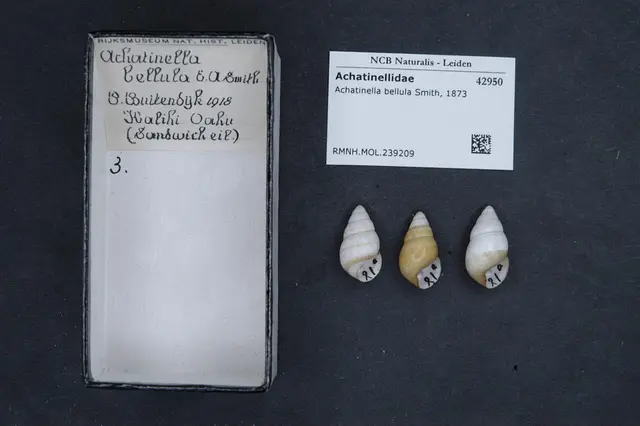
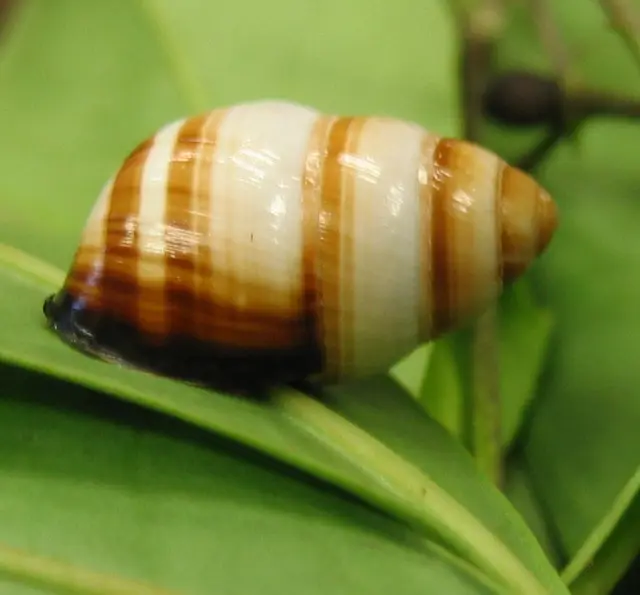
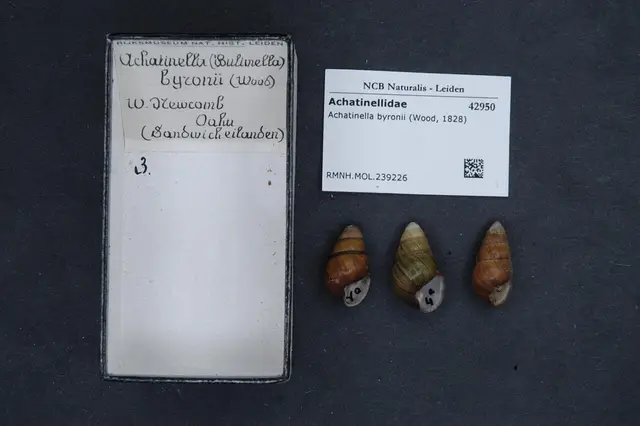
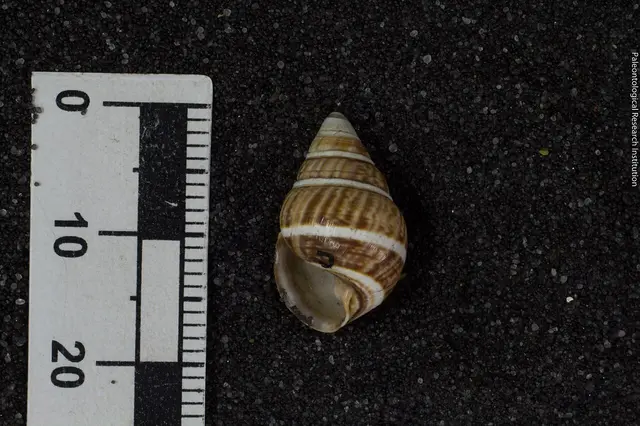
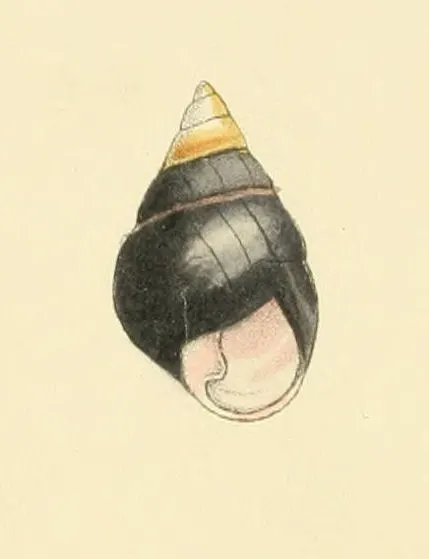
A fully grown shell was only about 19 mm long and 12 mm across, with around six whorls tapering to a point. Early descriptions note a black tip, white second and third whorls and later whorls in varied colours and patterns. The species name apexfulva means yellow-tipped.
It belongs to the Achatinellidae, a family of Hawaiian tree snails, and is the type species of the genus Achatinella.
How it lived
These snails lived on the leaves of forest trees in small groups and moved very little. They didn't eat the leaves. They grazed on algae, fungi and detritus on leaf and bark surfaces. Each snail was hermaphroditic and reportedly bore live young rather than laying eggs, though it still needed a partner to reproduce.
The shells were collected early on. Captain George Dixon visited Hawaii in 1786 and 1787, and his specimens are reported to be the first Achatinellid shells taken to Europe. A lei among them was apparently strung from shells of this species and a close relative.
Pins are Wikidata “endemic to” fields. Orange dots, when present, are GBIF occurrence tiles — survey bias included.
Why it was lost
The rosy wolfsnail (Euglandina rosea) is thought to be the main cause. It was brought to Hawaii in the 1950s (1955 in one account) to control the giant African snail, and it has since been linked to the disappearance of native snails. Introduced rats and Jackson's chameleons also eat tree snails, and introduced pigs, goats and deer damaged the forest.
The species was thought extinct until 1997, when a small population turned up in a few trees beside the Poamoho trail on Oahu. Researchers took the last 10 known snails into captivity. A few young were born, but most captive snails died, with a pathogen suspected, and only one offspring survived.
George, the last snail
George was born in the early 2000s at a breeding facility at the University of Hawaii at Manoa and was named after Lonesome George, the last Pinta Island tortoise. He reached maturity in 2012, but efforts to find him a mate failed. He lived alone and died aged 14.
His body was preserved, and his shell is to join the Bernice Pauahi Bishop Museum's collection. A piece of his foot about 2 mm across was frozen at the San Diego Zoo's Frozen Zoo in case cloning becomes possible one day.
What is being done for other Hawaiian snails
Hawaii has about 752 recognised land snail species. Many are extinct, though a 2018 survey documented about 200 still living. The Snail Extinction Prevention Program surveys remnant populations, builds predator-proof fences, moves threatened snails and breeds them in laboratories. In 2019 it was holding about 2,000 snails of 30 species that are extinct in the wild or exceedingly rare.
Sources
Written for this catalog in our own words from the sources below, checked against them on 12 November 2026. Population figures are estimates and carry the year they were made. Status and assessment year: IUCN. 2026. The IUCN Red List of Threatened Species. Version 2026-1. iucnredlist.org.