Critically Endangered
Achatinella bulimoides
Achatinella bulimoides
Achatinella bulimoides is an Oahu tree snail, one of the glossy, banded land snails that live only on that Hawaiian island. The IUCN Red List rated it Critically Endangered in 1996, an old assessment. A 2024 federal review counted none left in the wild, and about 290 are kept in captivity.
How to recognise it
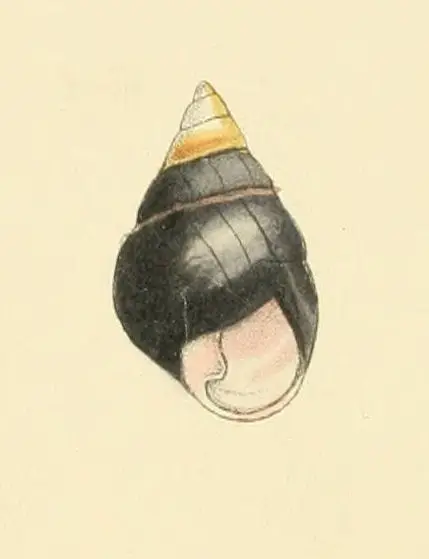
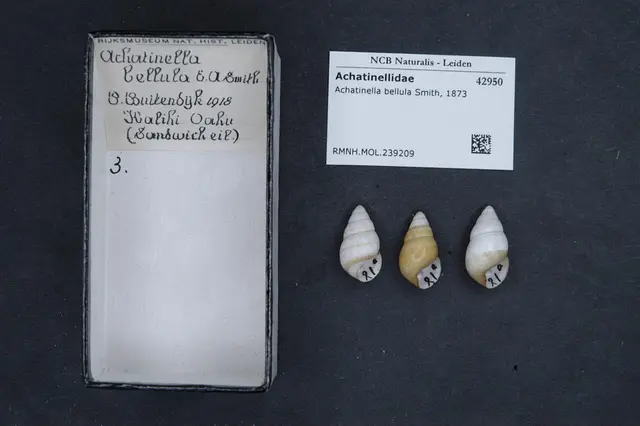
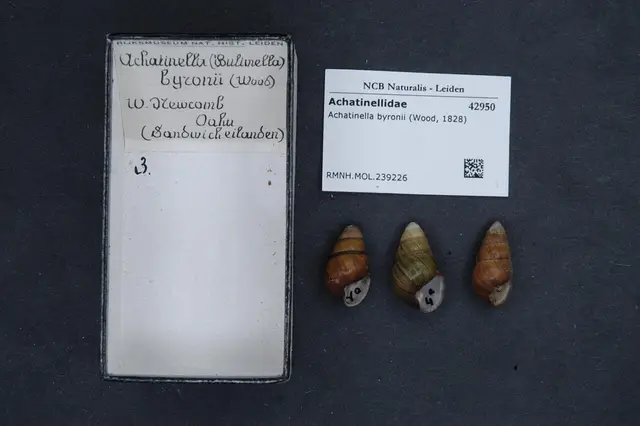
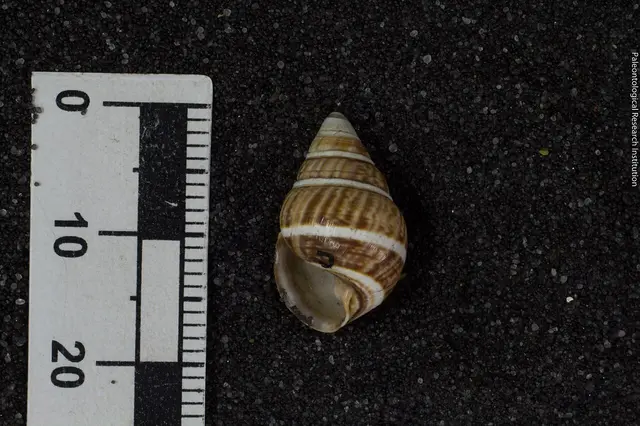
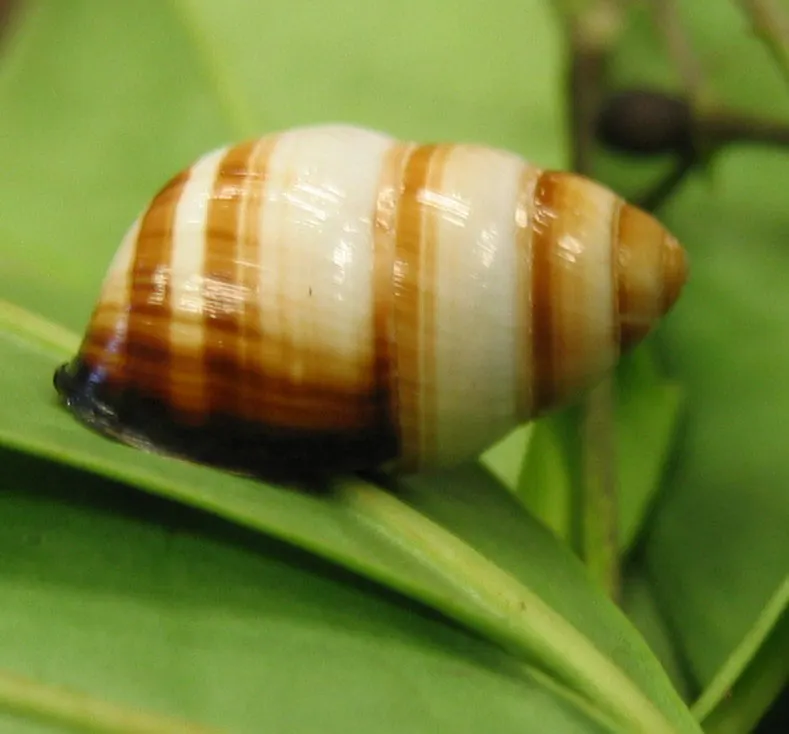
The shell is oval to oblong, usually whitish with chestnut bands and a pale brown tip, though some are pale chestnut or reddish-brown and others pure white. The opening is white. One described shell stood about 21 mm tall and 12 mm wide, with roughly six whorls. Some shells coil to the right and some to the left. A left-coiling, pale rose form called rosea is treated as a subspecies.
The snail was described by the naturalist William Swainson in 1828.
How it lives
Oahu tree snails share a way of life. They live in trees, are active at night and graze the fungus and algae that grow on leaf surfaces. They are also unusual in giving birth to live young, 3 to 4 mm long, rather than laying eggs. Each adult, which is both male and female, produces only one to four young a year and takes five to seven years to reach breeding age. That slow pace makes any loss hard to repair.
Captive snails are fed surface films on vegetation collected in the forest, and in the lab, mould grown in dishes has worked well too.
Pins are Wikidata “endemic to” fields. Orange dots, when present, are GBIF occurrence tiles — survey bias included.
Where it lives
The species is endemic to Oahu. The island's tree snails have been recorded from the Waianae and Koolau mountain ranges, but the sources give no location where this species last lived in the wild. A 2011 federal review counted two wild individuals.
Why it is in trouble
The biggest single blow came from the rosy wolfsnail, a predatory snail brought to Hawaii to control the giant African snail. It proved highly effective at killing native snails. Rats, Jackson's chameleons and the New Guinea flatworm have also cut native populations, and chameleons breached a snail enclosure barrier, delaying a planned release in 2023. These threats are described for Oahu tree snails as a group.
The 2024 federal review of Oahu tree snails put the number of wild A. bulimoides at zero. Climate modelling cited in that review suggests this species is likely to lose all of its climate-suitable habitat on Oahu within 75 years. That matters for any future release.
What is being done
The state's Snail Extinction Prevention Program has kept this species in captivity since 2005, and the captive stock stood at 290 snails in the 2024 review. The program breeds snails indoors, and wildlife managers have built predator-proof enclosures with slick walls and low-voltage barriers for releasing them. As of 2024 none of this species had been moved into an enclosure.
Captive colonies have their own problems. Unexplained die-offs have hit captive Oahu tree snails in late September and early October for three years running, and a pathogen or parasite is suspected.
Sources
Written for this catalog in our own words from the sources below, checked against them on 12 November 2026. Population figures are estimates and carry the year they were made. Status and assessment year: IUCN. 2026. The IUCN Red List of Threatened Species. Version 2026-1. iucnredlist.org.