Critically Endangered
Achatinella pulcherrima
Achatinella pulcherrima
Achatinella pulcherrima is a brightly banded Oahu tree snail, a live-bearing land snail found only on the Hawaiian island of Oahu. The IUCN Red List rated it Critically Endangered in 1996. In the early 1980s it was estimated at 50 or fewer individuals, and numbers have probably fallen since.
How to recognise it
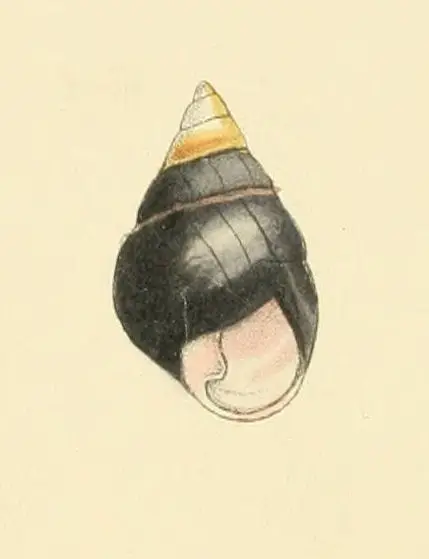
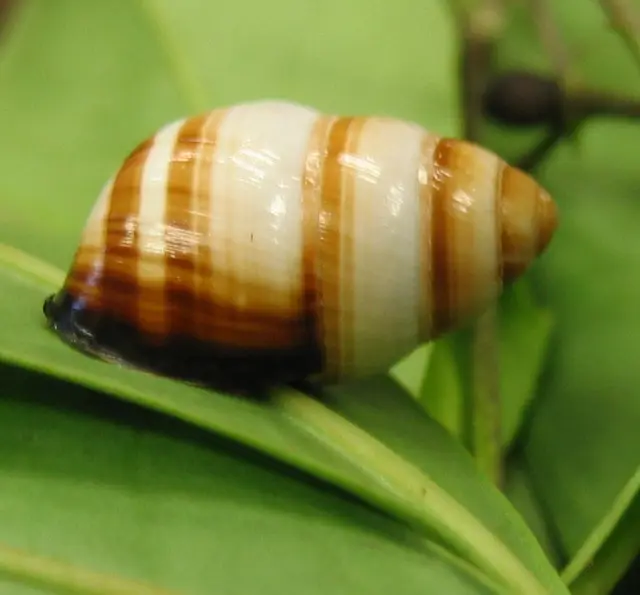
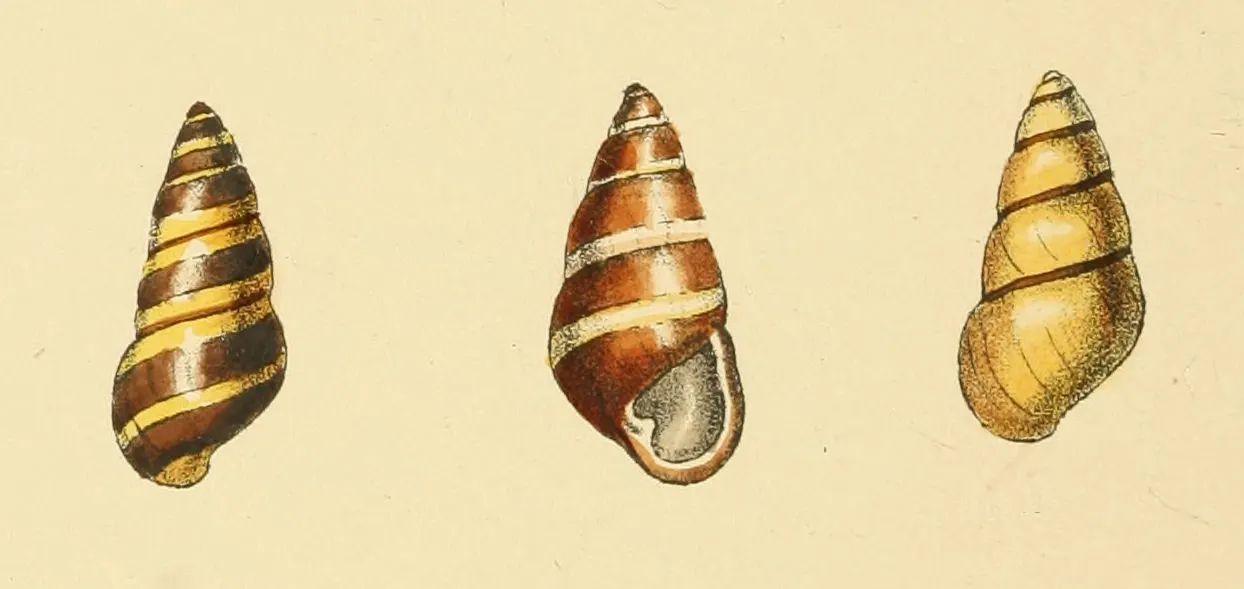
The shell is slender and oblong, about 20 mm tall and 11 mm wide, with six whorls that coil to the right. Colour varies a lot. Many shells are deep chestnut with one to three bands of orange, yellow or white, while others are white or yellow with a few broad chestnut bands. The lip is brown.
William Swainson described it in 1828. The American malacologist Henry Pilsbry treated it as a subspecies of Achatinella byronii, but it is now listed as a species in its own right.
Where it lives
Oahu tree snails generally live in undisturbed native forest, usually above about 300 m. This species is endemic to Oahu, and the IUCN lists the United States (Hawaiian Islands) as its range.
Detailed, current locality data for this particular species are scarce, and most of what is known about habitat and behaviour comes from the Oahu tree snails as a group.
Pins are Wikidata “endemic to” fields. Orange dots, when present, are GBIF occurrence tiles — survey bias included.
How it lives
Oahu tree snails graze fungi, microscopic algae and detritus on leaf and bark surfaces, not the leaves or bark themselves. Native plants such as ohia host the fungi they feed on.
Each adult is both male and female, but they don't fertilise themselves. They bear live young with fully formed shells, usually one at a time, and reach maturity at about six or seven years of age (genus-level information). That slow pace makes it very hard for a population to bounce back from losses.
Why it is in trouble
Oahu tree snails fell sharply in the twentieth century. The rosy wolfsnail (Euglandina rosea), a carnivorous snail released in 1955 to control the giant African snail, has eliminated tree snails wherever it became established. Rats bite through their shells, Jackson's chameleon, brought from Kenya, has spread into higher-elevation snail habitat, and native forest has been lost to farming, building and invasive weeds. Collecting by hikers and collectors added to the damage.
In the early 1980s this species was estimated at 50 or fewer individuals. Whole-genus populations are now put at about 5 to 10 percent of 1960 levels.
What is being done
All Achatinella species were listed as endangered under U.S. law on 13 January 1981, and the species is on CITES Appendix I, which bans international commercial trade. A 1992 federal recovery plan covers the Oahu tree snails of the genus. Hawaii's Snail Extinction Prevention Program and partners, including the Oahu Army Natural Resource Program, the U.S. Fish and Wildlife Service and the University of Hawaii, build predator-proof enclosures to protect remnant groups.
In early 2013, staff removed all 24 snails of a rapidly declining Oahu tree snail population (a different species from this one) to escape heavy rat predation, and later returned them to a new predator-proof enclosure in the Honouliuli Forest Reserve.
Sources
Written for this catalog in our own words from the sources below, checked against them on 12 November 2026. Population figures are estimates and carry the year they were made. Status and assessment year: IUCN. 2026. The IUCN Red List of Threatened Species. Version 2026-1. iucnredlist.org.