Critically Endangered
Achatinella fuscobasis
Achatinella fuscobasis
Achatinella fuscobasis is a small, left-coiled tree snail from the Koʻolau Mountains of Oʻahu, Hawaii. The IUCN record, dating from 1996, lists it as Critically Endangered. The last wild snails were collected in 1991, and a captive population is now being returned to the forest.
How to recognise it
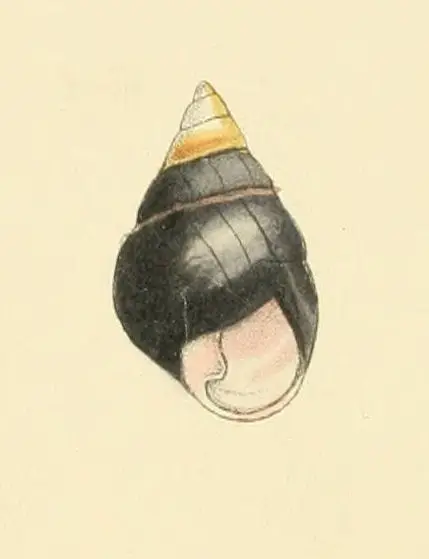
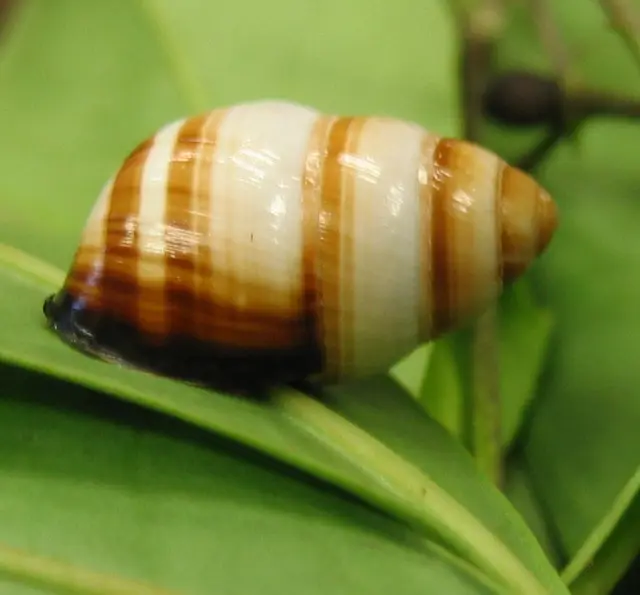
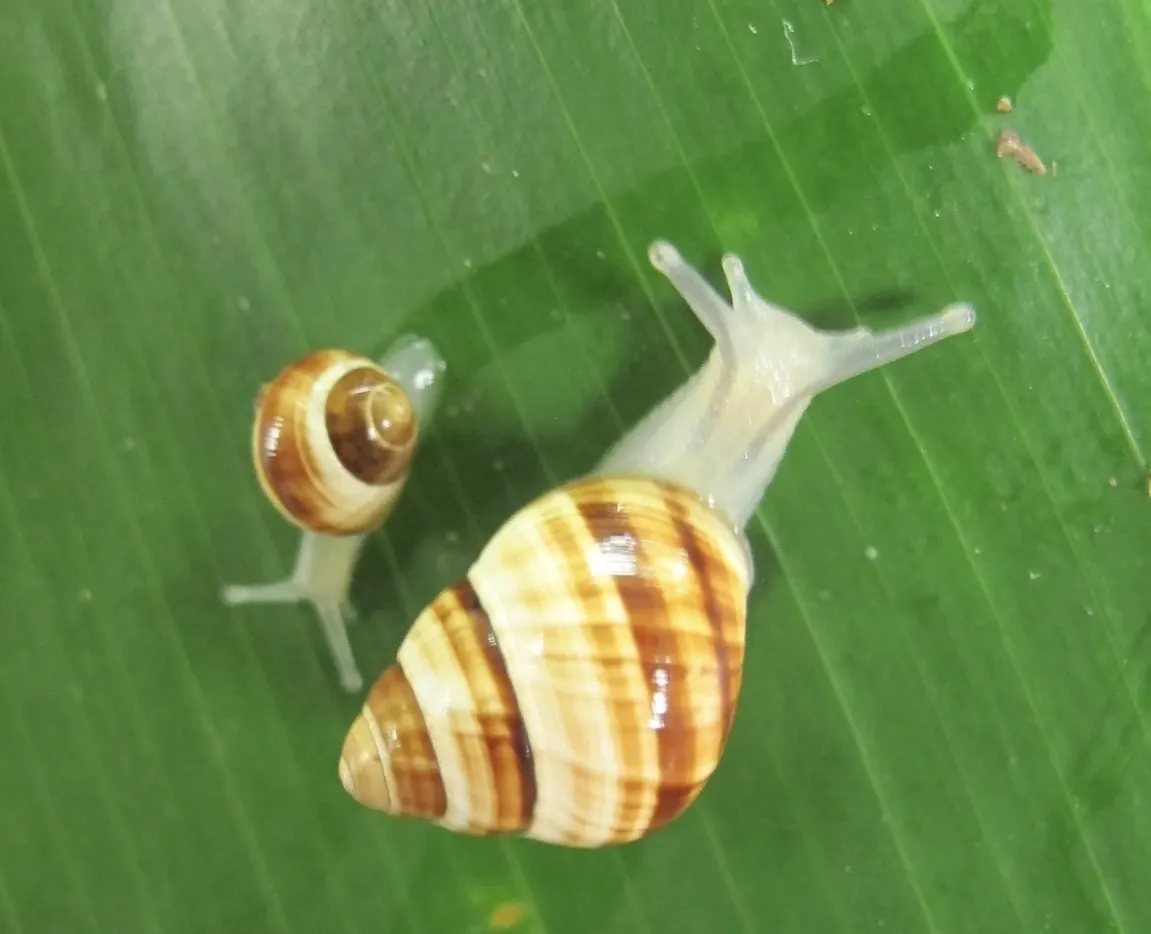
The shell coils to the left, which is unusual in snails, and is ovate with six whorls. It is glossy white, with a yellowish last whorl crossed by a brown band, and a brown base. A full-grown shell stands about 16 mm tall and 10 mm wide, with a strong fold on the central column.
Where it lives
This snail belongs to the Oʻahu tree snails and is endemic to Hawaii. The Red List records it from the Hawaiian Islands and the United States. Its range is reportedly limited to roughly 100 to 250 square km of high mountain forest, mostly on the leeward side of the Koʻolau range.
Pins are Wikidata “endemic to” fields. Orange dots, when present, are GBIF occurrence tiles — survey bias included.
How it lives
These snails graze rather than chew. They scrape thin films of black mould and fungus from leaf surfaces with a rasp-like tongue, which does no harm to the tree.
Hawaiian tree snails in general give birth to live young, usually one at a time, and produce only about 1 to 5 a year, starting to breed at around 5 years old. Those figures describe the group as a whole rather than A. fuscobasis specifically, but they show why a population recovers over decades, not seasons.
Why it is in trouble
Introduced predators did most of the damage. Rats, the New Guinea flatworm and Jackson's chameleons all prey on native snails. The rosy wolfsnail was brought in to control the giant African snail, then turned on native snails instead. Forest clearing for agriculture, fire, drought and collecting added to the losses.
In 1991 the University of Hawaiʻi researcher Michael Hadfield collected the last 11 wild snails from the only known Oʻahu populations, and the species has been considered extinct in the wild since. The Red List record dates from 1996 (criteria A1ce, B1+2abcde) and holds no population or threat details. Of the more than 750 Hawaiian tree snail species once known, at least 60 percent have gone extinct in the past century.
What is being done
Those 11 snails founded a captive colony that has passed 1,000 animals, held at the Snail Extinction Prevention Program lab in Pearl City. The program sits within the state Department of Land and Natural Resources and works with the US Fish and Wildlife Service and the University of Hawaiʻi. The species is also reportedly on CITES Appendix I.
On 10 December 2024, after more than 33 years in captivity, the first snails were released into a fenced exclosure in the Honolulu Watershed Forest Reserve. The state describes the site as a quarter-acre, with walls, copper mesh and a hood to keep out rats, chameleons and rosy wolfsnails. The release had been planned for late 2023 but slipped when Jackson's chameleons got past the barrier. Preparing the site took about five years, including roughly 600 hours of predator removal.
Bishop Museum and the Honolulu Zoo are to rear the species in new snail labs. The aim is a second, safeguard population rather than full recovery, and a second group of snails was scheduled for release in February 2025.
Sources
Written for this catalog in our own words from the sources below, checked against them on 12 November 2026. Population figures are estimates and carry the year they were made. Status and assessment year: IUCN. 2026. The IUCN Red List of Threatened Species. Version 2026-1. iucnredlist.org.