Critically Endangered
Achatinella fulgens
Achatinella fulgens
Achatinella fulgens is an Oahu tree snail, one of the Hawaiian kahuli, found only in the southern Koolau Range on Oahu. Its last known wild population was wrecked by a landslide in 2016, and the species now survives in a captive breeding programme. Its IUCN rating of Critically Endangered dates to 1996.
How to recognise it
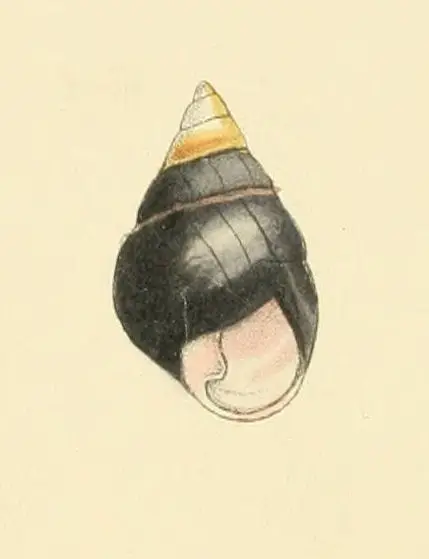
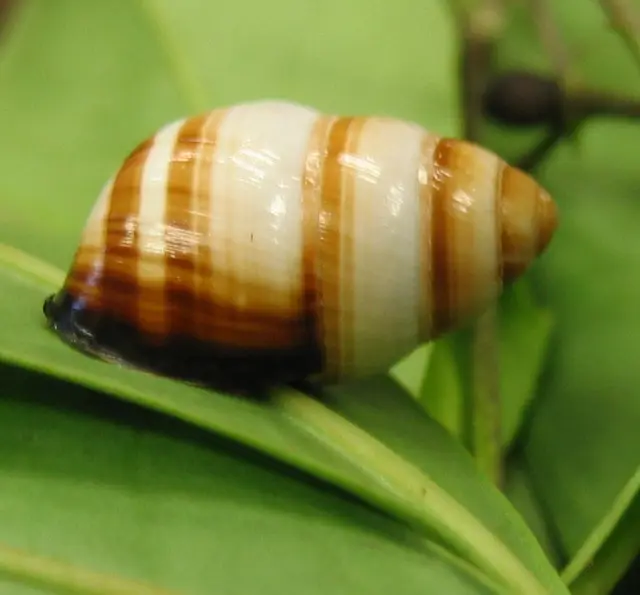
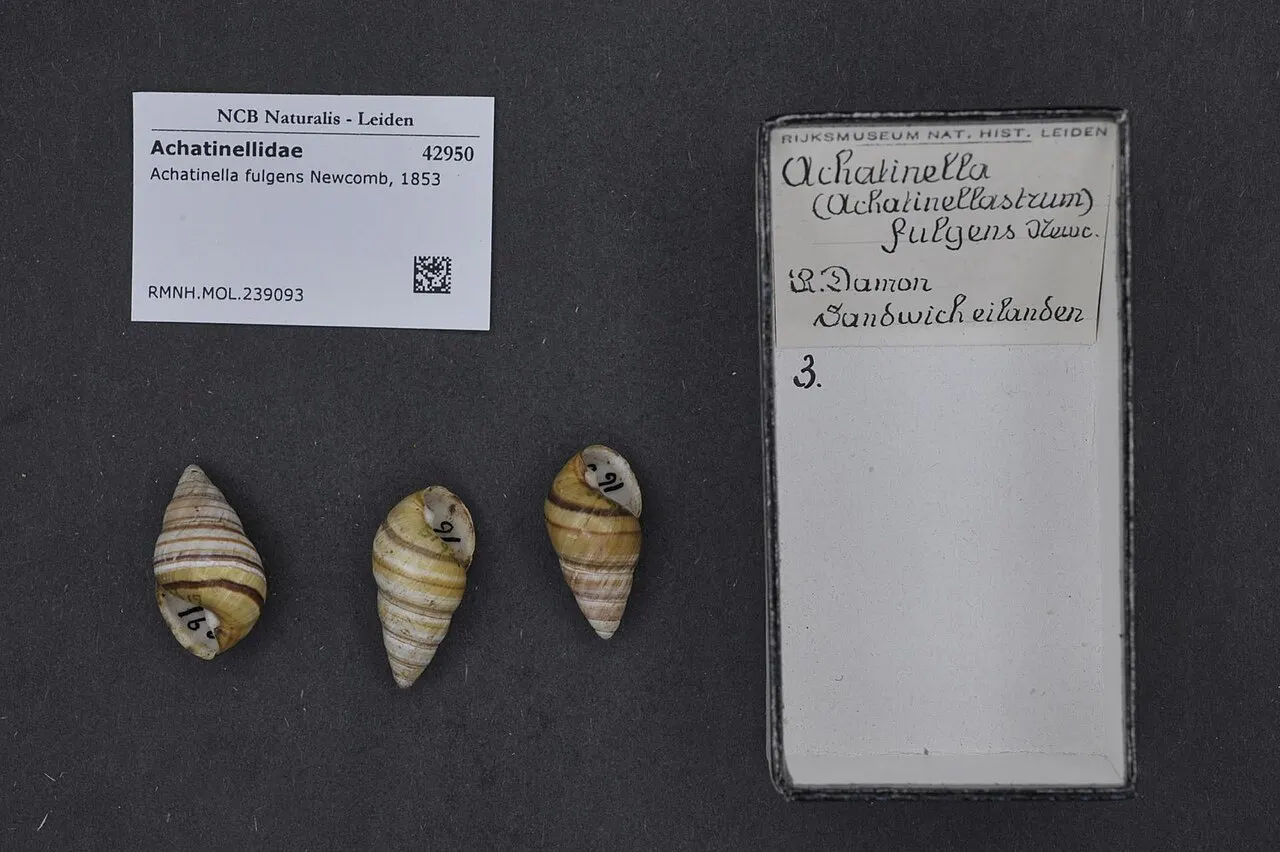
It is a glossy, cone-shaped tree snail with an ivory shell marked by coloured bands that range from gray and mahogany to near black. Shells in the genus Achatinella average about 1.9 cm long, and colour and pattern vary widely. William Newcomb described this species in 1853.
Where it lives
The species is endemic to the southern Koolau Range on Oahu. It lives in trees, mainly in guava forest at lower elevations, in the hills above Waikiki and Honolulu. Every Achatinella species is native to Oahu.
Pins are Wikidata “endemic to” fields. Orange dots, when present, are GBIF occurrence tiles — survey bias included.
How it lives
Achatinella snails are active at night and graze the fungus that grows on leaf surfaces, rather than eating the leaves. Adults are hermaphrodites and give birth to live young instead of laying eggs.
They are slow breeders. Hawaiian tree snails take five or more years to reach maturity, produce fewer than ten young a year, and can live well into their teens. A population cannot bounce back quickly, and rebuilding one often takes decades.
Why it is in trouble
The biggest killer of Hawaiian tree snails is the rosy wolf snail, a predatory snail brought from Florida in the 1950s to control the giant African snail. It tracks native snails by their slime trails. Rats, introduced Jackson's chameleons and habitat loss add to the pressure.
For this species, the final blow was physical. After a heavy storm in 2016, a mudslide above Waikiki toppled the trees of its last known wild colony. Only six snails were found.
What is being done
Those six went into a captive breeding programme, run from a trailer lab outside Kailua with climate-controlled chambers. By 2022 more than 50 had been bred, with a goal of over 100. A count of 91 in captivity in 2024 is reported.
The species is on CITES Appendix I. Predator-proof enclosures have been built in Hawaii, using barriers such as slick metal surfaces and a low-voltage wire against rosy wolf snails, though many more are still needed.
Sources
Written for this catalog in our own words from the sources below, checked against them on 12 November 2026. Population figures are estimates and carry the year they were made. Status and assessment year: IUCN. 2026. The IUCN Red List of Threatened Species. Version 2026-1. iucnredlist.org.