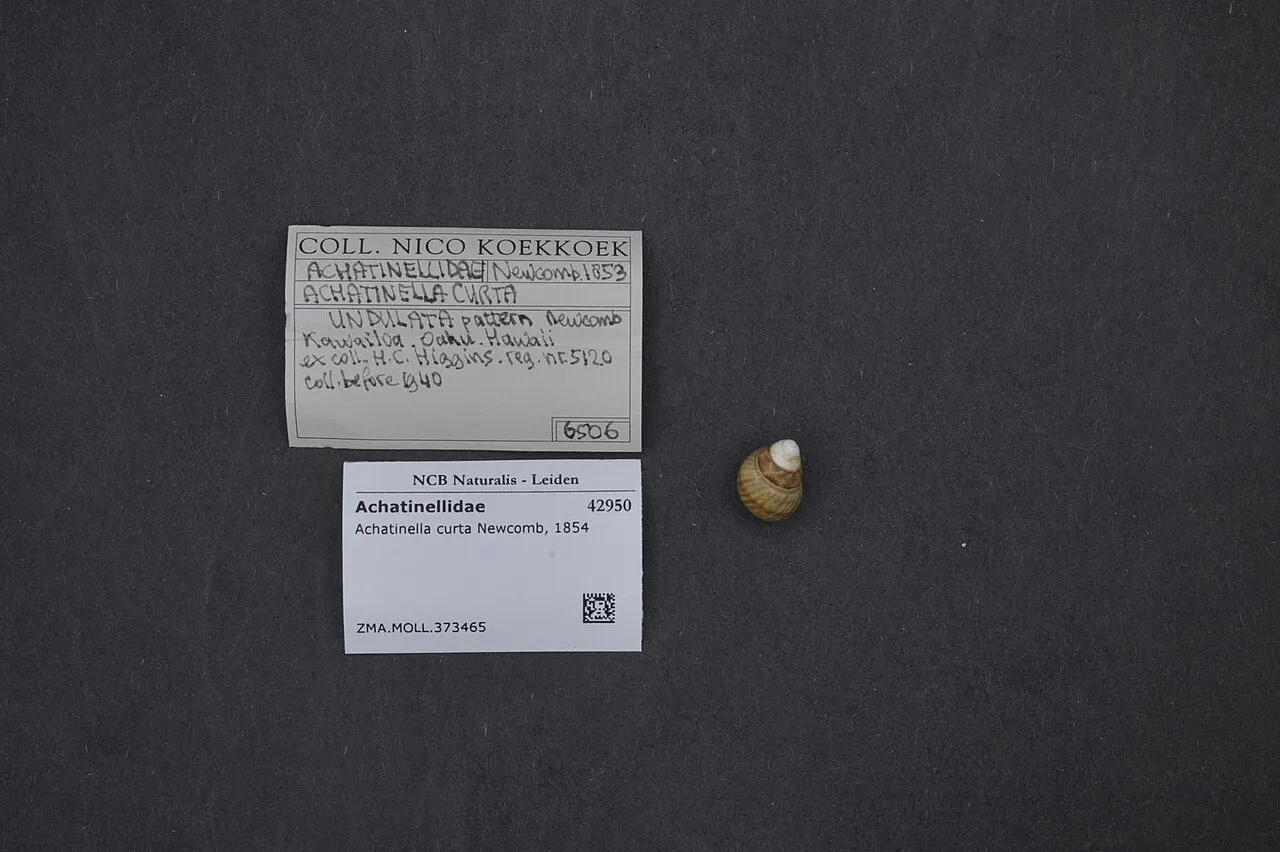
Critically Endangered
Achatinella curta
Achatinella curta
Achatinella curta is a small, long-lived tree snail from the island of Oahu, Hawaii, found nowhere else. The IUCN Red List rated it Critically Endangered in 1996. It was last seen alive in 1990, and a 2008 Army plan reported no known individuals in the wild.
How to recognise it
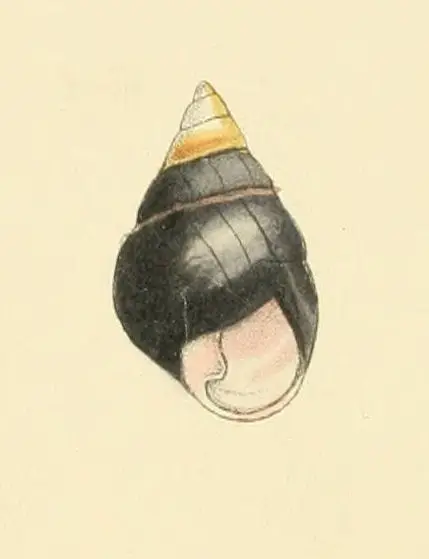
Adults grow to about 21 mm long and 10 mm wide, with up to five whorls. The shell is polished yellow or chestnut, usually plain or with a single black band along the suture, and only rarely carries two or more bands on the last whorl. The coil can run either way. Some individuals have right-handed shells and others have left-handed ones.
Newcomb described the species in 1854. It belongs to Achatinella, a group of 41 Oahu tree snails, all of them endemic to the island.
Where it lives
The IUCN lists it as native to the Hawaiian Islands and endemic to the United States. In practice that means Oahu. The last known sites were in the northern Koolau Mountains, around Paalaa Uka on the ridge south of Opaeula Gulch and along the Peahinaia and Kawailoa trails. A 2008 Army conservation plan records the final sighting in 1990, with the Kawailoa trail as the last observed location.
Earlier sightings came from mesic to wet forest, on native trees such as ohia lehua (Metrosideros polymorpha) and hame (Antidesma platyphyllum).
Pins are Wikidata “endemic to” fields. Orange dots, when present, are GBIF occurrence tiles — survey bias included.
How it lives
Almost nothing has been published on this species alone, so what follows describes the genus. Oahu tree snails live in trees and bushes and are mostly active at night, grazing on fungus that grows on leaves and trunks. By day they seal themselves against a leaf to avoid drying out. They are hermaphrodites, they give birth to live young, and they grow and breed slowly. For the best-studied species, A. mustelina, sexual maturity takes three to five years, and females produce only four to seven young a year.
Why it is in trouble
Hawaii's State Wildlife Action Plan names the same pressures for the whole genus. It estimates a loss of 75 to 95 percent of native habitat. Rats eat the snails, and the carnivorous rosy wolfsnail (Euglandina rosea) was brought to the islands to control the giant African snail and went on to prey on native species. Invasive plants such as strawberry guava degrade what forest is left, and collecting for leis and ornaments probably added to the losses. The Army plan also lists flatworms and a small predatory snail, Oxychilus alliarius, as threats to the genus.
A. curta has not been recorded since 1990. The IUCN record dates from 1996 and gives no population estimate or trend, and the species is not formally listed as extinct. The 2008 Army plan stated there were no known wild individuals, and planned surveys of the last observed sites.
What is being done
Achatinella is listed as endangered under United States federal law, and the State of Hawaii lists it as endangered too. The Army's plan committed to survey the last known sites for A. curta each year with two people for two days. It put surveying and captive breeding at the top of its priorities for two other species, A. apexfulva and A. bulimoides, which were still being found. For A. curta, no animals are reported in captivity, so the immediate task is to find any survivors.
Sources
Written for this catalog in our own words from the sources below, checked against them on 12 November 2026. Population figures are estimates and carry the year they were made. Status and assessment year: IUCN. 2026. The IUCN Red List of Threatened Species. Version 2026-1. iucnredlist.org.