United Arab Emirates
4 catalog pins
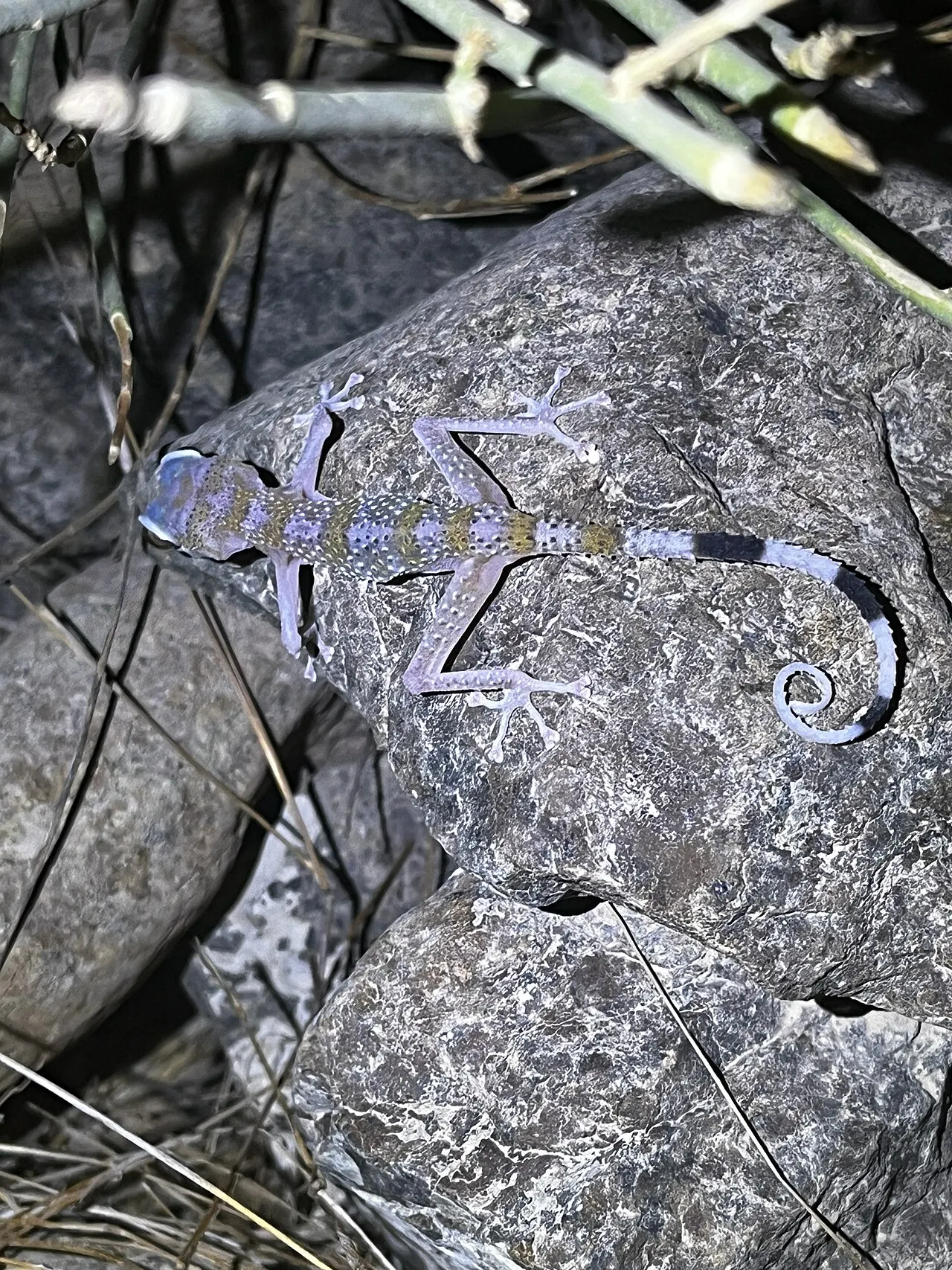
4 animals in this catalog carry a structured country pin for United Arab Emirates. That is a filing fact, not a claim that the crisis is only here.
The photograph is one of those animals: Emirati leaf-toed gecko. Open a dossier for the text, the status, and the map. Use the world map to jump to another country. Confirm official distributions on the Red List.
The United Arab Emirates sits on the Arabian Peninsula and is mostly desert. According to its Convention on Biological Diversity profile, desert covers about 80% of the country and mountains about 2.6%. The coast runs for 2,390 km along the Arabian Gulf and the Sea of Oman. Within that dry setting there are mangroves, mudflats, salt pans, dunes, wadis and mountain slopes.
Threatened animals are recorded here mainly because of the sea and a few dry-land specialists. The same profile counts about 500 fish species and 40 coral reef varieties, and it names overuse of marine resources among the main pressures.
Where the pressure comes from
The country's own CBD profile lists invasive alien species, climate change, red tide, overgrazing, overuse of marine resources, desalination, wastewater, tourism and oil spills along the coast as pressures. It also points to falling water tables and rising salinity as aquifers are drawn down. The profile is marked as a draft awaiting the country's approval, so treat its detail with some care.
Sharks and rays are a clear case. A 2023 report in The National said that of about 30 shark species in the Arabian Gulf, more than 75% appear on the IUCN threatened list. It named overfishing, habitat loss and climate change as threats, and noted that many sharks are taken as bycatch while boats target tuna or barracuda.
On land, hunting wiped out many large mammals over the last century, and feral goats and donkeys slow the recovery of native gazelles. Hunting is now banned.
What is being done
In 2013, 22 protected areas covering 6,841 km2 were declared, five of them Ramsar wetlands. Sharjah's Breeding Centre for Endangered Arabian Wildlife opened in 1998 to breed threatened species. In 2019 the Environment Agency Abu Dhabi recorded an Arabian caracal in Jebel Hafeet National Park, the first sighting in Abu Dhabi since 1984.
For sharks and rays, the 2023 report described a ban on fishing CITES-listed species, a closed fishing season from March to June to protect breeding, a bar on catching sharks within eight nautical miles of the mainland, and a rule against taking sharks only for their fins. It said a wider CITES listing covering 56 species was due to take effect and that the national shark order was expected to be updated.
Reading the catalog for the United Arab Emirates
The pins are few. Three of the four records are sharks, rays and guitarfish (Elasmobranchii), and one is a gecko of the genus Asaccus. That mix matches the picture above: the country's threatened wildlife is concentrated in its coastal waters, with a small remainder on land.
Sources for this section
- Wildlife of the United Arab Emirates: habitats, hunting, feral grazers, Breeding Centre 1998, caracal 2019
- CBD country profile, United Arab Emirates: desert 80%, coastline, species counts, 2013 protected areas, pressures
- The National, new measures to protect sharks in UAE waters (2023-03-04): shark threat share, bans, CITES listing, bycatch
What the catalog records for United Arab Emirates
The catalog has 4 animals with a country pin for United Arab Emirates: 2 Critically Endangered and 2 Endangered. By GBIF class the largest groups are Elasmobranchii (3), Squamata (1). The families with the most records are Myliobatidae (2), Phyllodactylidae (1), Rhinobatidae (1). A pin means a structured source (Wikidata or a GBIF match) places the animal in United Arab Emirates; it does not say the animal lives only there.
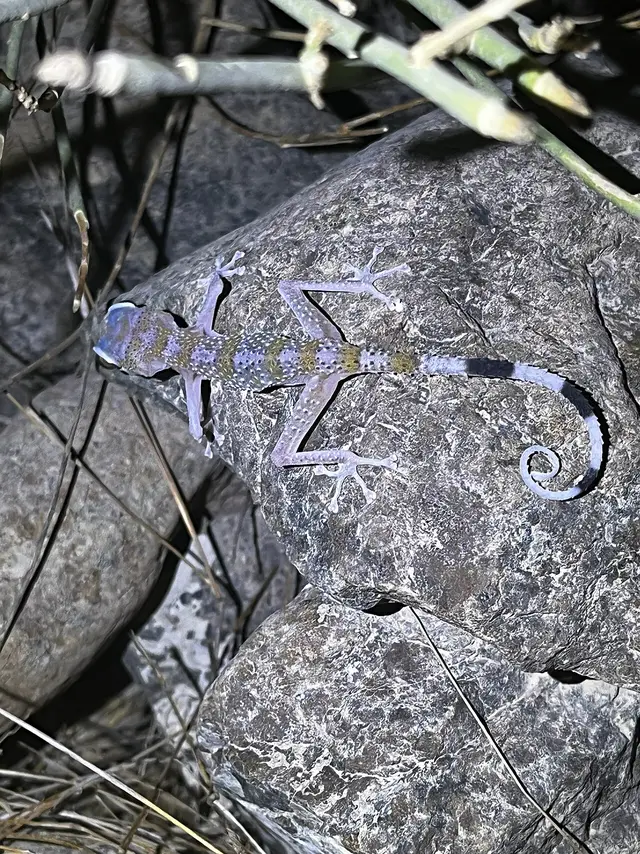 CR
Emirati leaf-toed gecko
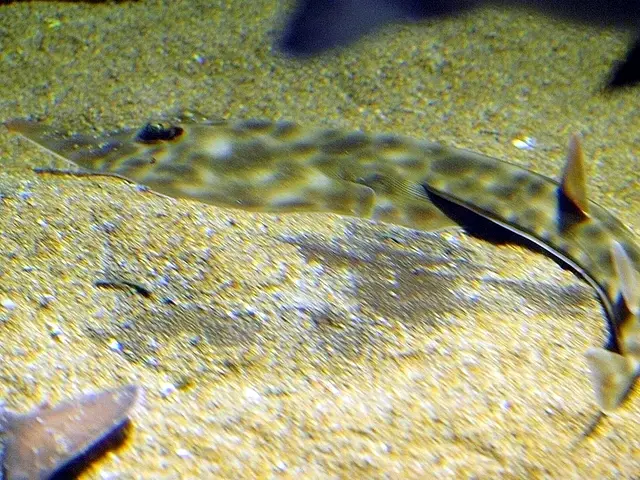 CR
Brown guitarfish
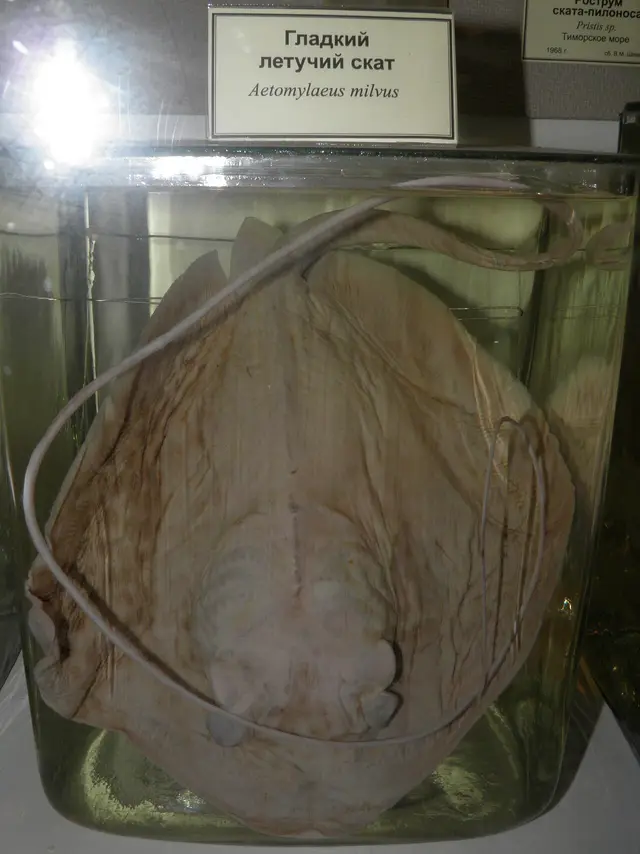 EN
Ocellate Eagle Ray
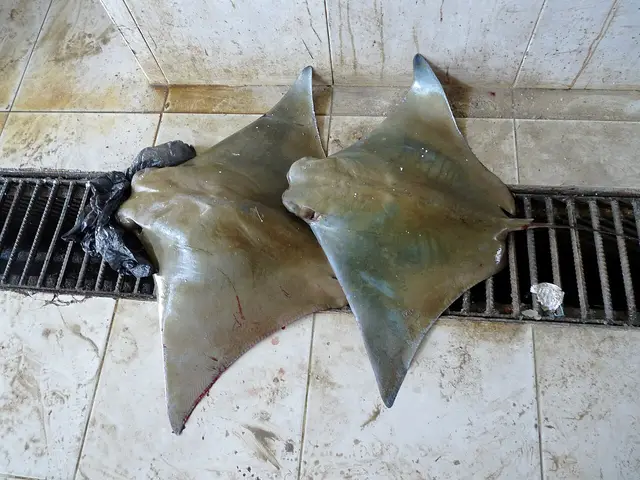 EN
Oman Cownose Ray
Total pins: 4.
Quick answers
- Do all these animals live only in United Arab Emirates?
- No. A pin means a Wikidata place field resolved here. Official ranges can be wider.
- Is this a government list?
- No. It is a slice of this catalog.