Endangered
Zona
Bedotia geayi
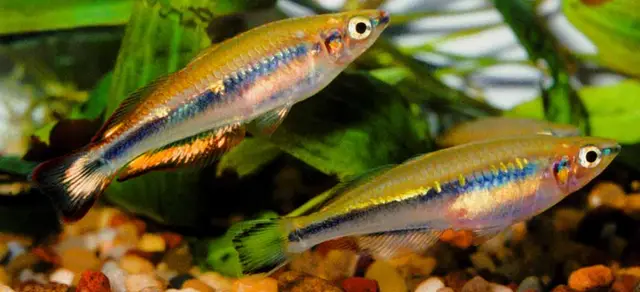
The zona (Bedotia geayi) is a slim Madagascan rainbowfish found only in forest streams of the Mananjary River basin in eastern Madagascar. The IUCN Red List classed it as Endangered in 2020. Males carry a red chin spot and red fins, and the fish long sold in aquariums as 'geayi' is a different species.
How to recognise it
The zona is a gracile, long-bodied fish. The largest specimen measured in a 2007 redescription by Loiselle and Rodriguez was a 74 mm male (standard length). The eleven original specimens, described in 1907, ranged from 48 to 74 mm.
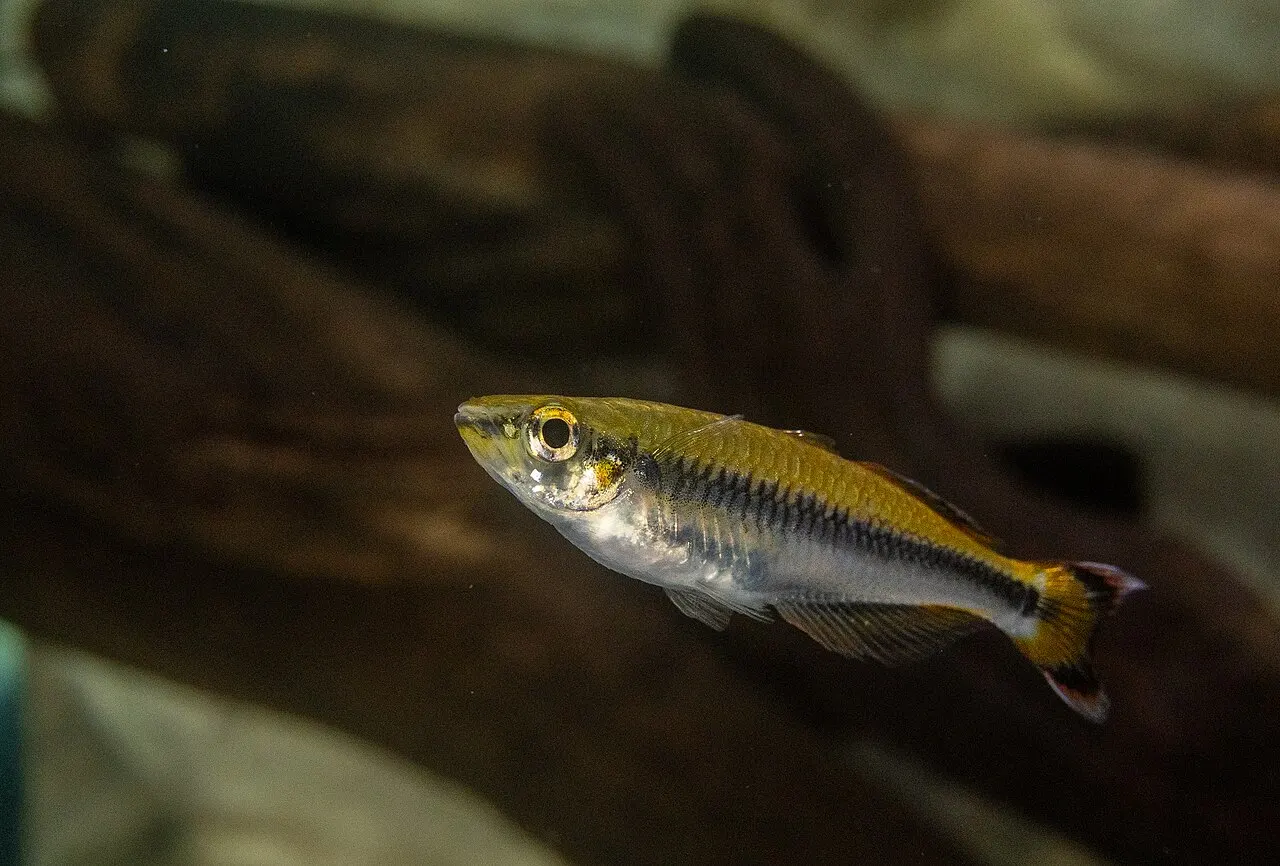
Both sexes have a clear black spot at the base of the tail. In females it is ringed by a yellow halo. Living males have red margins on the dorsal and anal fins, a red tail and a large red spot on the chin. The pectoral fins are clear in both sexes.
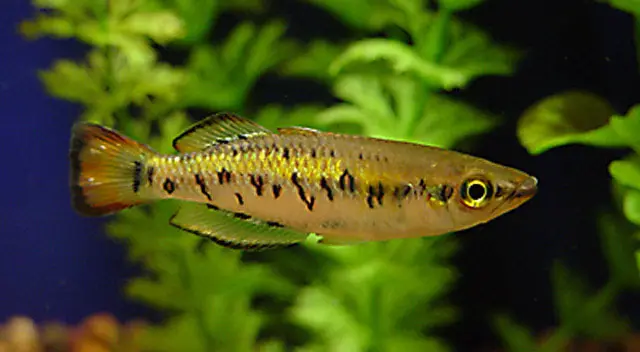
For decades aquarists knew a similar fish under this name. The 2007 study showed that fish is a separate species, Bedotia madagascariensis. Wild zonas lack the black band near the tail edge and the yellow in the dorsal and anal fins seen in that aquarium fish, and they do not show its red or white fin variation. Aquarists also report that the zona usually has two lengthwise stripes where the aquarium fish has one.
Where it lives
Bedotia geayi is known only from the Mananjary River drainage. The first specimens came from the Maha River, a tributary on the north bank near the town of Morafeno, at roughly 300 m above sea level. It has since been collected from several south-bank tributaries. The IUCN puts its extent of occurrence at about 1,928 square kilometres and counts a single location.
It lives in small streams under partial or complete forest cover between about 300 and 650 m. It has not been collected at low elevations in the basin, possibly because the land around the town of Mananjary has been heavily altered. In the neighbouring Namorona basin to the south, an undescribed Bedotia takes its place.
Pins are Wikidata “endemic to” fields. Orange dots, when present, are GBIF occurrence tiles — survey bias included.
How it lives
Zonas have been seen in loose groups of up to about a dozen fish, sorted by size. The streams often run fast, but the fish favour the shaded, quieter stretches. Juveniles stay in the shallows, while adults use deeper water away from the banks.
Almost nothing is recorded about its diet, breeding or predators. Loiselle and Rodriguez suggested these resemble the habits of its relative B. madagascariensis, but that remains an assumption.
Why it is in trouble
The IUCN classed the zona as Endangered under criterion B1ab, based on a small range, a single location and continuing decline in habitat. The trend is decreasing, and the listed threats include the unintended effects of large-scale harvest, along with competition and disturbance.
The 2007 study found the fish still abundant where it occurs, but raised two worries. The eastern mosquitofish (Gambusia holbrooki), a highly predatory livebearer, is already present in the Mananjary basin. A snakehead (Channa maculata) lives in the adjoining Namorona basin but had not been reported from the Mananjary, and its arrival would be a serious risk. Deforestation also favours introduced fish that tolerate silt and warm water better than most Malagasy natives.
What is being done
The IUCN records that the species occurs in at least one protected area. Its listed conservation needs are awareness and communication, site and area management, and control of invasive species. The 2007 study recommended treating the zona as a species of special concern and monitoring its status regularly.
Sources
Written for this catalog in our own words from the sources below, checked against them on 12 November 2026. Population figures are estimates and carry the year they were made. Status and assessment year: IUCN. 2026. The IUCN Red List of Threatened Species. Version 2026-1. iucnredlist.org.