Endangered
Bedotia marojejy
Bedotia marojejy
Bedotia marojejy is a tiny freshwater fish from Madagascar, known only from the Manantenina River at the edge of Marojejy National Park in the northeast. The IUCN Red List rated it Endangered in 2016. It belongs to the Madagascar rainbowfishes (family Bedotiidae), and few details of its life are recorded.
How to recognise it
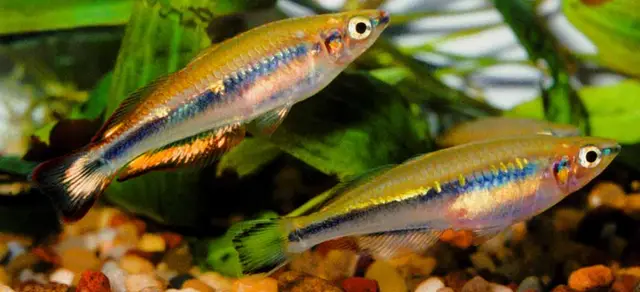
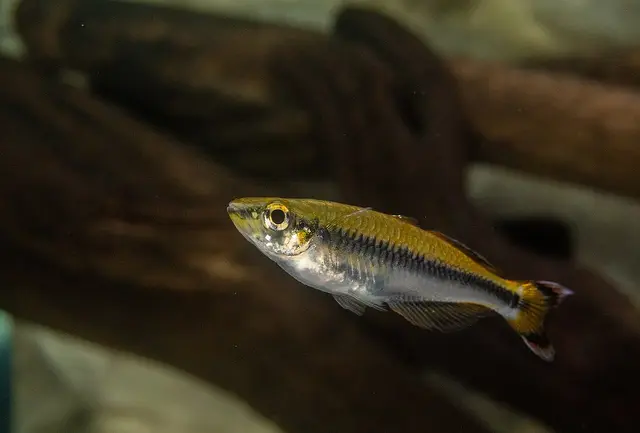
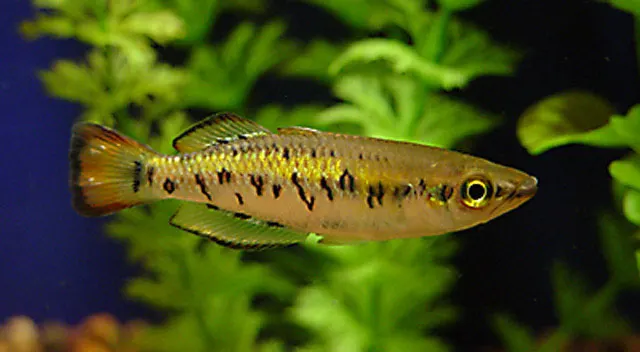
It is a small, slim-bodied fish. FishBase gives a maximum length of 4.8 cm for males and 4.7 cm for females, measured without the tail fin. A row of dark blotches runs along the midline of the body, and the gut is extremely short, only about a third of the body length.
The dorsal fin has 6 spines and 12 to 13 soft rays, the anal fin has 17 soft rays, and there are 34 vertebrae.
Where it lives
The species is endemic to Madagascar. Its type locality is the bank of the Manantenina River, in the Lokoho River basin, at the south-eastern boundary of Marojejy National Park, about 28 km northeast of the town of Andapa. The Red List records it from permanent rivers and streams, at a single location, with an extent of occurrence of about 374 square kilometres and an area of occupancy of 32 square kilometres.
The species name comes from the Marojejy area. Melanie Stiassny and Ian Harrison described it in a volume on the fishes of Marojejy National Park. The Catalog of Fishes gives the year as 2000, though some sources print 1999.
Pins are Wikidata “endemic to” fields. Orange dots, when present, are GBIF occurrence tiles — survey bias included.
Why it is in trouble
The 2016 assessment records a decreasing population and a continuing decline in the area occupied. It lists a named species and an activity of unrecorded motivation among the threats, and gives the basis of the decline as falling habitat quality and the effects of introduced species, competitors, pathogens or pollutants.
With one known location and a small range, the fish has little room to absorb damage to its river.
What is being done
The assessment says the species occurs in at least one protected area. It lists site management, awareness work and control of problem species as the actions needed. FishBase rates the fish at low vulnerability to fishing, and no fishery for it is recorded.
Sources
Written for this catalog in our own words from the sources below, checked against them on 12 November 2026. Population figures are estimates and carry the year they were made. Status and assessment year: IUCN. 2026. The IUCN Red List of Threatened Species. Version 2026-1. iucnredlist.org.