Endangered
Tres Marias Island Mouse
Peromyscus madrensis
The Tres Marias island mouse (Peromyscus madrensis) is a rat-sized deermouse found nowhere except the Islas Marías, a small island group off Mexico's Pacific coast. The IUCN Red List lists it as Endangered (assessed 2018). It was widespread in 1898, but now survives mainly on one island.
How to recognise it
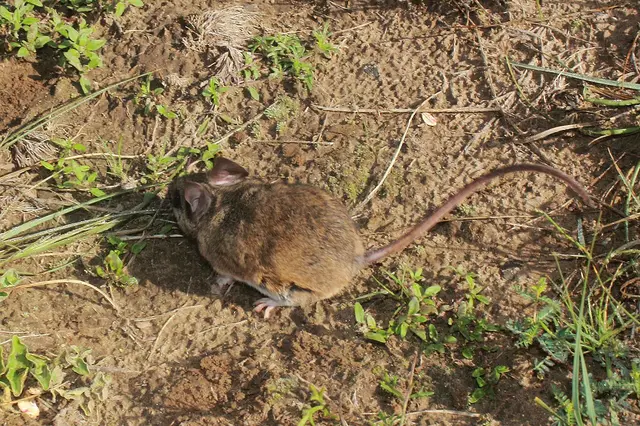
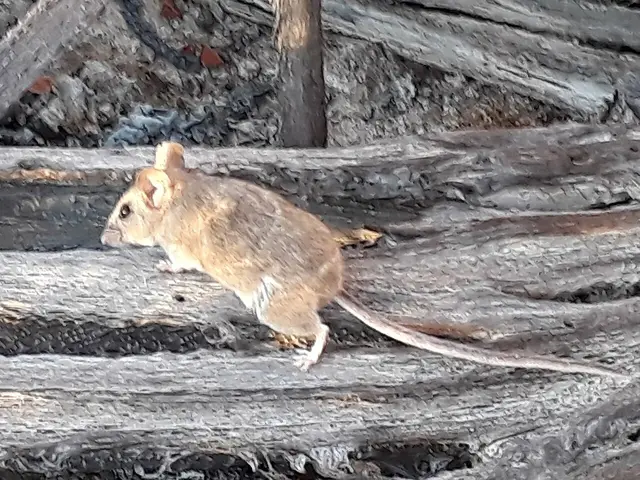
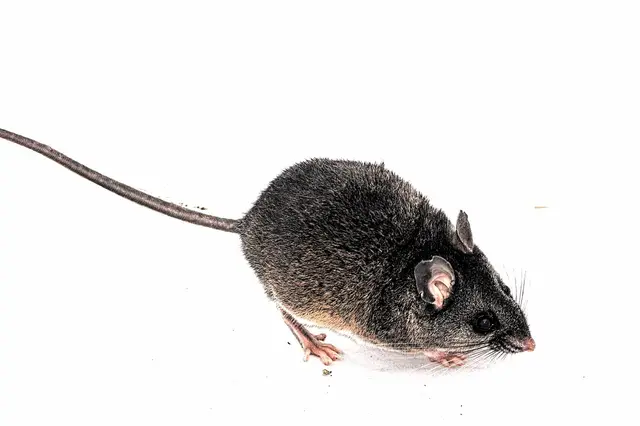
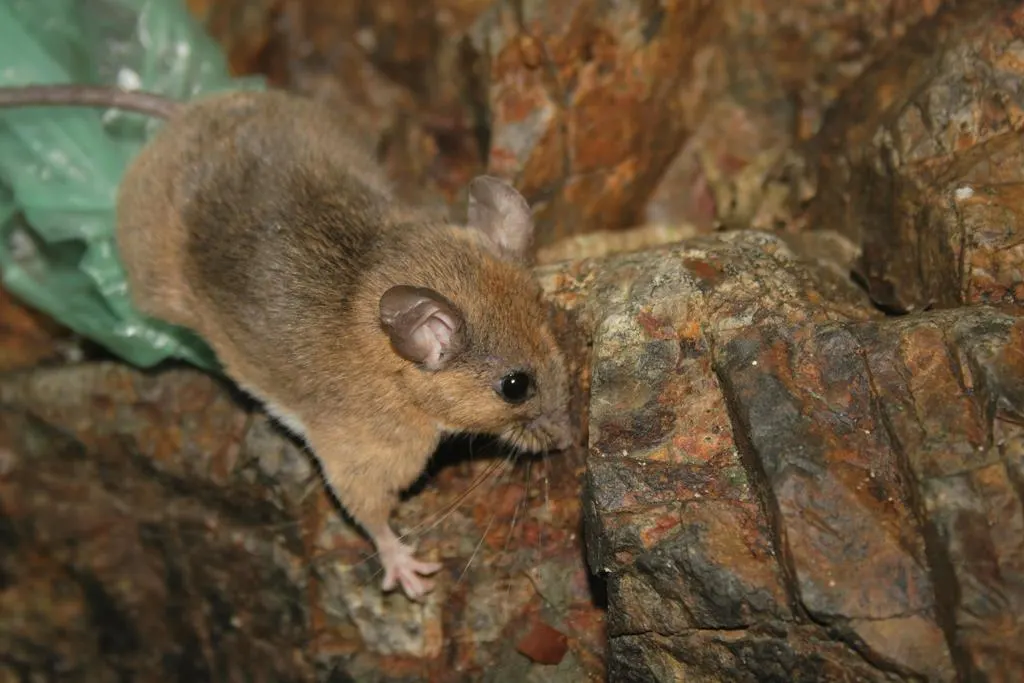
This is a big mouse by deermouse standards. Head and body run about 21 to 25 centimetres, with a tail of 10 to 13 centimetres, which puts it near the size of a small rat. The fur is pale tan above and white underneath, and the lips and feet are white too.
Look for a faint darker stripe toward the rump and dark spots on the ankles. The tail carries little hair and is clearly darker on top. Compared with closely related deermice it is larger, with a longer tail and smaller ears. Females have six teats.
Where it lives
The species is endemic to the Islas Marías, part of Nayarit state, Mexico. Its type specimen, an adult male, was collected on María Madre on 18 May 1897 by Edward Goldman and Edward Nelson, and Clinton Hart Merriam described the species the following year. It is still common on María Cleofás.
The Red List counts three locations and puts its extent of occurrence at about 893 square kilometres, with the area it actually occupies somewhere between 10 and 500 square kilometres. Its habitat is dry tropical forest, and it is most common in undisturbed tropical deciduous forest, especially in the interior highlands.
Pins are Wikidata “endemic to” fields. Orange dots, when present, are GBIF occurrence tiles — survey bias included.
How it lives
It shelters in cover on the forest floor, such as under logs and rocks. Beyond that, its daily habits are poorly documented, and no population count exists.
Its closest known relative is the Nayarit mouse (Peromyscus simulus) on the nearby mainland. The two split during the Pleistocene. Nobody knows whether the ancestors rafted across the water or walked over when the islands were joined to the mainland.
Why it is in trouble
A survey in 1991 found the mouse's range much smaller than it had been in 1898. The decline is linked to introduced animals, notably black rats, deer and goats. At the 2018 assessment it was common on María Cleofás but rare or absent on the other, more disturbed islands.
The Red List's threat list names ten introduced animals: goats, sheep, black rats, cattle, donkeys, horses, chickens, rabbits, white-tailed deer and cats. Each is scored as a low-impact ongoing threat. The assessment still describes the population as decreasing, with a continuing decline in the number of locations.
What is being done
The 2018 assessment records that conservation sites have been identified across the species' whole range. The Islas Marías are also recognised as a Key Biodiversity Area, and the mouse is one of three Endangered species that qualify the site, alongside the Tres Marias cottontail and Findley's myotis.
Sources
Written for this catalog in our own words from the sources below, checked against them on 12 November 2026. Population figures are estimates and carry the year they were made. Status and assessment year: IUCN. 2026. The IUCN Red List of Threatened Species. Version 2026-1. iucnredlist.org.