Critically Endangered
Theodoxus altenai
Theodoxus altenai
Theodoxus altenai is a thin-shelled freshwater snail, a nerite, known from the Kırkgöz spring complex near Antalya in southern Turkey. Its shell is about 9 to 10 mm wide. The IUCN rated it Critically Endangered in 2014, with drought, sewage and groundwater pumping all listed as threats to its one known location.
How to recognise it
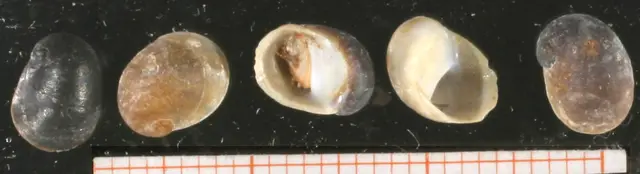
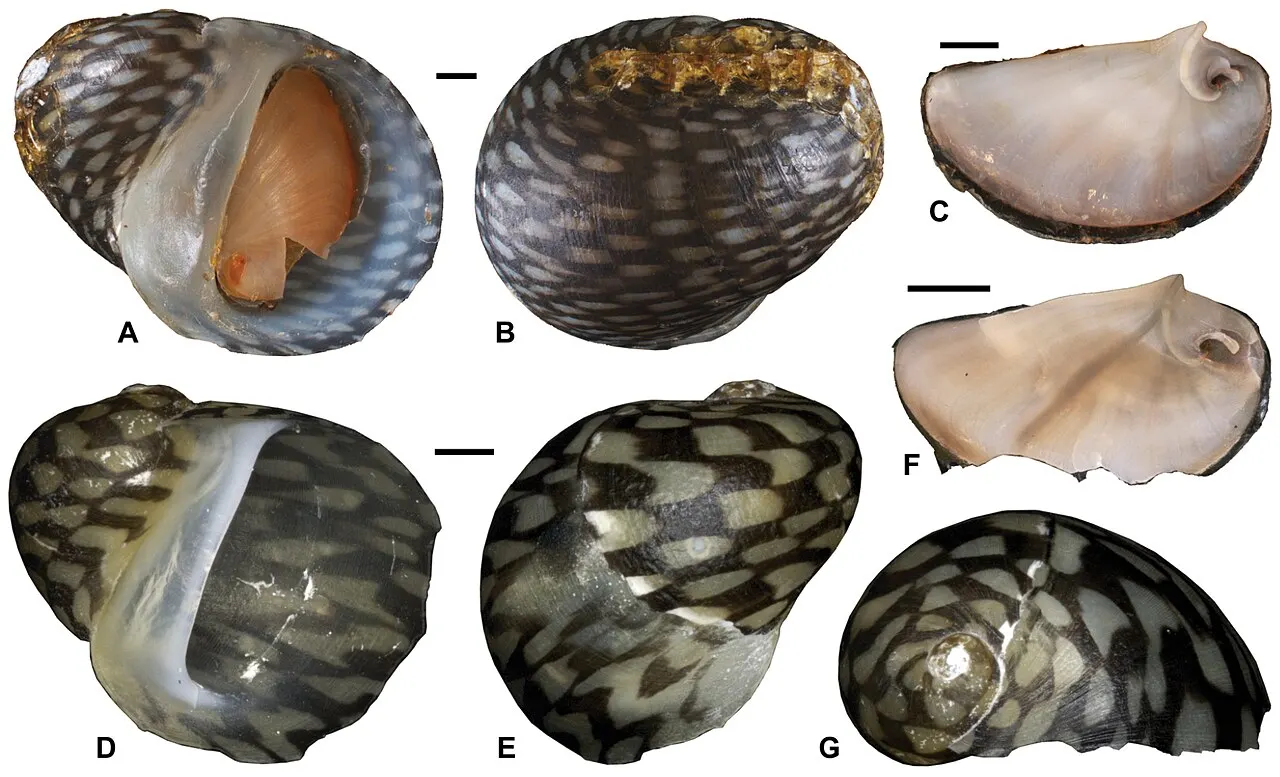
Nerites are small snails with a gill and a tough lid (operculum) that seals the shell. This one has a shell about 9 to 10 mm wide and 6 to 7 mm high. It is exceptionally thin, translucent and glossy, with a pale, horn-yellow colour and a brown, chequered pattern.
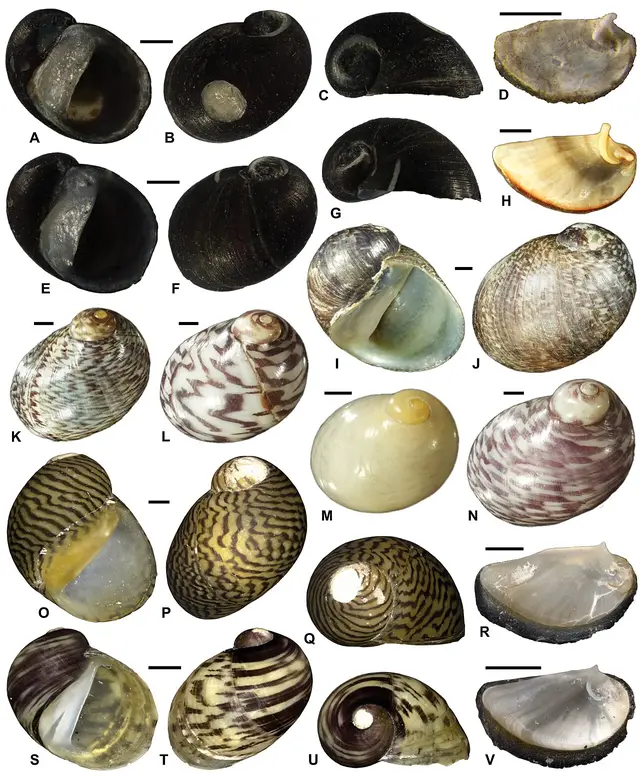
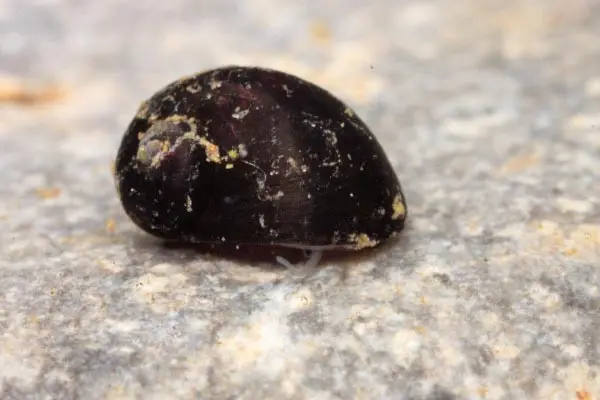
Its closest relative is Theodoxus anatolicus, and a 2020 revision of Asian Theodoxus by Sands and colleagues in Zoosystematics and Evolution describes how to tell them apart. T. altenai has brown and ivory checks on its outer shell skin, where T. anatolicus is uniformly black, and the plate on the inner side of the shell (the columellar plate) extends beyond the shell edge. DNA analysis suggests the two species likely split in the early Pleistocene.
Where it lives
Gerhard Schütt described the species in 1965 from Lake Kırkgöz, part of the Kırkgöz spring complex at Döşemealtı in Antalya Province. The 2020 revision found that all reliable records came from that spring complex. A 2019 study reported it at a second place, the Düden Waterfall at Varsak Karşıyaka, also in Antalya.
The IUCN counts one location and records the habitat as freshwater springs and oases. The assessment lists it from Turkey only.
Pins are Wikidata “endemic to” fields. Orange dots, when present, are GBIF occurrence tiles — survey bias included.
Why it is in trouble
The 2014 assessment rated it Critically Endangered under criteria B1ab(iii)+2ab(iii), which cover a very small range and a declining habitat. The IUCN lists three threats: drought, scored as a high impact affecting the whole population; sewage; and groundwater pumping for farming. The last two are scored as medium impact across the majority of the population. The population trend is recorded as unknown.
Local news reports show why that matters. In August 2024 the newspaper Sözcü reported a severe summer drought at Kırkgöz, with water that had been sent to the city for garden irrigation cut off. A local lawyer campaigning for the spring blamed quarries, dynamite blasting and a nearby hydroelectric plant. In May 2025 a report carried by the news agency DHA said the lake level had fallen compared with previous years, quoted a geophysical engineer who blamed illegal boreholes, and described bags and bottles covering the surface. Neither report mentions the snail, but it has nowhere else to go.
What is being done
The IUCN lists site management, resource and habitat protection, and awareness work among the conservation actions identified for it, though the assessment records none as in place. Research on its population and on its threats is also listed as needed. No population estimate has been made.
Sources
Written for this catalog in our own words from the sources below, checked against them on 12 November 2026. Population figures are estimates and carry the year they were made. Status and assessment year: IUCN. 2026. The IUCN Red List of Threatened Species. Version 2026-1. iucnredlist.org.
- IUCN Red List assessment, Theodoxus altenai (2014)
- Sands et al. 2020, A revision of the extant species of Theodoxus in Asia, Zoosystematics and Evolution 96(1) (Plazi treatment)
- Wikipedia, Theodoxus altenai
- Sözcü, 23 August 2024, Kırkgöz spring dried up
- DHA via Son Dakika, 6 May 2025, Kırkgöz Lake under threat
- GBIF, Theodoxus altenai