Critically Endangered
Smoothback angelshark
Squatina oculata
The smoothback angelshark (Squatina oculata) is a flattened, ray-like shark that rests on sand and mud off West Africa and in the Mediterranean. It was rated Critically Endangered by the IUCN in 2019. Once common, it is now caught only occasionally, mostly by accident in trawls and nets.
How to recognise it
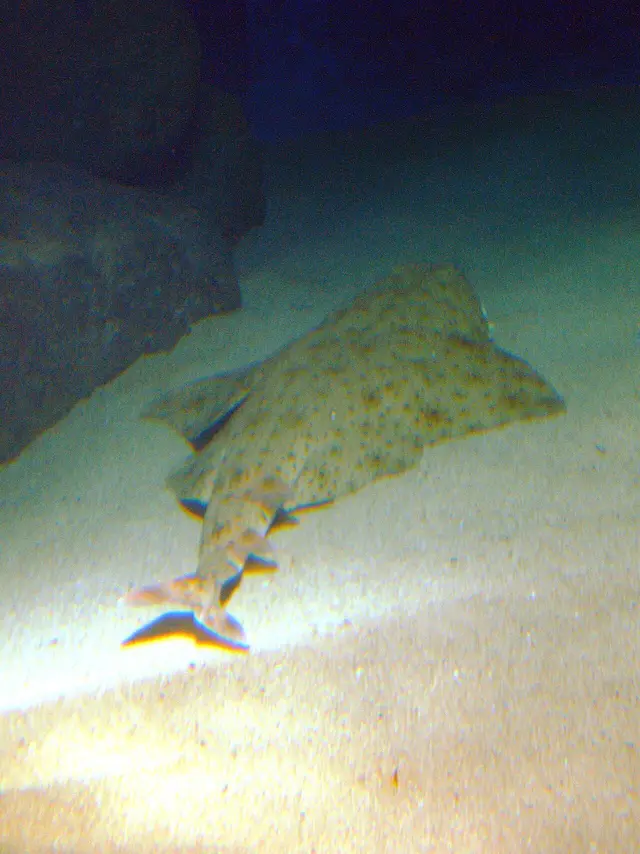
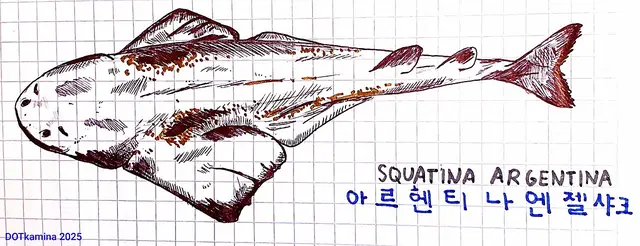
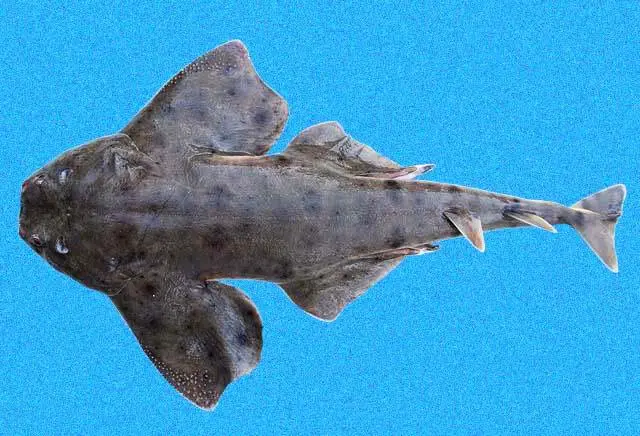
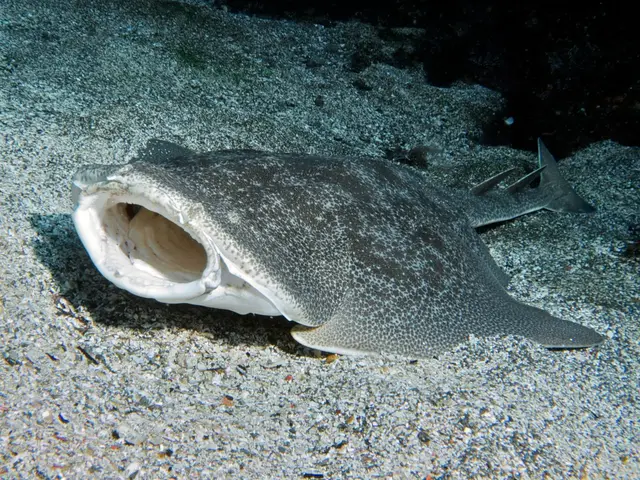
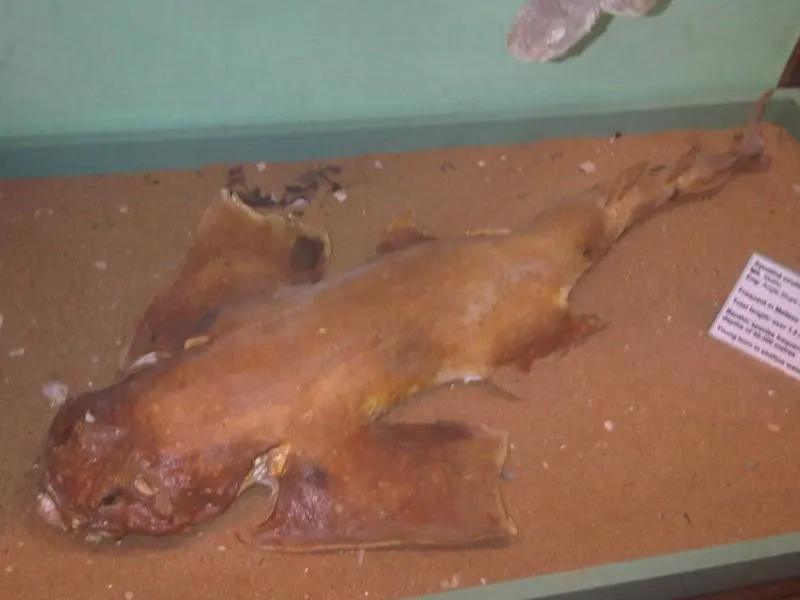
It has the typical angelshark shape: a flat body, very broad pectoral fins separated from the head, two dorsal fins and no anal fin. The colour is grey-brown, with small round black and white spots and a distinctive white patch on the neck. Dark, symmetrical spots mark the fin bases and tips and the base of the tail, and enlarged spines sit around the snout and eyes, though not along the back.
A 2017 conservation strategy reports males maturing at about 71 to 82 cm and females at about 89 to 100 cm. The largest are about 145 cm for males and 160 cm for females. Pups are reportedly about 24 to 27 cm at birth.
Where it lives
Historically it ranged over the coastal and outer shelf waters of the eastern Atlantic, from southern Iberia down to Namibia, and through the whole Mediterranean, where it was more frequent in southern waters such as those off Tunisia. The IUCN lists dozens of countries and territories along that coast, from Spain and France to Angola, and around the Mediterranean basin.
It is a bottom dweller on sand, muddy sand and mud, from about 10 to 500 m but mostly between 50 and 100 m, and deeper in the tropics. In the Mediterranean, recent records come from 26 to 180 m, usually on muddy or sandy-muddy ground and occasionally on seagrass or other vegetated beds. It reportedly eats small sharks, bony fish, squid and crabs.
Pins are Wikidata “endemic to” fields. Orange dots, when present, are GBIF occurrence tiles — survey bias included.
Why it is in trouble
Angelsharks grow slowly, have few young and spend much of their time on the seabed, which makes them vulnerable to bottom trawls. The IUCN lists unintentional catch in large-scale and small-scale fisheries, small-scale targeted harvest, recreational activity, tourism areas, housing and industrial development. The population is severely fragmented and still declining, and the species gathers in groups.
Portuguese fisheries data for the waters off Morocco and Mauritania reportedly showed a 95 percent fall between 1990 and 1998, though that figure covers this species and two relatives. In the Adriatic, it is considered regionally extinct in Croatian waters.
A 2022 paper in Acta Ichthyologica et Piscatoria assembled 34 Mediterranean records from 2005 to 2021. Twenty-one came from around Malta, six from Tunisian waters, five from south of Sicily and two from Egypt. Twenty-five were caught in bottom trawls and six in trammel nets, and one was seen by a scuba diver at 35 m. Few were released alive. Old stuffed specimens in museums in Palermo and Mdina show it once occurred there.
What is being done
A recovery plan is recorded in the IUCN assessment, along with conservation sites over part of the range, though only 1 to 10 percent of the population is thought to be in protected areas. Retaining angelsharks is prohibited in the Mediterranean, but landings persist, according to the 2017 strategy. Juveniles found off Malta suggest the central Mediterranean is a nursery area, and the 2022 paper proposes spatial fishing limits around Lampedusa and the Maltese islands.
Sources
Written for this catalog in our own words from the sources below, checked against them on 12 November 2026. Population figures are estimates and carry the year they were made. Status and assessment year: IUCN. 2026. The IUCN Red List of Threatened Species. Version 2026-1. iucnredlist.org.