Critically Endangered
Argentine angelshark
Squatina argentina
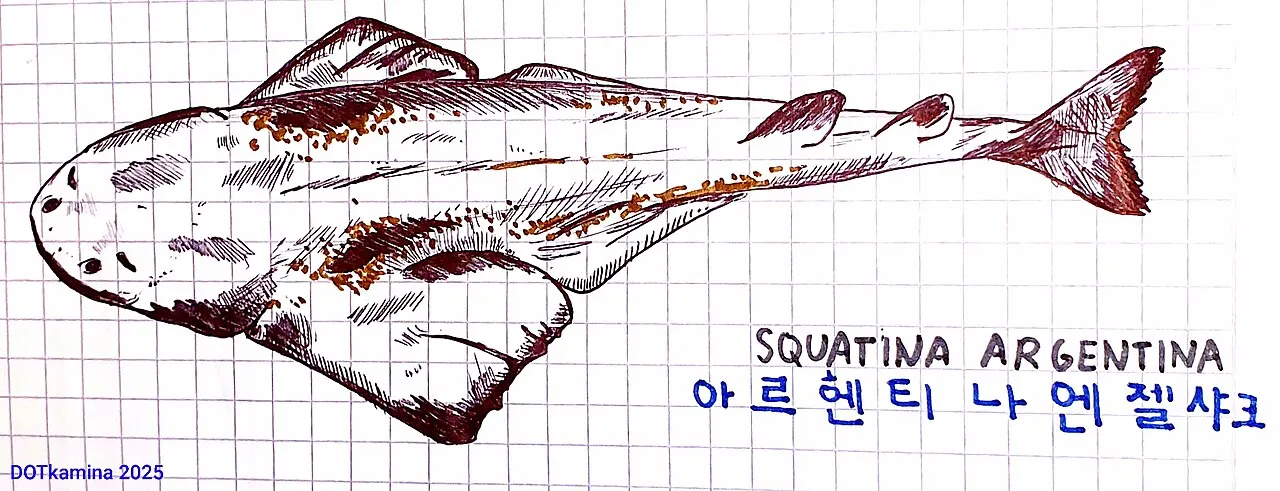
The Argentine angelshark (Squatina argentina) is a flat, ray-like shark of sandy and muddy sea bottoms off southern Brazil, Uruguay and Argentina. The IUCN Red List rated it Critically Endangered in 2019, with a decreasing population, mainly because it is caught accidentally in trawl and gillnet fisheries.
How to recognise it
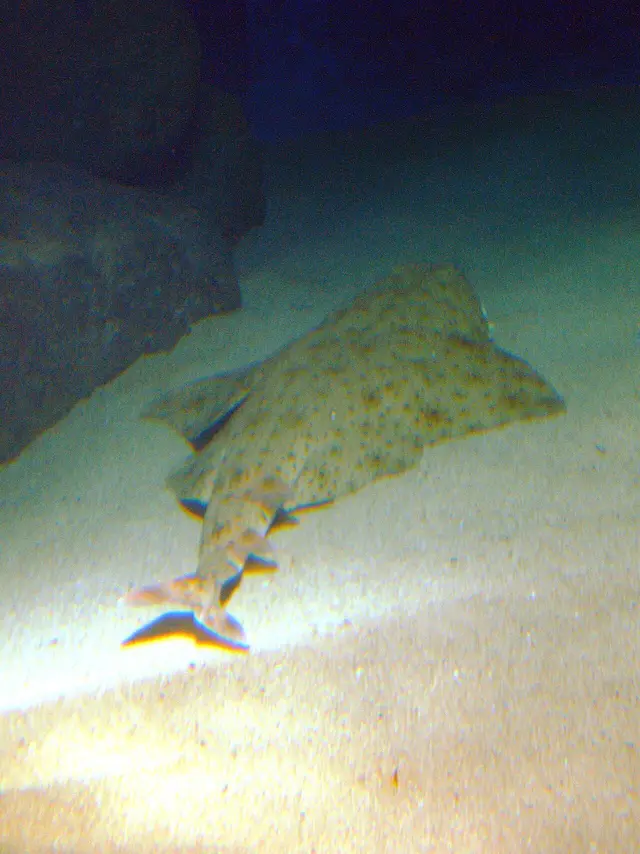
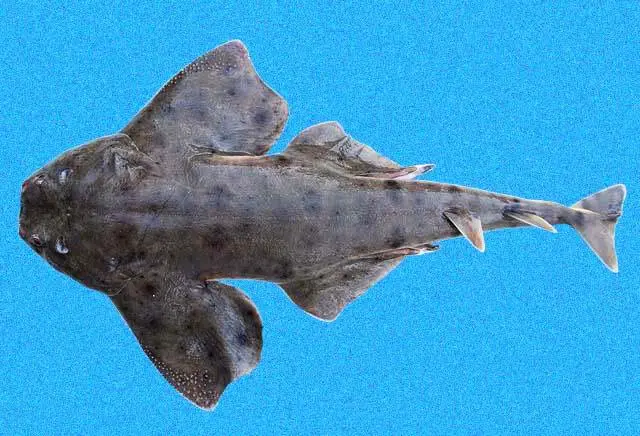
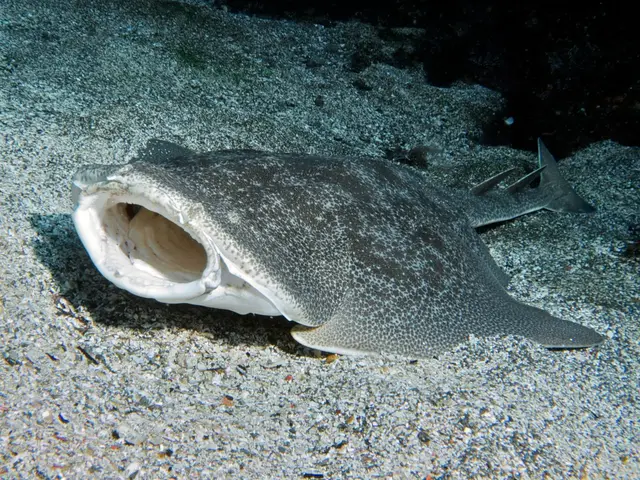
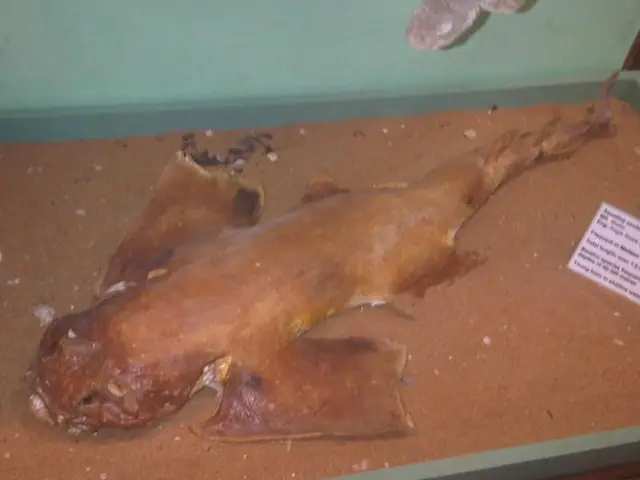
Like other angelsharks, it has a flattened body and very broad pectoral fins. It is purplish to dark brown above and spotted, though accounts differ on the spots: one general reference describes dark brown spots often ringed around a central spot, while NOAA describes small round white spots. The dorsal fins are paler.
Adults mature at roughly 100 to 120 cm. The largest recorded is about 138 cm, with one figure of 170 cm that is less certain, and NOAA gives a maximum of around 4.5 feet. Marini described the species in 1930.
Where it lives
It lives in the southwest Atlantic. The IUCN records it in Brazil (including Santa Catarina and Rio Grande do Sul), Uruguay and Argentina (Buenos Aires province), and NOAA says it likely extends south to the San Matias Gulf.
It stays on the continental shelf and upper slope, over soft sandy or muddy seabed. The IUCN gives a depth of 51 to 320 m, though NOAA's figures are shallower.
Pins are Wikidata “endemic to” fields. Orange dots, when present, are GBIF occurrence tiles — survey bias included.
How it lives
Angelsharks are ambush hunters, and NOAA describes this one as a sit-and-wait predator. Fish make up most of the diet, followed by crustaceans and molluscs, though diet data are limited.
Young develop inside the mother, nourished by yolk, and litters are 7 to 11 pups, with 9 or 10 most common. The IUCN gives a generation length of 15.5 years, and the minimum population doubling time is reportedly more than 14 years, which is very slow for a fished animal.
Why it is in trouble
The IUCN names one threat, accidental capture in large-scale and small-scale fisheries, and lists the shark as used for human food. NOAA says trawl and bottom gillnet fleets in Brazil catch it heavily, and that it is a significant bycatch in the monkfish fishery, which likely contributed to a significant decline in the early 2000s.
Counting the losses is hard. Landings in southern Brazil are logged as plain angel shark, mixing this species with Squatina guggenheim and S. occulta, so figures for S. argentina alone are not available. The IUCN assessment nonetheless records a continuing decline.
What is being done
Protection is limited. The IUCN reports no species recovery plan, no monitoring scheme and no harvest management plan, though it lists harvest management and policy at national and international level as needed actions. NOAA Fisheries listed the species as endangered under the US Endangered Species Act, effective 9 June 2017.
Sources
Written for this catalog in our own words from the sources below, checked against them on 12 November 2026. Population figures are estimates and carry the year they were made. Status and assessment year: IUCN. 2026. The IUCN Red List of Threatened Species. Version 2026-1. iucnredlist.org.