Critically Endangered
Chilean angelshark
Squatina armata
The Chilean angelshark (Squatina armata) is a flat, ray-like shark that rests on sandy and muddy seabeds along the Pacific coast of South America. The IUCN Red List rated it Critically Endangered in 2020, largely because it is caught in coastal fisheries. Its biology is still poorly known.
How to recognise it
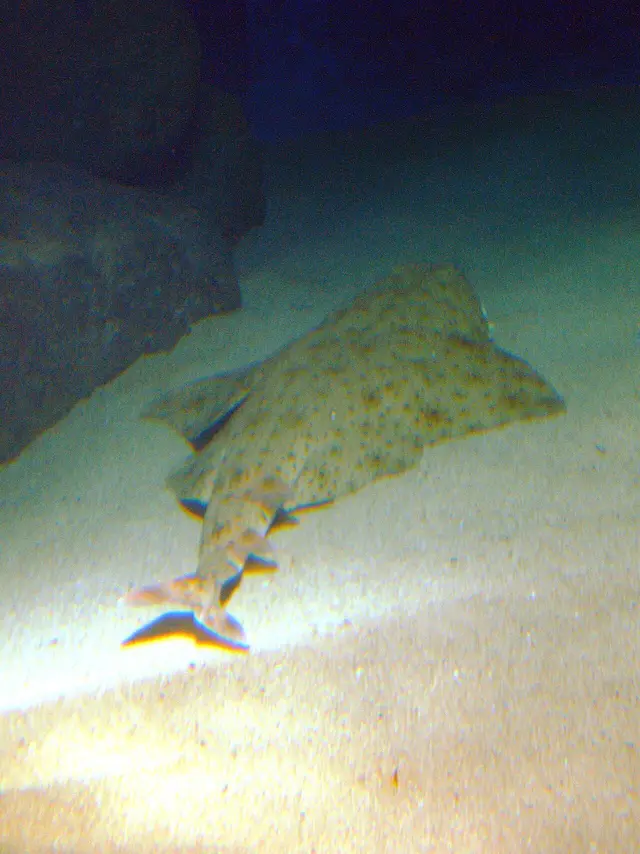
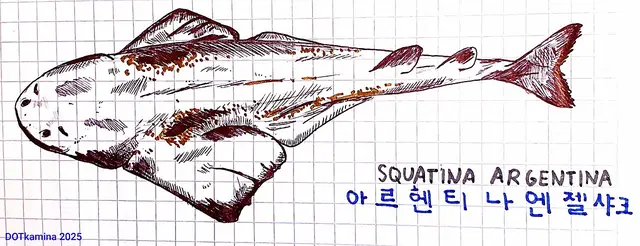
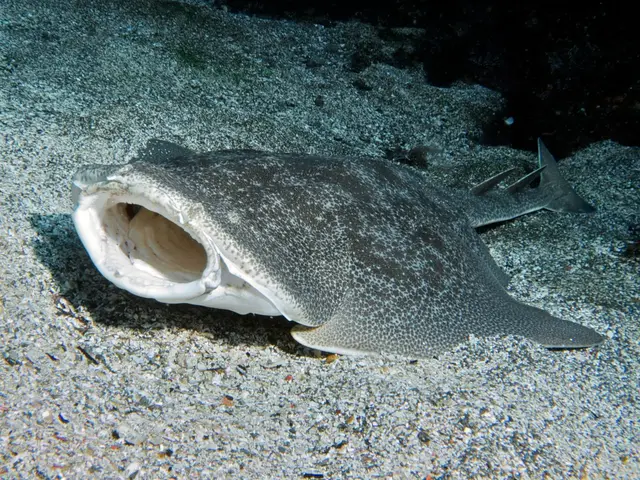
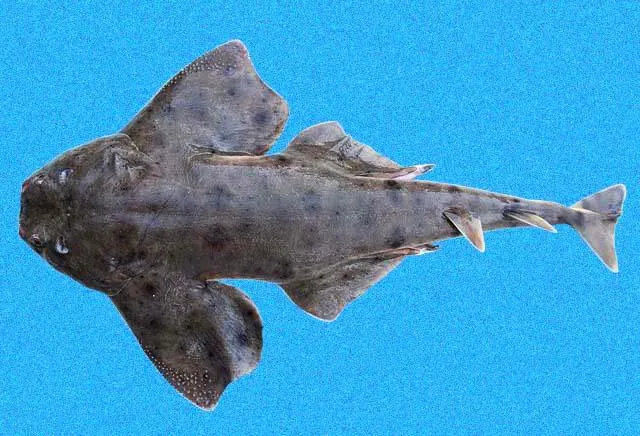
Like other angelsharks, it has a broad, flattened, ray-like body, but it is a true shark. Enlarged thorns run over the head and back. It grows to a little over a metre, with the maximum reported at 1.03 m.
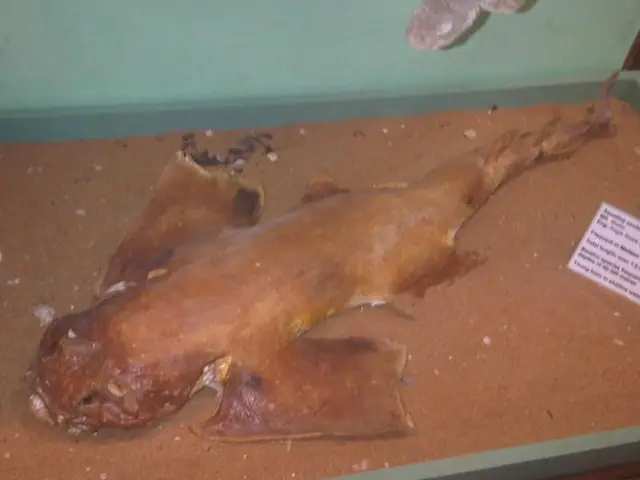
The species was first described by Philippi in 1887 from a thin original description, and the type specimen was later lost. In 2024 Kraft and colleagues redescribed it in the European Journal of Taxonomy and designated a new reference specimen (a neotype) from the type locality. A 1,004 mm specimen is shown in press coverage of the work. The redescription aims to make identification reliable where it overlaps with the California angelshark.
Where it lives
The IUCN lists Chile, Peru, Ecuador and Colombia in its range. It lives on the continental shelf over sand, mud and sandy mud, from the surface down to about 400 m. Angelsharks are nocturnal bottom dwellers that spend much of their time buried in sediment, ambushing prey.
Pins are Wikidata “endemic to” fields. Orange dots, when present, are GBIF occurrence tiles — survey bias included.
How it lives
It eats mainly fish, especially lizardfish, along with crustaceans, molluscs and shrimp. Females give birth to live young that hatch from eggs inside the body. The IUCN gives a generation length of about 23 years, which means populations take a long time to rebuild.
Why it is in trouble
The threats the IUCN names are all fishing: small scale and large scale harvest, both directed and accidental, with food use as the main trade. The Red List trend is decreasing.
Fishing records are poor, which makes it hard to put a number on the decline. A 2010 study in Revista de Biologia Marina y Oceanografia followed bycatch in an artisanal flounder gillnet fishery in Coquimbo Bay, Chile, from October 2006 to November 2007. Of 32 bycatch species, the Chilean angelshark was among the most frequent, and it was strongly tied to spring and summer.
Near Playa Seremeno in northern Chile, artisanal fishers using gillnets meant for bony fish accidentally caught two whole sharks and the head of a third. The specimens went to the national natural history museum in Santiago. The find shows the species is still present.
What is being done
The IUCN lists harvest management as the only action in place, and records no recovery plan or monitoring scheme. Better species level fishery data is the main thing researchers say is missing.
Sources
Written for this catalog in our own words from the sources below, checked against them on 12 November 2026. Population figures are estimates and carry the year they were made. Status and assessment year: IUCN. 2026. The IUCN Red List of Threatened Species. Version 2026-1. iucnredlist.org.
- IUCN Red List assessment (2020)
- Kraft et al. 2024, Redescription of Squatina armata, European Journal of Taxonomy 932 (abstract)
- Chilean angelshark, encyclopedia article
- The Brighter Side of News, report on the redescription
- Seasonal variation in fish bycatch, artisanal flounder fishery, Coquimbo Bay (2010, abstract record)