Endangered
Clouded angelshark
Squatina nebulosa
The clouded angelshark (Squatina nebulosa) is a flat, bluish-grey to tan shark that lies buried on the seabed of the northwest Pacific, from Hokkaido to Taiwan. The IUCN Red List rated it Endangered in 2021, estimating a population fall of 50 to 79 percent over 69 years, mostly from fishing bycatch.
How to recognise it
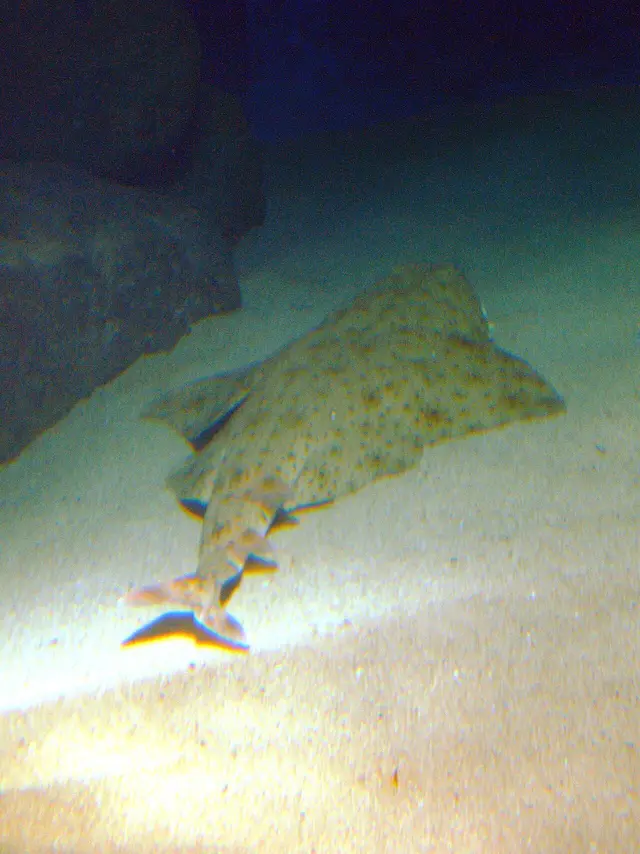
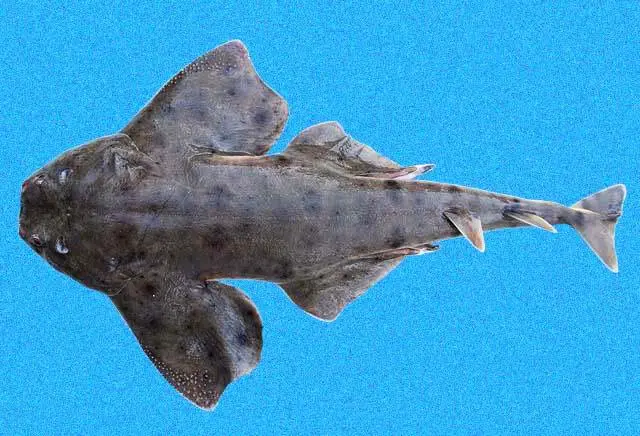
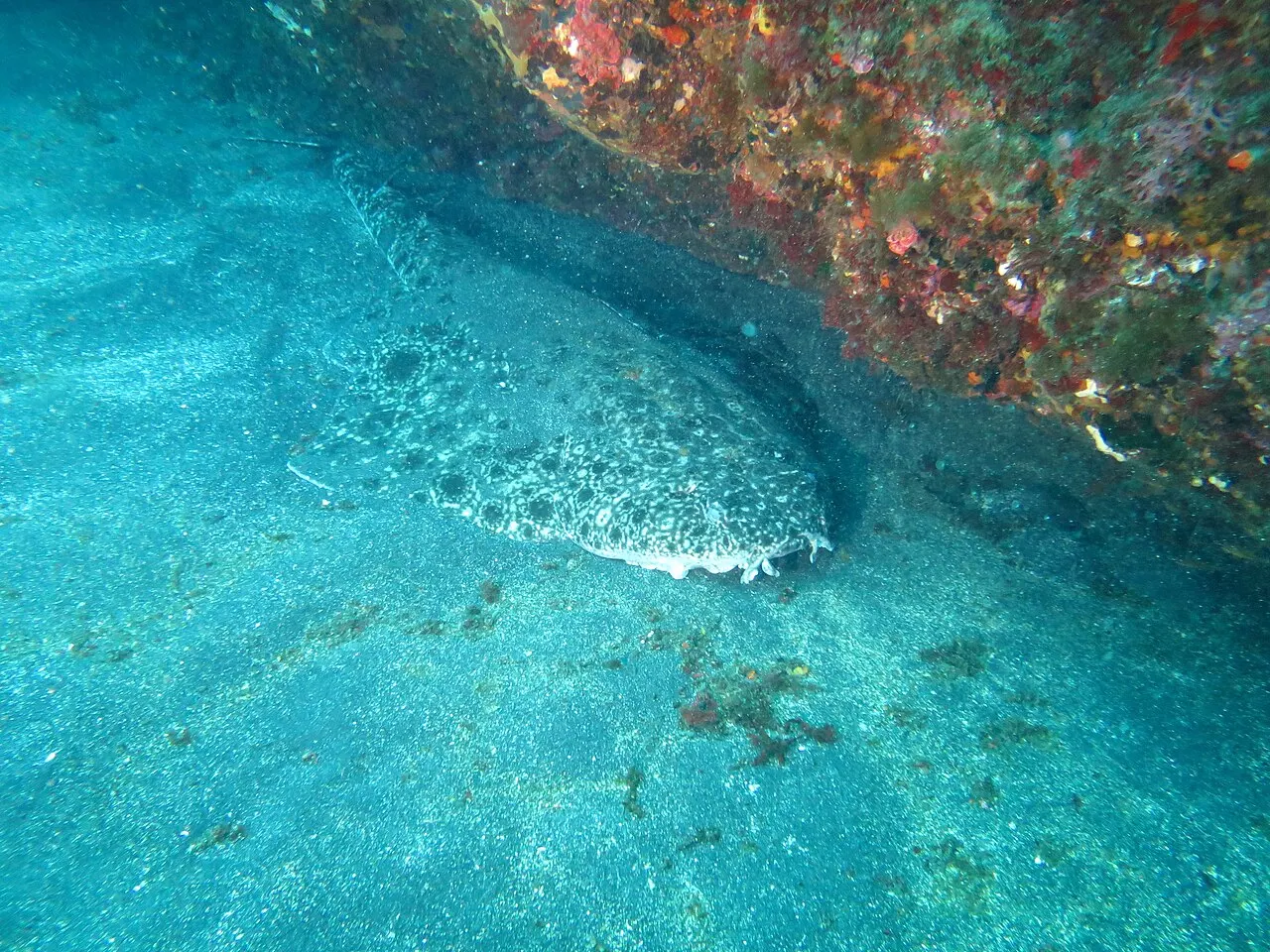
Like other angelsharks it is flattened, with broad pectoral fins, and looks halfway between a shark and a ray. The back is bluish grey to tan, marked with dark spots larger than the eye, thin broken dark lines and a few paired white spots. Each pectoral fin has one large spot forming a faint eyespot, and the underside is pale. The nasal barbels are long and taper.
Size figures differ. FishBase gives a maximum of 163 cm, while another profile says at least 200 cm. Pups are about 30 cm at birth. Charles Tate Regan described the species in 1906, and a 2007 review by Walsh and Ebert clarified its taxonomy.
Where it lives
It occurs from the southeastern Sea of Japan and Hokkaido south to Taiwan, including the Ryukyu Islands, and along the coasts of Korea and China. It lives on sandy and muddy bottoms, often near rocky reefs, on the continental shelf. The Red List gives a depth range from the surface to 330 m.
In winter it moves into shallow bays, which is when divers occasionally meet one, mostly off southern Honshu. Sightings around Mikomoto Island off southern Izu usually come between January and April.
Pins are Wikidata “endemic to” fields. Orange dots, when present, are GBIF occurrence tiles — survey bias included.
How it lives
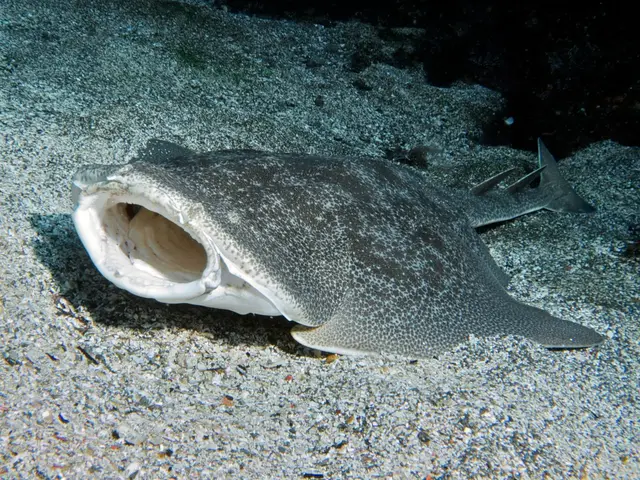
It's an ambush predator. It lies partly buried in sand and lunges upward at bottom-living fishes and cephalopods. Females give birth to 12 to 20 pups per litter, and the IUCN estimates a generation at 23 years.
Divers say it relies on camouflage and can be approached fairly closely, but it may bolt if disturbed and will bite if a hand gets near its mouth.
Why it is in trouble
It is caught as bycatch in trawl, gillnet, set net and longline fisheries across its range. The meat and fins are kept, and the rest can be ground into fish meal. In Taiwan it is the most common angelshark in fish markets, and in parts of Japan it is reportedly twice as common as the Japanese angelshark.
Catch rates in Taiwan have looked stable for 20 years, but they are likely far below levels before industrial fishing. The IUCN assessment lists the population trend as decreasing.
What is being done
Little so far. The 2021 assessment records no recovery plan, no systematic monitoring scheme, no harvest management plan and no international trade controls. It names harvest management, trade management, species recovery, site protection and national-level action as relevant conservation actions.
Sources
Written for this catalog in our own words from the sources below, checked against them on 12 November 2026. Population figures are estimates and carry the year they were made. Status and assessment year: IUCN. 2026. The IUCN Red List of Threatened Species. Version 2026-1. iucnredlist.org.