Endangered
Greeneye spurdog
Squalus chloroculus
The greeneye spurdog (Squalus chloroculus) is a small deepwater dogfish found only off southern Australia, living on the continental slope far below the reach of divers. The IUCN Red List rated it Endangered in 2019 after trawling and longlining cut its numbers, and its very slow breeding makes recovery a long job.
How to recognise it
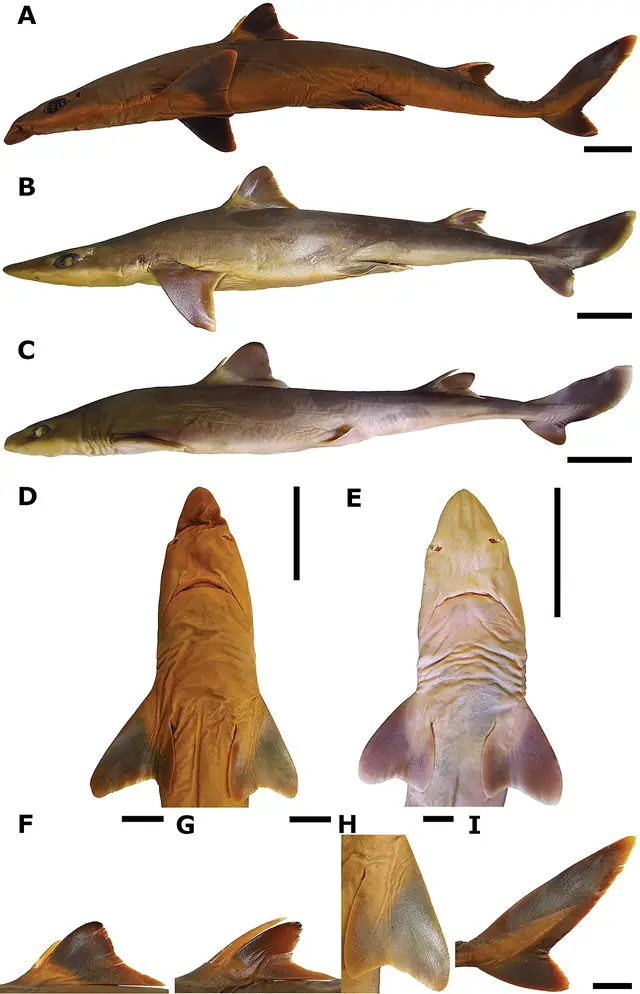
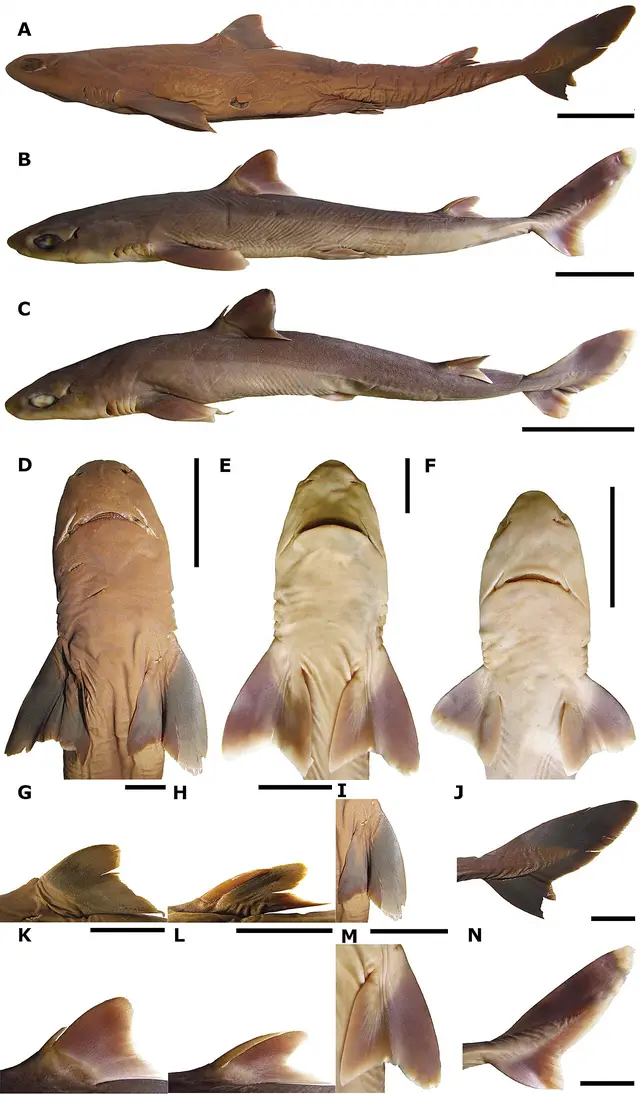
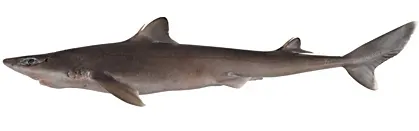
It's a grey dogfish, paler underneath, with a broad pointed snout, prominent spines on the dorsal fins and a short tail fin. The dorsal fins are pale grey with black edges, and the tail fin has a dark bar above its notch. Fresh specimens have vivid green eyes, which give it both its common and its scientific name.
Females grow larger than males. Sources give different maximum lengths, from about 70 cm up to 99 cm, and the longest specimen in the original description is reported at 85.6 cm. Newborns are about 25 cm. The species was described in 2007, having previously been treated as part of the shortspine spurdog (Squalus mitsukurii) group.
Where it lives
It lives on the upper and middle continental slope, at 216 to 1,360 m and most commonly at 300 to 500 m, over both hard and soft seabed. Its range runs along southern Australia from off Jervis Bay, New South Wales, west through Victoria, Tasmania and South Australia to the Great Australian Bight near Eucla in Western Australia. It feeds on fishes and invertebrates living on or near the bottom.
Pins are Wikidata “endemic to” fields. Orange dots, when present, are GBIF occurrence tiles — survey bias included.
How it lives
It gives birth to live young, 4 to 15 pups at a time, and a female breeds only about every three years. Gestation is estimated at 31 to 34 months. Males are thought to mature at 9 to 12 years and females at around 16, and some individuals live to at least 26 years. The IUCN puts a generation at about 21 years.
Why it is in trouble
The main threat is fishing, mostly as unintended catch. Between 2000 and 2006 the average catch was about 212 tonnes a year in southeast Australia, taken mainly by bottom trawl (89%) and, to a lesser extent, automatic longline (7%). Catch rates of greeneye dogsharks fell by around 97% between 1976 and 1997 in southeastern survey areas, although those surveys likely mixed several similar species. The IUCN records a past population reduction of 50 to 75%. The species is now rare off New South Wales, eastern Victoria and Tasmania.
The Australian Marine Conservation Society cites an estimate that at least half the population has been lost over 63 years. A 2019 national report card rated the species Recovering, citing lower fishing effort, a low combined catch limit on deepwater dogfish and a network of refuges, but the global rating used in that card was the older Near Threatened one.
What is being done
The Red List assessment records a harvest management plan and at least one protected area where the species occurs, and lists harvest management, area management, species recovery and national-level measures as actions needed. It records no recovery plan and no monitoring scheme specific to the species.
The Australian Marine Conservation Society's general recommendations for endemic sharks and rays include no-take rules, onboard cameras and observers, catch trigger limits and marine sanctuaries. The society also points to a 2025 consultation by Australia's Threatened Species Scientific Committee on whether the species qualifies for listing as threatened.
Sources
Written for this catalog in our own words from the sources below, checked against them on 12 November 2026. Population figures are estimates and carry the year they were made. Status and assessment year: IUCN. 2026. The IUCN Red List of Threatened Species. Version 2026-1. iucnredlist.org.