Endangered
Japanese spurdog
Squalus japonicus
The Japanese spurdog (Squalus japonicus) is a small bottom-living dogfish of the north-western Pacific, found on the continental shelf and upper slope around Japan, Korea, China and Taiwan. The IUCN Red List rated it Endangered in 2020, mainly because of fishing pressure across much of its range.
How to recognise it
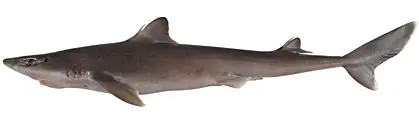
It is a small dogfish in the family Squalidae. Adult males reportedly reach about 50 to 70 cm and females 56 to 80 cm, and females are the heavier sex.
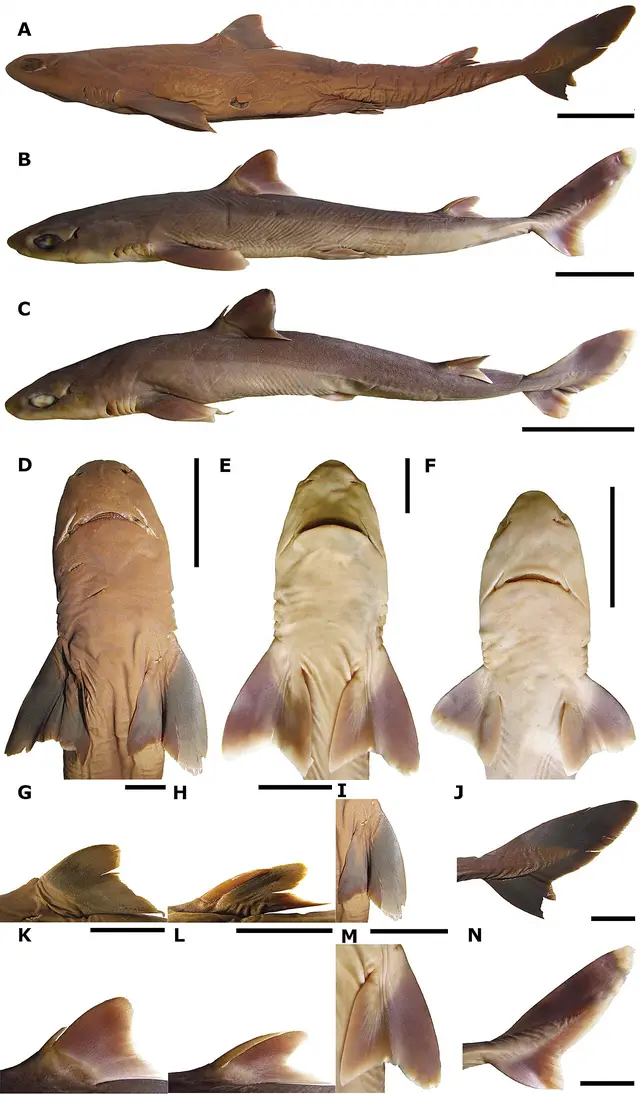
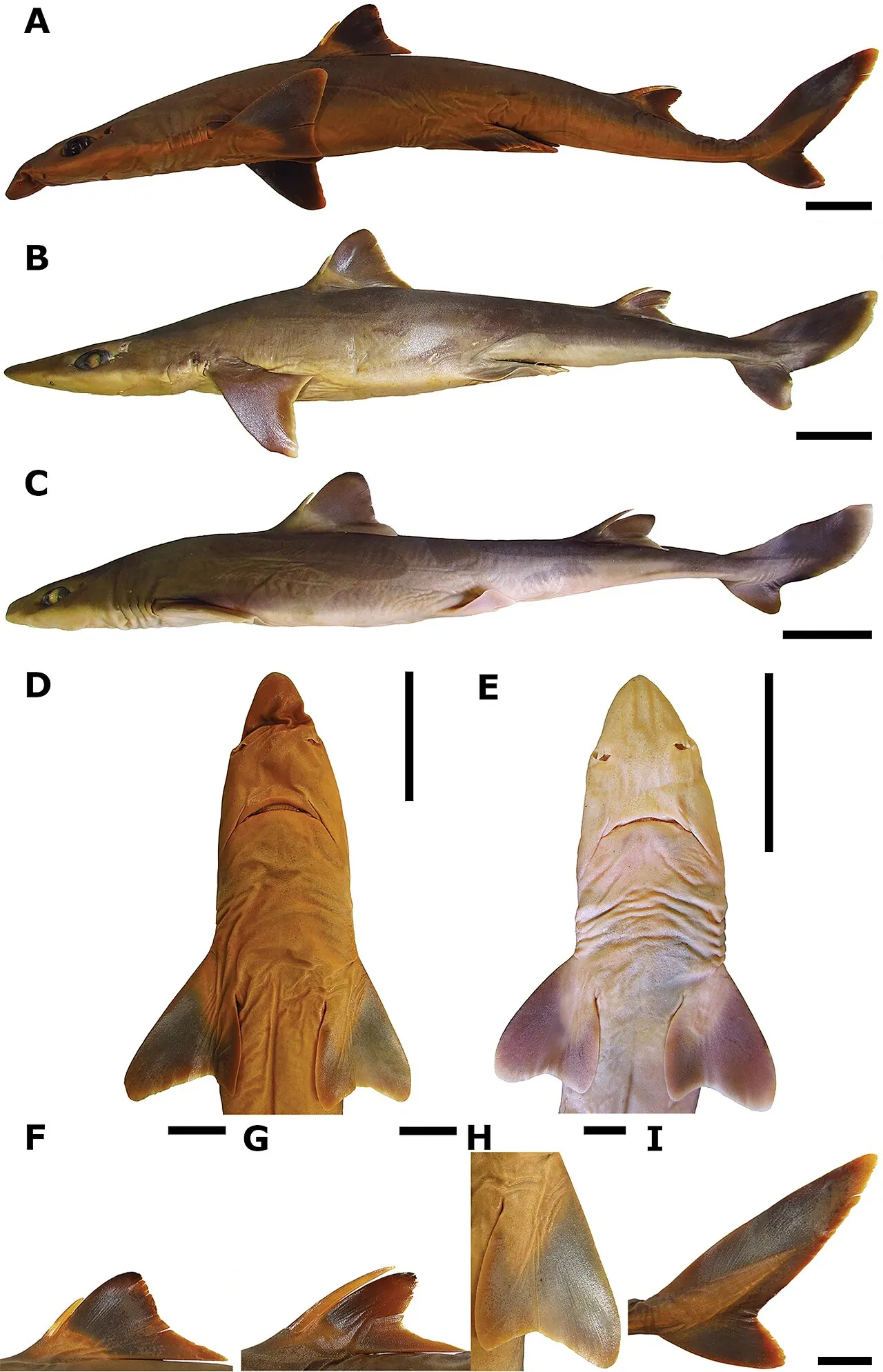
Telling it from its relatives is hard. A 2020 study in Zoosystematics and Evolution re-examined the Japanese spurdogs, named a new species (Squalus shiraii) and fixed a neotype for S. japonicus: an adult male, 645 mm long, caught in Suruga Bay, Japan, in 1982. The study gives a conspicuously long snout with a blunt tip as one of the features of S. japonicus.
Where it lives
The IUCN lists the species as native to Japan, China, Taiwan, South Korea and North Korea, in the north-west Pacific. Some older accounts also place it in the Philippines and report one trawl record from the Arafura Sea. Those wider records date from a time when several spurdog species were often confused, so they may involve other species.
It lives on or near the bottom at depths of about 52 to 400 m, over sand, sandy mud, mud and hard ground.
Pins are Wikidata “endemic to” fields. Orange dots, when present, are GBIF occurrence tiles — survey bias included.
How it lives
It feeds mainly on bony fishes and squid. A study of bottom-trawl surveys in the East China Sea (2000 to 2005 and 2008 to 2014) found that lanternfishes were the most important prey, and that Japanese spurdogs and a second spurdog, Squalus brevirostris, were spread out differently over the continental slope. It estimated that half of males are mature at about 40 cm precaudal length and half of females at about 46 cm.
The young are born live, in litters of 2 to 8 pups about 19 to 30 cm long, after a pregnancy of roughly 11 to 12 months. With so few young and such a long gestation, the species is likely to recover slowly from heavy fishing. The IUCN gives its generation length as about 21 years.
Why it is in trouble
The main threat is fishing. The IUCN records both targeted and accidental harvest, at large and small scale, rates the pressure as medium in impact and lists the population trend as decreasing. The species is used for food, and reportedly for fish meal. The assessment gives an estimated past reduction of 50 to 79 percent, based on levels of exploitation.
Catches in Japan have reportedly been stable since 1983, but abundance elsewhere in the range has reportedly fallen since the mid-20th century. The species was assessed as Data Deficient in 2009. The 2020 reassessment moved it to Endangered under criterion A2d, which covers population reduction.
What is being done
At the time of the 2020 assessment, no recovery plan, monitoring scheme or harvest management plan specific to the species was in place, and no captive programme was recorded. The IUCN lists harvest management, trade management, species recovery and site protection as actions needed.
The research priorities it names are population trends, harvest levels and trade trends, distribution, and life history and ecology.
Sources
Written for this catalog in our own words from the sources below, checked against them on 12 November 2026. Population figures are estimates and carry the year they were made. Status and assessment year: IUCN. 2026. The IUCN Red List of Threatened Species. Version 2026-1. iucnredlist.org.