Critically Endangered
Southern Vietnamese box turtle
Cuora picturata
The southern Vietnamese box turtle (Cuora picturata) is a forest turtle with a tall, domed shell and a yellow head, found only in the hills of southern Vietnam. The IUCN Red List rated it Critically Endangered in 2020 because collection for trade is driving rapid declines.
How to recognise it
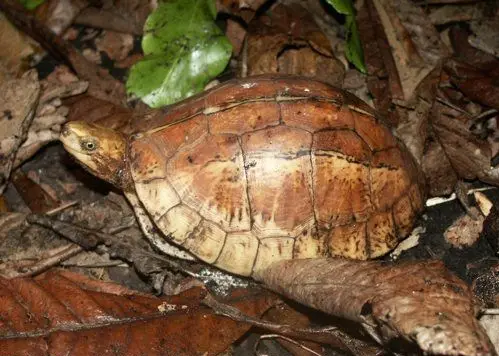
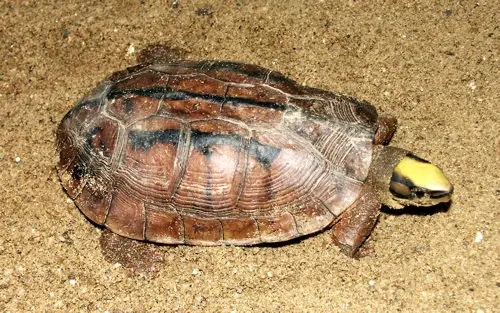
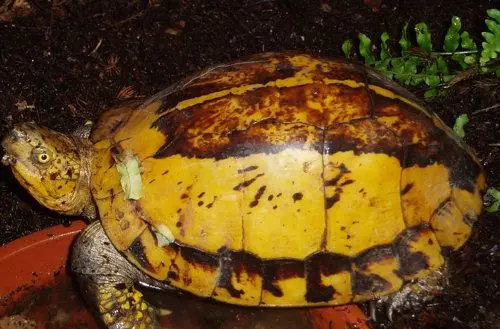
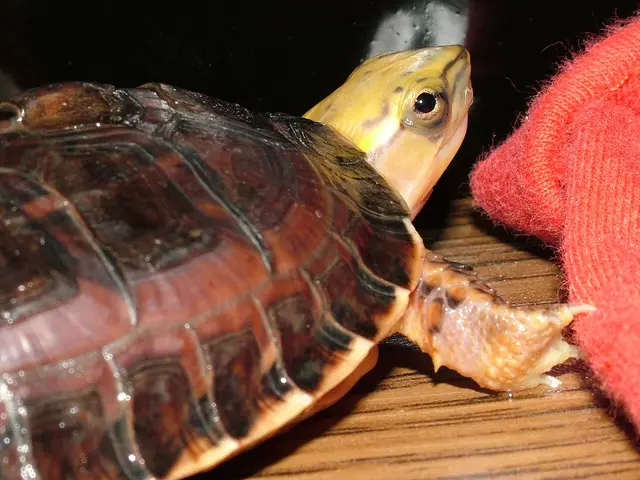
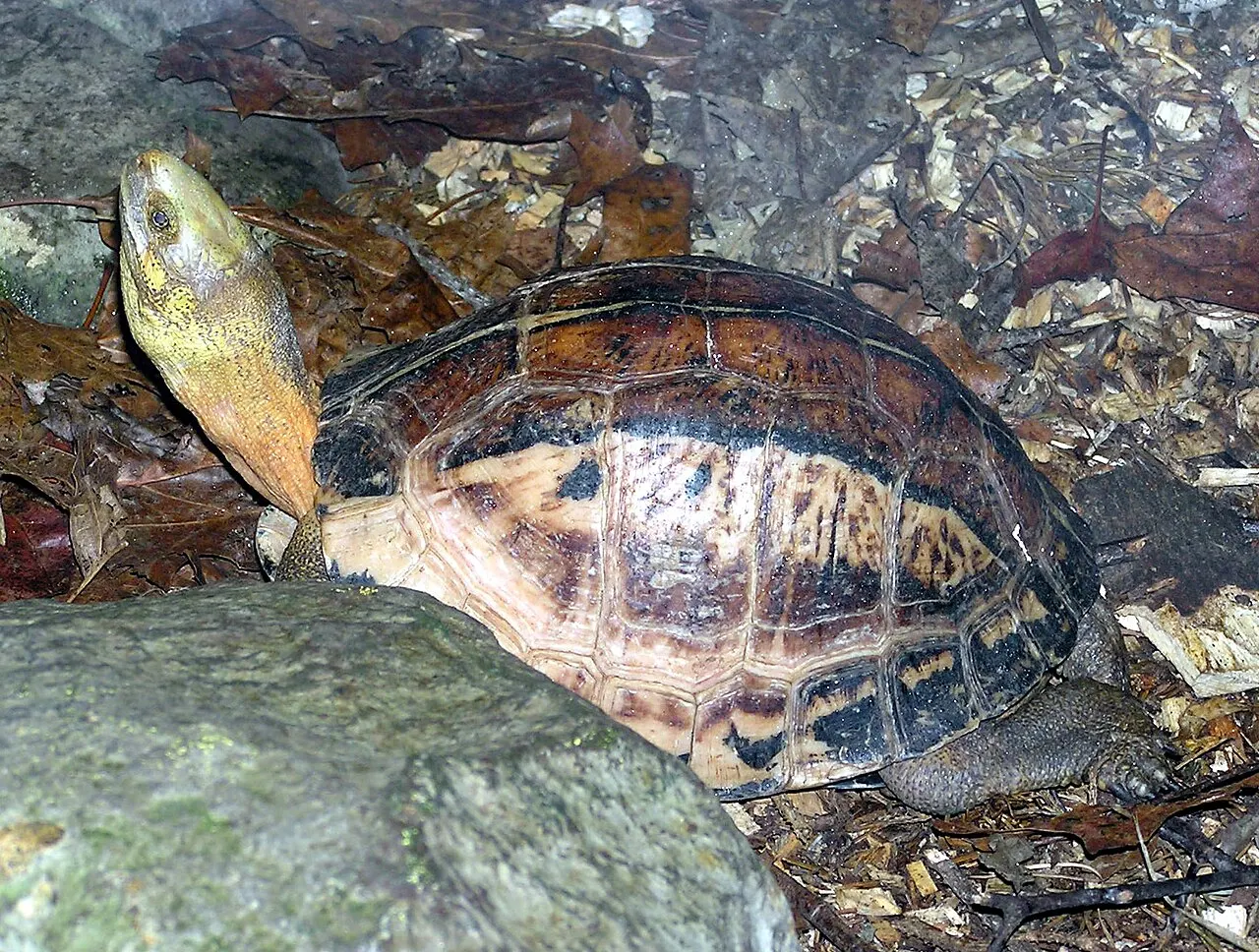
Adults have the highest-domed shell of any box turtle in the genus Cuora, reportedly likened to a conquistador's helmet. The shell is orange-brown to dark brown, with lighter bands along the sides. The head is buttery yellow with fine grey markings, and the soft parts are yellow. The belly shell is cream to light yellow with a black blotch on each plate.
In the first field survey, three adult females measured 157 to 176 mm in shell length and weighed 690 to 970 g. The turtle was first described in 1998 as a subspecies of the Indochinese box turtle (Cuora galbinifrons), and genetic work later showed it is a separate species.
Where it lives
The turtle is native to the southern end of the Truong Son mountains in Vietnam. The IUCN treats it as endemic to Vietnam, at roughly 300 to 600 m above sea level, while other accounts allow that it may also occur in eastern Cambodia and southern Laos. Known records come from the eastern slopes of the Langbian Plateau, in Khanh Hoa and Phu Yen provinces.
For years nobody had seen one in the wild, because scientists knew it only from animals sold in markets. A team led by Ly, with Hoang and Stuart, found eight in forest at three sites between July 2010 and January 2011. All were on the floor of broadleaf evergreen forest mixed with bamboo, at 368 to 561 m. The team used village dogs to track the turtles by scent.
Pins are Wikidata “endemic to” fields. Orange dots, when present, are GBIF occurrence tiles — survey bias included.
How it lives
It eats both plants and animals. The IUCN describes it as not migratory. In the 2010 and 2011 survey, turtles were found on moist forest floor, tucked under dry leaf litter at the base of a rattan bush, beside rocks, or at the foot of a rotting tree.
The IUCN puts a generation at about 20 years, so a population recovers slowly from losses. The three females caught in 2010 had 20 to 22 growth rings on their belly plates.
Why it is in trouble
Collection is the main threat. The IUCN scores deliberate taking of the species for international trade as high impact across the whole population, causing very rapid declines. Turtles are sold for food, traditional medicine and the pet trade. The species was first known only from animals sold in markets, and the Turtle Survival Alliance says it was first documented in Chinese food markets. Hunting dogs can find turtles that people struggle to spot.
Forest loss adds to the pressure. Small farms, plantations and shifting cultivation are each rated as lower impact, but the 2011 survey noted that large areas of forest on the plateau were being converted to coffee and other crops, and that only one of its three sites lay in a protected area. The Red List gives an estimate of 3,000 to 10,000 turtles, and the population is decreasing.
What is being done
The species is covered by international trade controls, and the IUCN notes it occurs in at least one protected area. Captive groups exist. Turtle Survival Alliance, with the Asian Turtle Program and the Gregory Family Foundation, is building an assurance colony at Cuc Phuong National Park. At its own Turtle Survival Center, the alliance acquired its first captive-bred turtle in 2014 and had produced 36 hatchlings by 2023. The species has historically been hard to acclimate to captivity, so it is rare in collections.
The 2020 assessment records no recovery plan and no systematic monitoring scheme in place.
Sources
Written for this catalog in our own words from the sources below, checked against them on 12 November 2026. Population figures are estimates and carry the year they were made. Status and assessment year: IUCN. 2026. The IUCN Red List of Threatened Species. Version 2026-1. iucnredlist.org.