Critically Endangered
Southern pigtoe
Pleurobema georgianum
The southern pigtoe (Pleurobema georgianum) is a small freshwater mussel found only in the Coosa River system of Alabama, Georgia and Tennessee. The IUCN Red List rated it Critically Endangered in 1996, and it has been federally protected as endangered in the United States since 1993.
How to recognise it
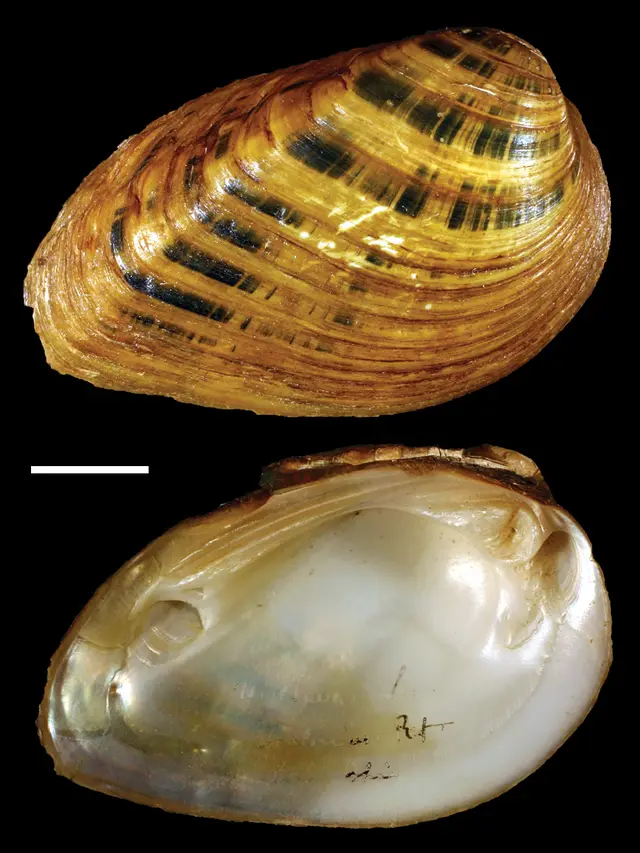
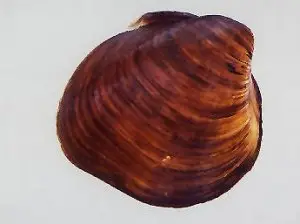
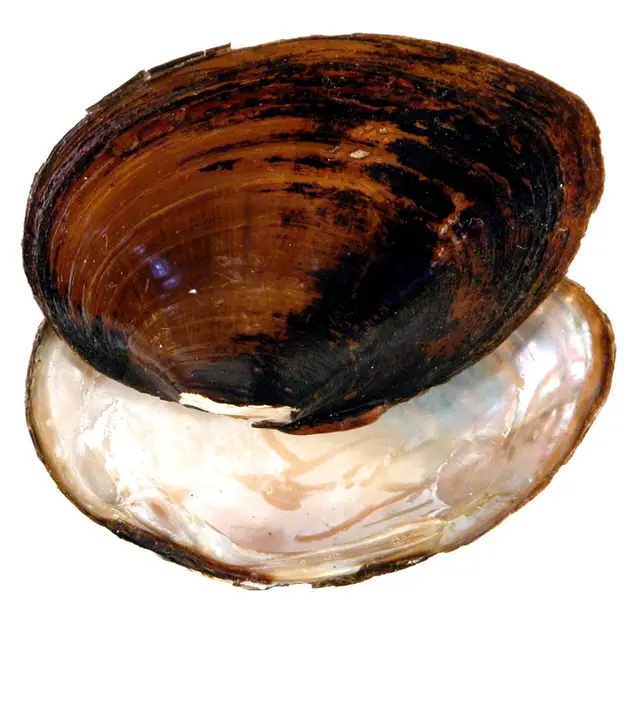
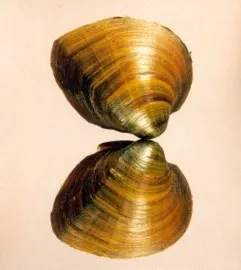
It's a small to medium river mussel, reaching about 65 mm long. The shell is oval to elliptical and slightly flattened from side to side. The outer layer is yellow to yellow-brown, and the inside is white.
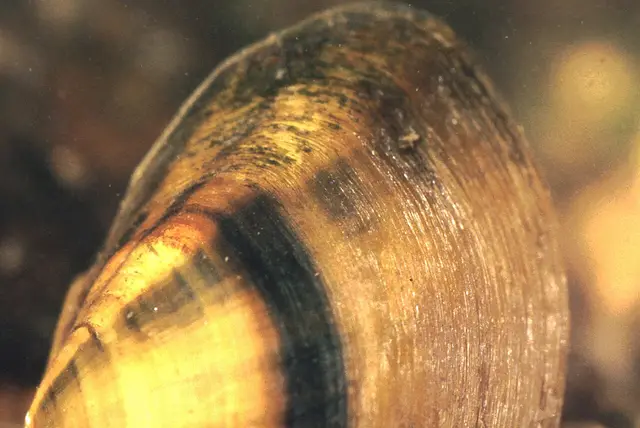
Small young shells can show green spots along the posterior ridge, and older ones often carry dark brown growth lines. The species was first described by Isaac Lea in 1841 and belongs to the river mussel family Unionidae.
Where it lives
It lives in riffles, runs and shoals of medium creeks and large rivers, where the bed is sand and gravel. Historically it was found across the Coosa River and its tributaries. Today it survives only in scattered tributaries, including the Conasauga River and Holly Creek in Georgia and Tennessee, Armuchee Creek in Georgia, and Shoal, Big Canoe, Terrapin, Yellowleaf, Hatchet and Cheaha creeks in Alabama.
Every remaining population is small and isolated. The strongest has been Shoal Creek, in an isolated stretch of about 9.6 km inside the Talladega National Forest, between Sweetwater and Highrock lakes. A 2004 estimate put it at roughly 800 mussels, but searches in 2011 turned up only two, and the creek's decline has been linked to exceptional droughts in 2007 to 2008 and in 2017.
Pins are Wikidata “endemic to” fields. Orange dots, when present, are GBIF occurrence tiles — survey bias included.
How it lives
The southern pigtoe is a short-term brooder: females carry developing young in spring and early summer. The larvae must attach briefly to a fish before they drop off as young mussels. Reported host fish are the Alabama shiner, blacktail shiner and tricolor shiner.
Hatchery work shows how fussy this step can be. Culture attempts in 2010 and 2015 used blacktail shiners, and 31 infested fish produced only 49 juvenile mussels, which makes that shiner a poor host.
Why it is in trouble
Federal officials listed the mussel in 1993 mainly because dams and impoundments had turned free-flowing river habitat into still water and shrunk its range. Some tributary populations have been found since, which improved the picture slightly, but the range is still badly fragmented and no population trend data exist.
A 2018 recovery plan amendment says the species stays vulnerable because of its tiny range and habitat, low numbers, pollution washing off the land and chance events.
What is being done
Critical habitat was designated in 2004, covering 1,155 stream km shared with ten other mussel species. A recovery plan approved in 2000 was amended in 2018 because it gave too little guidance on when the species could be downlisted or delisted.
The amendment argues that delisting will need a well-developed propagation and reintroduction strategy to build more populations. Culture attempts so far have had limited success, and the status review in 2008 recommended no change to the endangered listing.
Sources
Written for this catalog in our own words from the sources below, checked against them on 12 November 2026. Population figures are estimates and carry the year they were made. Status and assessment year: IUCN. 2026. The IUCN Red List of Threatened Species. Version 2026-1. iucnredlist.org.