Endangered
Oval pigtoe
Pleurobema pyriforme
The oval pigtoe (Pleurobema pyriforme) is a small freshwater mussel found only in rivers and creeks of Georgia, Alabama and Florida that drain to the Gulf of Mexico. The IUCN Red List assessed it as Endangered in 2012, and the U.S. has listed it as endangered since 1998. Once abundant, it has declined sharply across its range.
How to recognise it
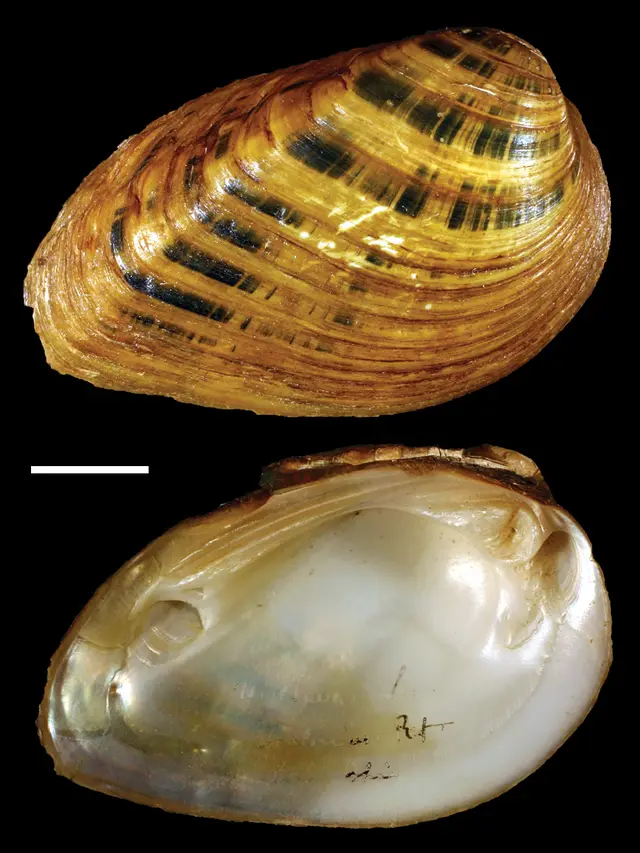
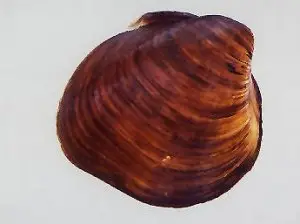
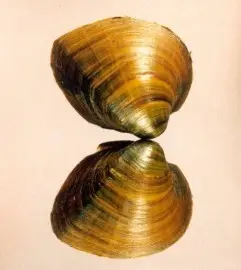
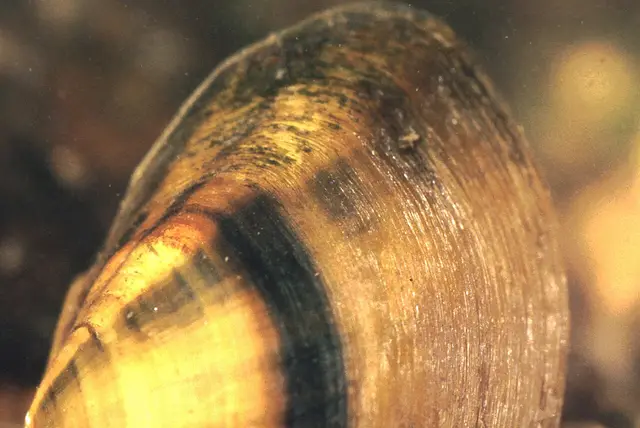
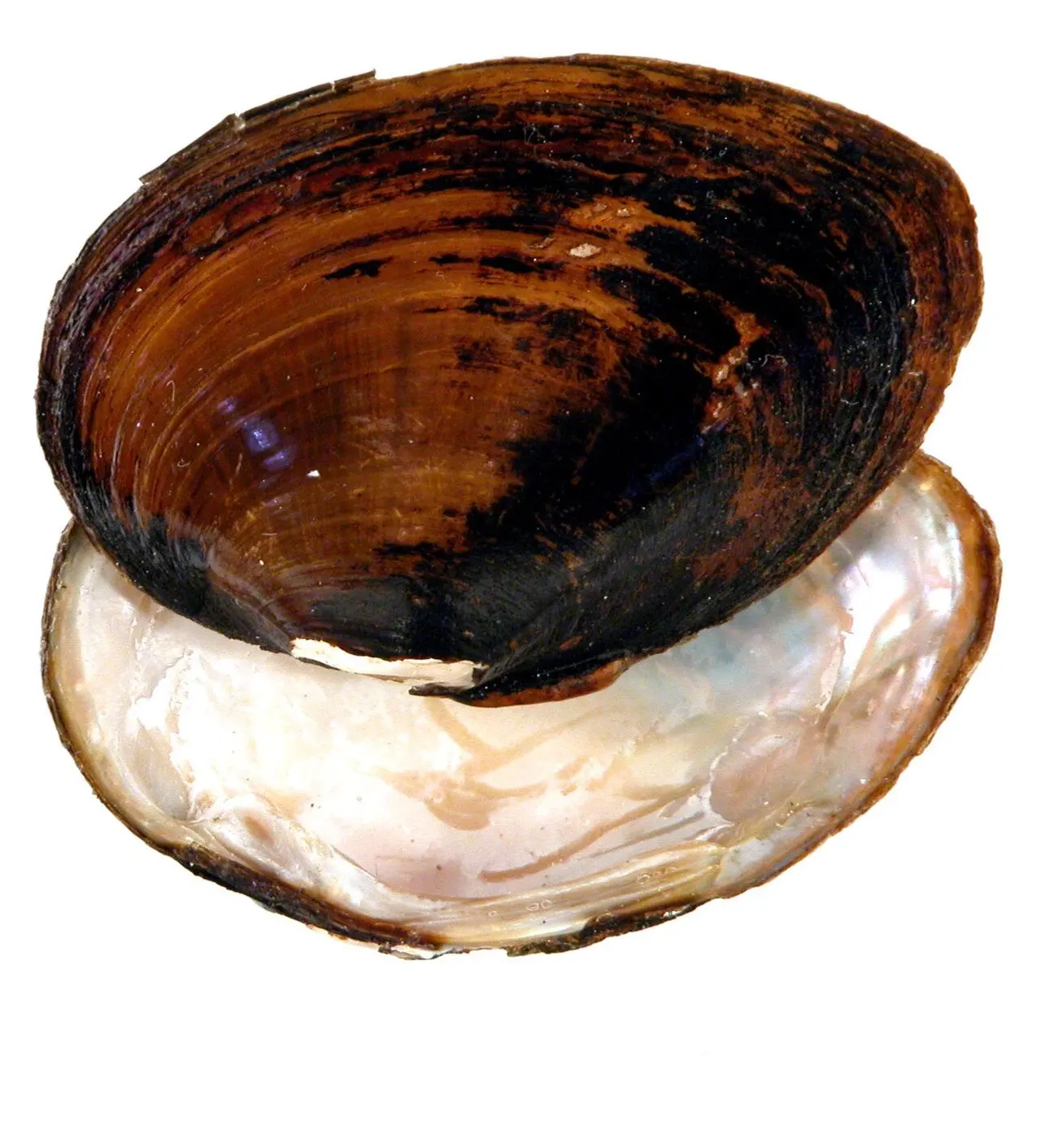
It's a small to medium mussel, reaching about 60 mm (2.4 inches) in length. The shell is oval and somewhat flattened, smooth, and shiny, in yellowish to chestnut or darker brown, with clear concentric growth lines but no rays on adults. A few small specimens show faint green rays. A ridge runs from the raised hinge area to the blunt, slightly tapered rear end.
Inside, the nacre is salmon to bluish white and turns iridescent toward the back. The Gulf moccasinshell is equally small and also brownish, but it tends to carry greenish radiating lines. Many mussels look alike from the outside, so an expert should confirm any identification.
Where it lives
Isaac Lea described the species in 1857 from the Chattahoochee River near Columbus, Georgia. It lives in streams and small rivers with moderate to slow current, over sand, sandy mud or gravel. Historically it lived in the Flint, Chattahoochee, Chipola, Ochlockonee, Apalachicola, Suwannee and Santa Fe river systems and in Econfina Creek.
The IUCN's 2012 assessment gives an extent of occurrence of 1,000 to 5,000 square kilometres, a population figure of about 2,500 and a decreasing trend. Surveys behind the 1998 federal listing found live animals at only 24 of 410 sites sampled, at an average of 5.2 animals per site, and found no evidence of young animals joining the population. More recent Florida surveys, run from 2006 to 2017, failed to find the mussel in the Ochlockonee basin, so that population may be gone, and the Suwannee and Santa Fe population looks very sparse.
Pins are Wikidata “endemic to” fields. Orange dots, when present, are GBIF occurrence tiles — survey bias included.
How it lives
Like other freshwater mussels, it filters algae, tiny zooplankton and organic particles from the water. The female draws sperm in from the current, fertilises her eggs and broods them in her gills. The larvae then spend time attached to a fish before dropping off to settle in the riverbed.
The sailfin shiner is the known host fish. The Florida Natural Areas Inventory lists the eastern mosquitofish as a possible one too. If a host fish declines, the mussel can't complete its life cycle.
Why it is in trouble
The IUCN lists sewage, mining and quarrying, soil erosion and sedimentation, commercial and industrial development, housing and urban areas, and dams as ongoing threats. Reservoirs and dams have altered about 29 percent of the Flint River's main channel, and Talquin Reservoir flooded roughly 12 percent of the river habitat on the middle Ochlockonee River and the lower end of its largest tributary, the Little River.
The introduced Asian clam (Corbicula fluminea) is also named among the pressures on its habitat. When the species was listed in 1998, almost all of the remaining sites were in streams running through private land, which makes protection harder.
What is being done
The U.S. Fish and Wildlife Service listed the oval pigtoe as endangered on 16 March 1998, together with other mussels of the eastern Gulf slope. In 2007 it designated critical habitat for the oval pigtoe and six related mussels, covering about 1,200 miles of stream in four Gulf drainages. The IUCN records a recovery plan and a monitoring scheme in place, and conservation sites identified across the whole range.
Florida's habitat guidance calls for protecting more floodplain through purchase or easement, keeping river flows and water quality high, controlling invasive bivalves, and monitoring both the mussels and their host fish.
Sources
Written for this catalog in our own words from the sources below, checked against them on 12 November 2026. Population figures are estimates and carry the year they were made. Status and assessment year: IUCN. 2026. The IUCN Red List of Threatened Species. Version 2026-1. iucnredlist.org.
- IUCN Red List assessment (2012), Pleurobema pyriforme
- U.S. Fish and Wildlife Service species profile
- Florida Natural Areas Inventory field guide, oval pigtoe
- Encyclopedia.com, Oval Pigtoe (Endangered Species entry)
- U.S. Fish and Wildlife Service, critical habitat designated for seven freshwater mussels (2007)
- Wikipedia, Oval pigtoe